Who this suits

No-cook or minimal-kit campers

Choose a breakfast pastry that can be eaten without an oven and has clear storage and date information on the pack. A packaged croissant is generally more practical than a frozen bake-at-camp option when you cannot keep food frozen or cook it.

Campers seeking genuine sourdough

Look for an item explicitly sold as sourdough rather than relying on buttery, slow-proved or artisan-style wording. In the named retailer ranges, sourdough is presented in bread ranges rather than the listed croissant ranges.

Campers managing allergies or intolerances

Check the exact current pack or bakery information before travelling, especially for loose items. The croissant examples include common allergens such as wheat or gluten, milk and egg, and loose bakery items may need a store-specific allergen check.

What to check before buying

Start with the camping setup, then confirm whether sourdough identity, pack information and allergen details match the breakfast you are planning.

Priority What to check Your needs
Sourdough identity Look for “sourdough” in the exact product name or description. Do not treat all-butter, slow-proved or artisan wording as equivalent. Check whether sourdough bread and croissants are listed as separate categories. I want a product marketed as sourdough, rather than a croissant that only sounds artisan-style.
Storage and cooking Read the storage direction and date on the pack. Frozen croissants need continuous storage at -18°C or colder and an oven if the pack requires baking from frozen. I need breakfast that works with the equipment at my campsite, whether that means no cooking at all or access to a freezer and oven.
Allergen information Read the current ingredients and allergen statement on packaged products. For loose bakery items, ask staff or use the allergen information displayed in the selected store. Everyone in my group needs ingredient and allergen details checked before we leave home.
Pack size and freshness Match the number of pastries to the group and planned breakfasts. Check the front-of-pack best-before date and follow the stated storage conditions. A smaller pack may suit one or two campers, while a larger pack only makes sense if it can be eaten within its labelled date and storage conditions.

Common camping-food mistakes

  • Treating all-butter, artisan or slow-fermented as proof of sourdough

    Retailer ranges can list sourdough bread separately from croissants, and a slow-fermented croissant is not automatically labelled as sourdough.

    Require the exact product name or description to say “sourdough”. If that is not essential, choose by convenience and flavour instead.

  • Taking frozen croissants without freezer continuity or an oven

    Frozen croissants can conflict with a basic camping setup when they must stay at -18°C or colder and be baked from frozen.

    Use this route only where the stated cold storage and oven instructions can be followed; otherwise choose a ready-to-eat packaged croissant.

    Plan for the practical burden of freezer capacity and cooking fuel or electricity.

  • Ignoring allergen differences between packed and loose bakery products

    Packaged examples declare common allergens, while loose bakery products may require an extra check with staff or store signage and can have cross-contact uncertainty.

    Read the current pack before travelling. For loose items, obtain allergen information at the specific store rather than relying on a general product name.

  • Buying a large pack without checking the date and trip plan

    Formats range from small packs to larger packs, and the exact best-before date must be read on the item collected.

    Match the pack count to the number of campers and breakfasts, then check the front-of-pack date and storage instructions.

    Unused pastries can become waste if the group cannot eat them within the labelled date and storage conditions.

Relevant supermarket brand references

M&S

An in-store bakery option for campers buying close to departure.

  • Lists all-butter croissants alongside a separate sourdough bread range.
  • Its croissant listings do not establish that the croissants are sourdough; check local store stock before travelling.

Tesco Finest

A packaged all-butter croissant option for campers looking for a four-pack from a major grocery range.

  • Tesco lists Tesco Finest All Butter Croissants in a four-pack format.
  • The listing does not describe the croissants as sourdough, so check the exact product information for your chosen pack.

Sainsbury's

Own-label and Taste the Difference croissant options for shoppers wanting a supermarket four-pack.

  • Lists Taste the Difference Butter Croissants x4.
  • Its sourdough bread and butter croissant listings are separate, so a sourdough croissant should not be assumed.

Waitrose

A packaged option for campers who want ingredients, allergens and storage directions before travelling.

  • Waitrose No.1 2 Butter Croissants provide ingredient, allergen, cool-dry storage and best-before guidance.
  • The product is all-butter rather than sourdough and may contain nuts.

Lidl

A selected-store loose bakery option for campers buying pastries immediately before a trip.

  • Its All Butter Croissant listing identifies milk, wheat and egg allergens.
  • For loose bakery products, confirm allergen information in the selected store because other allergens cannot be guaranteed absent.

Joybuy product options

Joybuy option for campers using a frozen bake-at-camp route with reliable freezer storage and an oven.
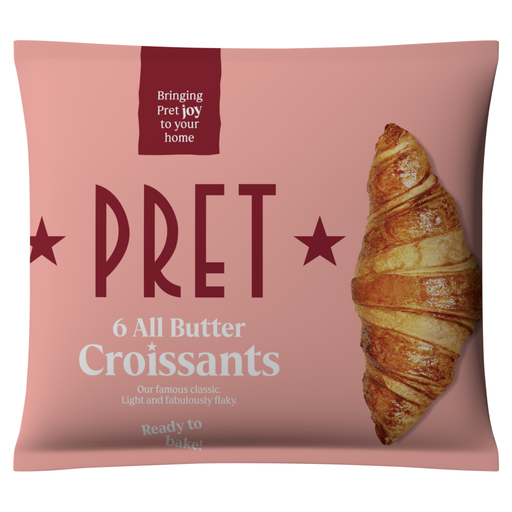
Pret A Manger Butter Croissants 330g

Pret A Manger Butter Croissants 330g

A frozen bake-at-camp option only for accommodation or campsites with dependable freezer storage and an oven.

Store at -18°C or colder and bake from frozen for 20 minutes. Contains wheat, gluten, milk and egg; may contain nuts, sesame and soya. It is not labelled as sourdough.

Joybuy

Frequently asked questions

Are sourdough croissants verified in the named UK supermarket ranges?

Not on the retailer pages available on 30 September 2026. M&S, Tesco, Sainsbury's and Waitrose presented croissants and sourdough bread as separate ranges or products, and none of the listed croissants was explicitly marketed as sourdough.

Can I take frozen croissants camping?

Only if you can maintain the storage temperature on the pack and bake them using the stated method. The Pret A Manger croissants listed on Joybuy require storage at -18°C or colder and 20 minutes of baking from frozen, so they do not suit a standard no-power tent trip.

What date should I check before packing croissants?

Follow the date and storage instruction on the exact pack. Waitrose directs shoppers to the front of pack for the best-before date on its No.1 2 Butter Croissants, and the Food Standards Agency distinguishes best-before dates from use-by dates.

How should I check allergens for bakery croissants in the UK?

For packaged croissants, read the current ingredients and allergen statement on the exact pack. For loose bakery items, ask staff or check available signage; the Food Standards Agency notes that this information may be supplied verbally, by staff or visually in store.

Is a slow-fermented croissant the same as a sourdough croissant?

No equivalence should be assumed. The Pret A Manger product is described as slow-fermented, but it is not labelled as sourdough; choose it only if its frozen storage and oven requirements suit your trip.