Campers avoiding alcohol
Look for an explicit alcohol-free claim on the exact drink you intend to pack, rather than relying on its place in the mixer aisle. Check the pack’s alcohol-status wording and any stated ABV.


For a camping drink without alcohol, choose a ready-to-drink product explicitly presented as alcohol-free and check the exact pack’s wording and ABV. If you are making mixed drinks, a tonic or ginger ale does not determine the alcohol content of the finished serve: the base drink and pour size matter. Small cans let a group open portions as needed; a larger bottle makes more sense when it can be used and stored as its label directs.
Look for an explicit alcohol-free claim on the exact drink you intend to pack, rather than relying on its place in the mixer aisle. Check the pack’s alcohol-status wording and any stated ABV.
Choose the base drink and its pour size deliberately. Changing the tonic or other mixer alone does not establish the alcohol content of the finished drink.
Compare individual cans with a shared bottle according to how many serves the group expects to use. Small portions allow people to open different drinks without opening a larger bottle at once.
Decide whether you need a drink to serve on its own or a mixer for a separately chosen base, then choose a pack size that fits the trip.
| Priority | What to check | Your needs |
|---|---|---|
| Alcohol status | Read the exact pack’s alcohol-status claim and stated ABV. The Department of Health and Social Care’s UK guidance describes “low alcohol” for alcohol-substitute drinks as 1.2% ABV or below; it does not turn an ordinary soft-drink mixer into a labelled alcohol substitute. | I want a drink I can choose for alcohol avoidance without guessing from words such as “mixer”, “light” or “ginger beer”. |
| Finished serve | If mixing with an alcoholic drink, check that base’s ABV and the amount poured. The NHS identifies choosing lower-strength drinks as one way to cut down; mixer branding does not establish the finished drink’s strength. | For a mixed drink at camp, I want to decide what goes into each serve rather than assume the mixer makes it low alcohol. |
| Pack size | Compare the number and volume of cans with the serves your group expects. For a larger bottle, follow its own storage and after-opening directions. | If people want different drinks, I would rather open portions as needed than leave a shared bottle unfinished. |
| Flavour and nutrition | Choose tonic, lemonade or ginger flavour separately from alcohol status. Check the exact ingredients and per 100 ml nutrition information if those details affect your choice. | I want a flavour that works alongside our camping food, while making a separate decision about alcohol content. |
Those words do not establish the alcohol content of a mixed drink. An alcoholic base still contributes alcohol according to its strength and the amount poured.
Check the base drink’s ABV and decide the pour size. For alcohol avoidance, check an explicitly alcohol-free product’s exact pack instead.
“Ginger beer”, “mixer” and “fermented” do not, by themselves, give you an ABV. Fentimans lists fermented ginger-root extract among its Ginger Beer ingredients; that ingredient wording is not an alcohol-status statement.
Read the alcohol-status wording and any ABV on the particular pack you are buying, especially when avoiding alcohol is essential.
The Joybuy listing for Fentimans Ginger Beer 750 ml directs consumers to use it within three days of opening. That matters if a small group will only want a few serves.
Match the bottle to the expected number of drinks and follow its storage directions. Consider individual cans when the group may choose different drinks.
An unfinished bottle may leave product unused within its stated after-opening period.
A brand’s regular mixers and its explicitly non-alcoholic drinks serve different buying decisions; check the particular product rather than applying one label to the whole range.
Its range includes conventional tonic mixers and a separately named non-alcoholic ready-to-drink G&T.
A tonic option for campers comparing small mixer cans.
Offers tonic waters, mixers and ginger-flavoured drinks for those choosing a flavour route.
A reference point for comparing portioned soft-drink packs with larger shared formats.
These options include a ready-to-drink non-alcoholic-labelled drink and portioned tonic or ginger-ale mixers. Choose between those uses before comparing can counts and flavours; check the exact pack if alcohol avoidance is essential.
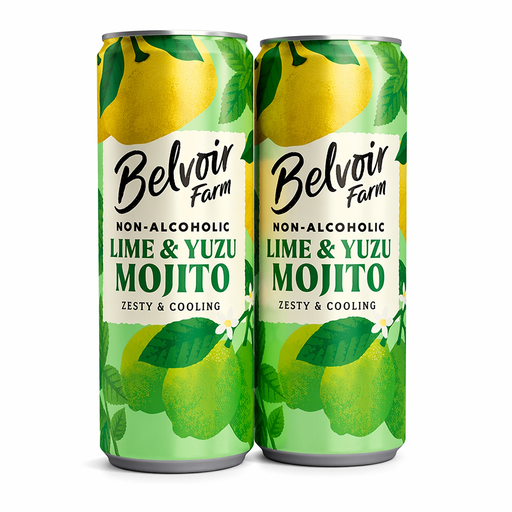 No image available
A portioned, ready-to-drink alternative rather than a tonic for mixing with a spirit. For complete alcohol avoidance, check the alcohol-status wording and ABV on the exact pack.
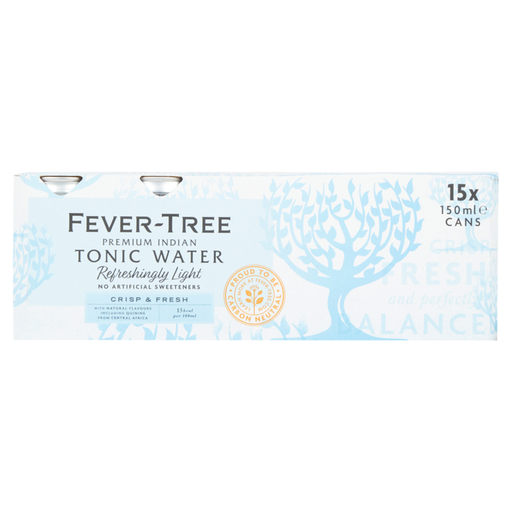 No image available
A conventional tonic in individual cans for separately planned serves. “Light” does not establish alcohol status or the strength of a drink mixed with an alcoholic base; check the pack and the base drink.
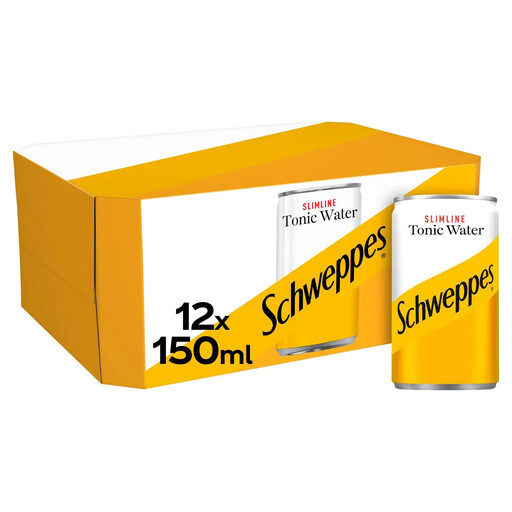 No image available
The 150 ml cans offer separate tonic portions for a group. “Slimline” is not a low-alcohol claim: check the pack if alcohol avoidance matters, and assess any mixed drink by its base and pour size.
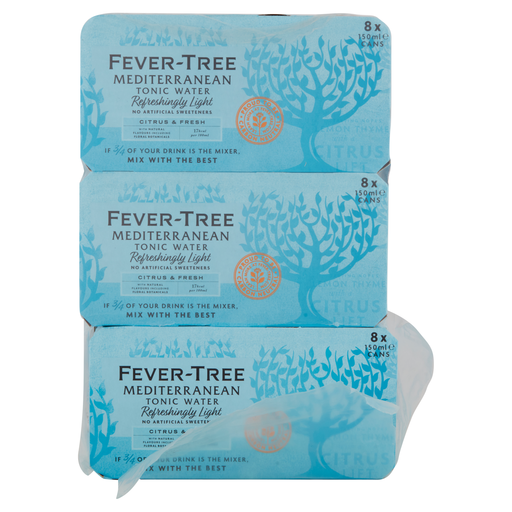 No image available
A tonic-mixer choice in eight separate cans when that pack size suits the group. Check its exact alcohol-status wording if needed; a “light” mixer does not determine the alcohol content of a finished serve.
 No image available
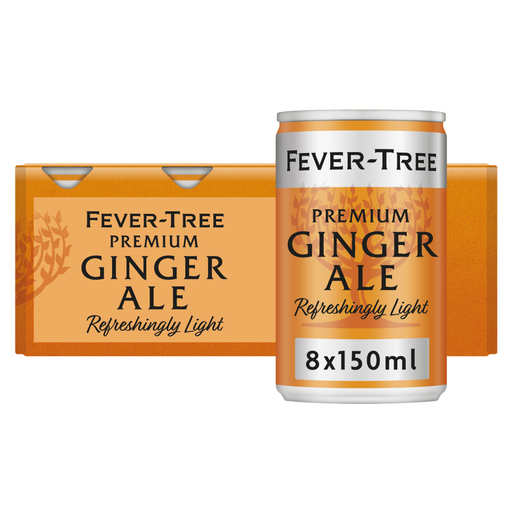
An individually portioned ginger-ale alternative to the tonic packs above. Its name does not establish an alcohol-free claim; check the exact pack, and consider any alcoholic base separately.
No. The Department of Health and Social Care’s UK guidance sets a limit of 1.2% ABV or below for the “low alcohol” description of alcohol-substitute drinks and treats “alcohol free” as a different descriptor. That guidance does not classify an ordinary soft-drink mixer merely because it can be added to a spirit; read the exact product label.
No. If the drink contains an alcoholic base, its ABV and the amount poured affect the finished serve. Choose the base deliberately rather than relying on a tonic’s “light” or “slimline” wording.
Choose a specific drink explicitly presented as alcohol-free, then check the wording and any ABV on the pack you buy. Fever-Tree describes its Non-Alcoholic Mediterranean G&T as a serve without alcohol, but that description does not apply to its conventional tonics.
Choose by the number of serves you expect to use and the bottle’s after-opening directions. Individual cans can be opened as needed; for Fentimans Ginger Beer 750 ml, the Joybuy listing says to store it in a cool, dry place and consume it within three days of opening.