
24/7 全天候客户支持

免费退货

当日/次日达

品质保障

开启新人专享福利: 全场免邮 | 低至 2 折 | 免费试用 30 天 JoyPlus 会员
下载 Joybuy
As a Joybuy Product Recommendation Officer, my role is to help you navigate the crowded market of outdoor equipment. With the right information, you can find reliable camping gear that enhances your adventures, rather than ending them prematurely. This guide focuses on the key details that separate durable, practical kit from the marketing hype.
Before you invest in new equipment for your next trip, it’s crucial to understand a few common pitfalls. Many well-intentioned buyers are caught out by vague promises and clever marketing, leading to gear that fails when you need it most.
To avoid these issues, focus on a few core parameters. Understanding these will empower you to assess a product's true capabilities, regardless of its marketing claims.
The single most important factor for any shelter or waterproof travel accessory in the UK is its ability to handle rain. Instead of relying on the word "waterproof," look for a Polyurethane (PU) coating rating, measured in millimetres (mm).
Equally important are taped or sealed seams. The stitching on a tent is a natural weak point for water ingress. Quality outdoor equipment will have a waterproof tape applied over these seams to ensure a fully watertight construction.
The durability of fabric-based gear like tents, bags and folding camping chairs is often indicated by its Denier (D) rating. This number measures the thickness and weight of the fabric's fibres.
A higher Denier number generally means a tougher, more abrasion-resistant fabric, which is a key consideration for items that will see heavy use or contact with rough ground.
For any piece of camping gear, from a tent to a stainless steel cup, its portability is defined by more than just weight. Always check the packed dimensions. A chair might be light, but if it’s an awkward shape when folded, it can be a nuisance to pack in a car or carry to a festival. Look for items that pack down into a compact, regular shape, often in an included carry bag. This makes organising your camping storage far more efficient.
Based on these practical criteria, here are some items matched to specific types of outdoor enthusiasts.
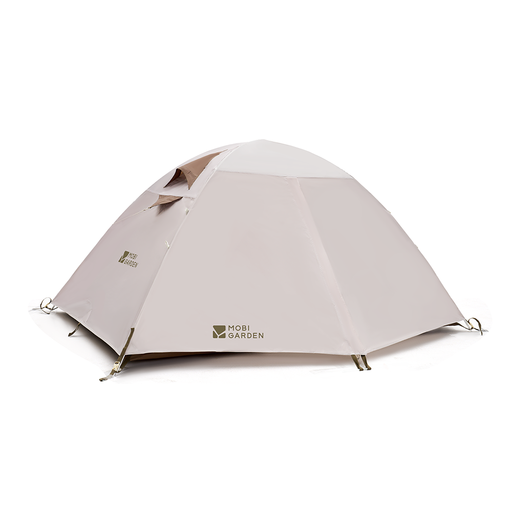
Why This Fits Their Persona: This tent is an ideal all-rounder for casual campers and festival-goers who need a reliable shelter without overly technical features. It's spacious enough for two and straightforward to set up.
It avoids the "waterproof" myth by clearly stating its ratings: a PU2000mm outer tent and a robust PU4000mm groundsheet, offering solid protection from rain and damp ground.
The 68D tear-resistant polyester fabric offers greater durability than many ultralight alternatives and its compact packed size (41 x 16 cm) makes it easy to transport.
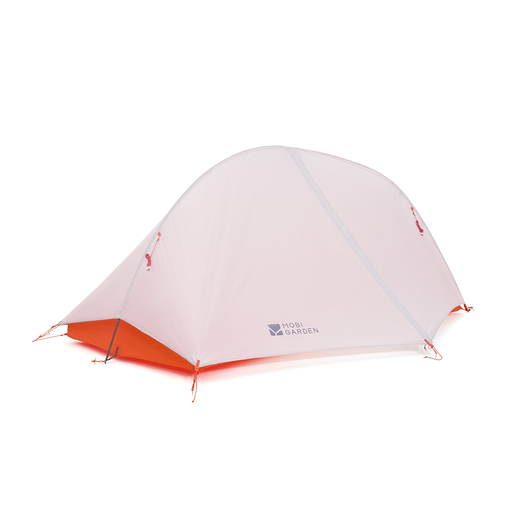
Why This Fits Their Persona: For the serious hiker counting every gram, this tent delivers high performance in an exceptionally light package. It's designed for long-distance treks where low weight and small pack size are paramount.
It counters the "ultralight compromise" by using high-quality 20D ripstop nylon with a silicone treatment and taped seams. This balances its low weight (approx. 1.18 kg) with reliable durability and weather protection.
Its large inner mesh area provides excellent ventilation to minimise condensation, a common issue on multi-day trips. The ultralight aluminium alloy poles provide a stable structure without adding unnecessary weight.
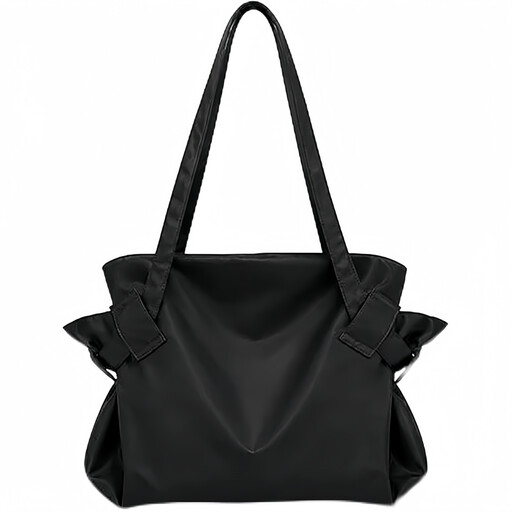
Why This Fits Their Persona: Perfect for spontaneous trips to the park, beach or a day out. This item combines two essentials into one, prioritising convenience and clever design for those who pack light for a day's activity.
It avoids the "gimmicky multi-function" trap by focusing on two highly compatible functions. It's a genuinely useful tote bag and a practical, waterproof portable picnic blanket, without compromising on either role.
Its key advantage is efficiency. The high-density waterproof material keeps your belongings dry on the way and gives you a dry place to sit. It transforms from a bag to a 100cm mat in seconds.
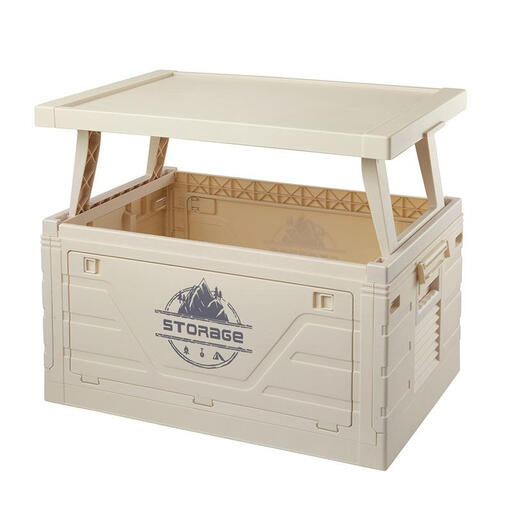
Why This Fits Their Persona: For those who value a tidy and efficient campsite, this piece of camping storage is a game-changer. It keeps gear organised, protected and doubles as a useful surface for drinks or food prep.
This is another example of multi-functionality done right. Its primary purpose as a durable, load-bearing storage box is solid and its secondary function as a table is a practical bonus, not a flimsy gimmick.
The multi-directional opening allows easy access to contents even when stacked. Its sturdy, stackable PP construction makes it ideal for organising a car boot or tent interior.
We have compiled a complete, real-time list of products that fully satisfy these strict selection criteria and UK safety regulations.
A PU2000mm rating indicates the fabric can withstand a 2,000 mm column of water before it begins to leak. In practical terms, this is sufficient for the light to moderate rain showers common across much of the UK. For trips to mountainous regions like the Scottish Highlands or Snowdonia, where prolonged, heavy rain is more likely, you may want to consider gear with a rating of 3000mm or higher for added assurance.
The lifespan of your outdoor equipment depends heavily on the materials and how you care for it. Gear with powder-coated steel frames, like some folding camping chairs, will resist rust better than untreated metal. Tents made from higher denier fabrics will resist abrasion for longer. The most critical factor is maintenance: always ensure your tent is completely dry before storing it to prevent mould and fabric degradation. Clean your hiking accessories and cookware after each trip to ensure they are ready for the next one.
For most casual, car-based camping or festivals, the answer is generally no. Ultralight gear achieves its low weight by using thinner, more specialised materials, which often come at a higher price and can be less forgiving of rough use. For these scenarios, prioritising durability, comfort and ease of use over a few hundred grams is often a more practical and economical choice.