
24/7 Customer Support

Free returns

Same-day & Next-day Delivery

Quality Guaranteed

Unlock Your Welcome Offers: FREE Delivery | Up to 80% OFF | Free 30-day JoyPlus trial
Download the APP
When the sun sets on your campsite or a power cut plunges your home into darkness, the last thing you need is a lantern that fails you. Yet, many shoppers find their new LED camping lantern is either too dim, breaks after one trip or has a 'power bank' feature that is more of a gimmick than a genuinely useful function. Navigating the market can be frustrating, with exaggerated claims and features that sound good on paper but disappoint in practice.
As the Joybuy Product Recommendation Officer, my role is to help you see past the marketing clutter. Before you spend your money, let's look at the common pitfalls that catch out even savvy buyers and what to look for instead.
Many products fail to deliver on their promises. Here are three frequent issues to be aware of:
lantern with USB charger is appealing, but many fall short. Some models have such a small internal battery capacity that they can only provide a minimal charge to a modern smartphone, leaving you stranded when you need it most. This feature is only useful if backed by a substantial power source.bright outdoor lantern needs to be built for more than just a calm, dry evening in the garden.To ensure you get a reliable and practical lantern, focus on these key specifications.
Lumens measure the total amount of visible light from a source. For a small tent light, 150-200 lumens is often sufficient. For lighting up a larger family tent or a campsite area, look for models offering 500 to 1000 lumens.
However, the quality of light is as important as the quantity. A good LED camping lantern should offer 360-degree illumination to light up an entire space evenly. Also, look for a dimming feature. This allows you to adjust the brightness to conserve battery life or create a softer light, such as a night light mode, which is perfect for inside a tent.
The power source dictates the lantern's runtime and the effectiveness of its USB charging port.
battery powered lantern using D-cells, like some Energizer lantern models, offers a significant advantage for emergency preparedness. These batteries have a long shelf life and can provide a substantial amount of power, making the lantern with USB charger function genuinely useful for topping up devices during a power cut.Always check the stated runtime for both high and low settings to understand how long you can depend on the light.
For any outdoor equipment in the UK, durability is non-negotiable. Look for two key indicators:
Based on these practical criteria, we have matched products to different user needs. This approach helps clarify which features are essential for your specific situation.
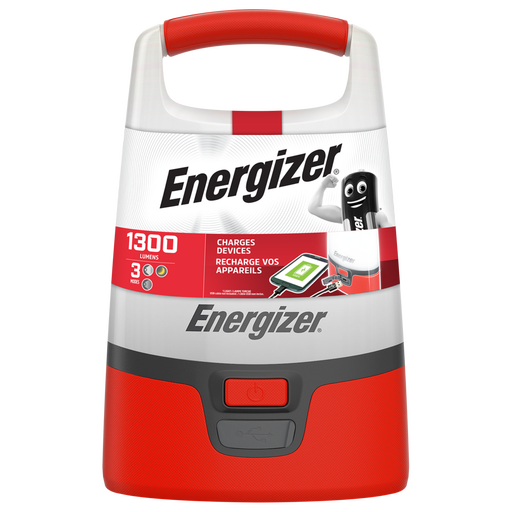
Why This Fits Their Persona: This is an ideal choice for those who need a reliable, multi-purpose light for UK camping, fishing trips or as a dependable emergency light for power cuts at home. Its robust design and powerful output are built for practical situations, not just for show.
It delivers a genuine 1000 lumen output with 360-degree coverage, avoiding the 'ultra-bright deception'. The power bank is backed by four D-cell batteries, providing substantial capacity. Its IPX4 rating and 1-metre impact resistance mean it is built for real-world use.
High-output, adjustable lighting with an extremely long runtime on low settings (up to 150 hours). The USB output port provides a genuinely useful emergency charging function.
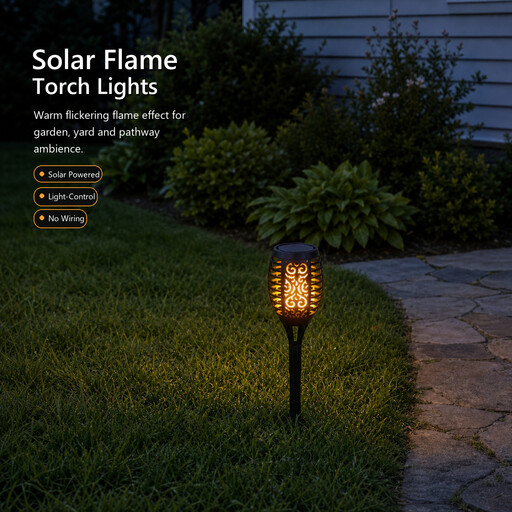
Why This Fits Their Persona: This product is designed for those looking to add decorative, ambient light to their garden paths or flowerbeds. Its purpose is aesthetic, creating a flickering torch effect after dark.
This product highlights a common purchasing mistake. It is not a camping lantern. Its low-lumen, decorative light is unsuitable for tasks, it has no power bank and it is not designed for the rigours of camping. It is an ambient garden light only.
Solar-powered with automatic dusk-to-dawn functionality for hassle-free garden decoration. Provides a safe, flame-like effect without any fire risk.
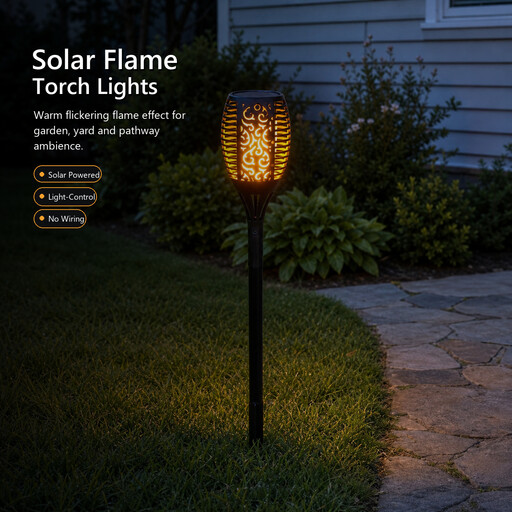
Why This Fits Their Persona: Excellent for homeowners who want to create a warm, inviting atmosphere on a patio, balcony or in a garden for evening gatherings. The focus is entirely on the visual effect of a dancing flame.
Like other solar torches, this is not a functional bright outdoor lantern. It serves as a clear example of a product designed for aesthetics, not for the practical needs of camping, hiking or emergency situations. It lacks the brightness, durability and power bank features required for those uses.
The 96-LED design creates a more realistic and dynamic flickering flame effect. It is solar-powered and weatherproof for long-term outdoor placement.
We have compiled a complete, real-time list of products that fully satisfy these strict selection criteria and UK safety regulations.
It depends on your needs. For reading inside a small tent light, 100-200 lumens is adequate. For illuminating a large family tent or a campsite cooking area, a 1000 lumen lantern or one with at least 500 lumens is more appropriate. A lantern with an adjustable dimming feature offers the most versatility.
This depends on the lantern's power source. Models with small, built-in rechargeable batteries may only provide a 20-30% emergency boost. However, a battery powered lantern that uses multiple large D-cells holds significantly more energy and can provide a more substantial charge, sometimes close to a full charge for some smartphone models. Think of it as a crucial backup, not a replacement for a dedicated power bank.
There are trade-offs. Disposable battery models are excellent for an emergency light for power cuts kit, as the batteries can be stored for years. They are also great for long trips where you can't recharge. Rechargeable lanterns are more convenient and cost-effective for frequent, short-term use, provided you remember to charge them. The right choice depends on your primary use case.