Choose a single tin of prepared pasta if you want one self-contained pack and can manage its serving size, preparation instructions and empty can. An ambient pouch is another option if its heating method suits your equipment; dried pasta makes sense when you can carry the water, pan and fuel it needs. For a chilled pasta meal, the Food Standards Agency advises keeping food below 5°C throughout the trip.
Who is choosing camping pasta?
Off-grid solo campers
If refrigeration is unreliable, storage instructions become a deciding factor. The Food Standards Agency suggests considering predominantly dry foods when food cannot be kept sufficiently chilled; a tin or ambient pouch also needs its own label checked before packing.
Backpackers planning water and fuel
Dry pasta gives you control over how much to cook, but it needs water and equipment. Barilla specifies about 1 litre of water to cook 100g of its Spaghettini, so the whole cooking setup matters when planning a route.
Weekend campers with dependable cooling
A chilled pasta meal is an option only when it can stay sufficiently cold for the trip. The Food Standards Agency advises storage below 5°C and cautions that a cool box is unlikely to keep food chilled for an extended period.
What matters when choosing a format?
Prepared pasta in a tin
Choose it when: You want pasta in one can and its stated serving size works for your meal.
Allow for: A rigid empty can to carry out and any preparation the label requires.
Ambient pasta pouch
Choose it when: You want a non-tin format and can use the exact pouch's heating instructions.
Allow for: Heating equipment; an ambient pouch is not necessarily ready to eat without preparation.
Dried pasta
Choose it when: You can cook at camp and want to portion the pasta yourself.
Allow for: Cooking water, a pan, fuel and anything else you plan to serve with it.
Chilled pasta meal
Choose it when: You can reliably keep it at the temperature its label requires throughout the trip.
Allow for: The Food Standards Agency's advice to store food below 5°C; a cool box may not maintain chilling over an extended period.
| Concern | Buying checks | Who this matters to |
|---|
| Storage without refrigeration |
Check whether the pack is ambient or chilled, then read its storage directions and date label. |
When I cannot depend on a fridge at camp, I need food that can be stored as its label directs throughout the trip. About 33% of consumers put storage without refrigeration first. |
| Cooking water and equipment |
Match the pack's preparation method to your stove, pan, water supply or microwave access. |
If water and cooking equipment are limited, I need a meal I can prepare with what I am carrying. Roughly 27% of consumers make preparation requirements their primary concern. |
| Solo portion |
Compare net weight, stated servings and nutrition per pack rather than assuming one pack means one meal. |
For a meal on my own, I want a manageable amount without having to store leftovers. Around 20% of consumers prioritise a straightforward solo portion. |
| Carrying and packing out |
Consider the filled pack, any separate cooking supplies and what packaging you must carry away. |
When space is tight, I need to account for both the food going in and the empty packaging coming out. About 20% of consumers place that carrying burden first. |
What should you check before packing?
-
Assuming every pasta ready meal can travel without chilling
Ready meals have different storage requirements. The Food Standards Agency advises keeping food below 5°C and warns that a cool box is unlikely to maintain chilling for an extended period.
Read the individual pack's storage directions before choosing a chilled meal for your trip.
-
Assuming a microwave-labelled pouch needs a microwave
Preparation methods are product-specific. Dolmio gives a pan method for its Pasta Pronto Tomato & Basil 200g pouch, but that does not establish a stove method for every pouch.
Check the exact pack and bring the equipment and water its instructions specify.
-
Treating a small tin as a complete dinner by size alone
A 200g label tells you the net weight, not whether the contents match the amount you want to eat.
Check the serving guidance and nutrition per pack, then decide whether to take other food alongside it.
-
Comparing packs without considering the whole trip
Dried pasta requires cooking supplies, while a tin leaves a rigid container to carry out. Neither pack weight nor preparation time alone captures those differences.
Plan for water, fuel, cookware and used packaging as well as the food itself.
Brands and ranges to consider
Heinz
Tesco Groceries lists Heinz spaghetti and ravioli in its tinned-pasta category, including 200g examples relevant to a smaller-pack search.
- Offers distinct tinned pasta formats to compare for a camping meal.
- Check each tin's serving, heating, storage and allergen information; the category alone cannot answer those questions.
Dolmio
Dolmio's Pasta Pronto Tomato & Basil is an ambient 200g pouch stated to serve one, rather than a single tin.
- Dolmio provides a pan preparation method for this particular pouch as well as microwave instructions.
- The pouch still needs preparation; check the exact product's method and allergen label.
Barilla
Barilla Spaghettini is dried pasta for campers equipped to cook, not a prepared meal in a tin.
- Barilla states a 5-minute cooking time for Spaghettini.
- Its instructions specify about 1 litre of water per 100g pasta; plan for a pan, heat and any accompaniment.
Tesco
Tesco Groceries lists tinned pasta meals and dried pasta, so it is useful for comparing the two formats.
- Its tinned-pasta category includes smaller Heinz tins alongside other pasta products.
- Use the individual product label for serving, preparation and storage details rather than applying one listing's details to the range.
M&S
M&S lists Italian pasta ready meals, a different choice from an ambient single-tin meal.
- Its ready-meal range provides pasta options for trips with suitable storage.
- Check each meal's storage label; the Food Standards Agency's below-5°C advice matters for chilled food.
Single-tin pasta on Joybuy
These prepared pasta tins suit a search for one-can camping food. Both are 400g Heinz products, so check their serving guidance and preparation requirements before treating either can as one solo meal.
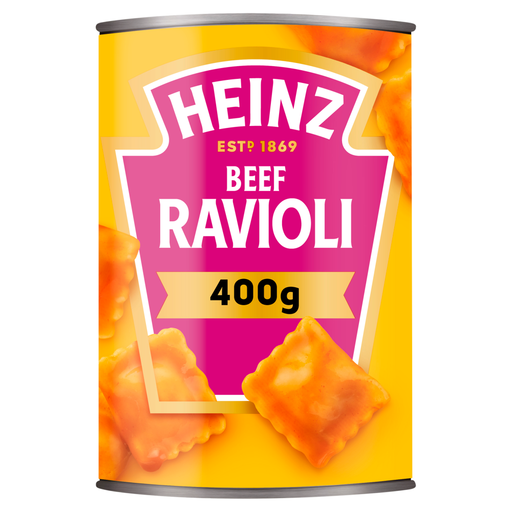 Image unavailable
Heinz Ravioli in Tomato Sauce 400g
This prepared pasta tin is worth considering if you want ravioli in one can and can manage a larger portion. The 400g can is described as containing two servings; check whether you will use both, as unused contents need refrigeration after opening. Its listed preparation methods are hob and microwave, so take suitable heating equipment.
View on Joybuy
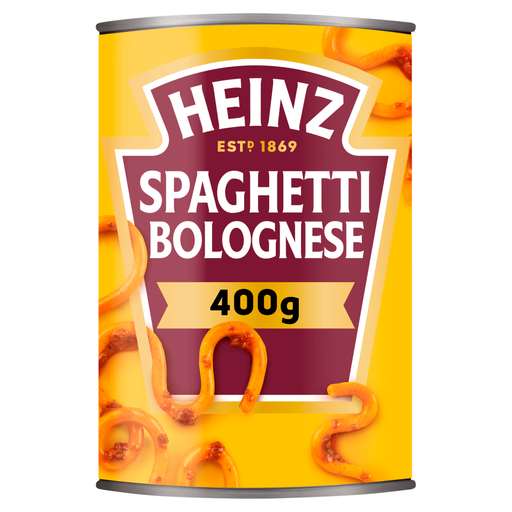 Image unavailable
Heinz Spaghetti Bolognese 400g
This prepared spaghetti tin is another one-can option if its portion suits your meal plan. The 400g product gives nutrition information per half can; check the pack's serving and heating instructions before travelling, and plan to refrigerate any unused contents after opening.
View on Joybuy
Camping pasta questions
Can I take a chilled pasta ready meal camping?
Yes, if you can keep it sufficiently chilled throughout the trip. The Food Standards Agency advises storing food below 5°C and says a cool box is unlikely to keep it chilled for an extended period; check the meal's own storage instructions.
Does a best-before date mean the same thing as a use-by date?
No. GOV.UK explains that use-by dates concern safety, while best-before dates concern quality. Follow the product's storage directions and check the condition of its packaging as well as its date label.
Can I heat Dolmio Pasta Pronto Tomato & Basil on a camping stove?
Dolmio gives a pan method for its 200g Tomato & Basil pouch: boil 30ml of water, add the pasta, cover and simmer for 3 minutes, stirring occasionally. Check the exact pouch before setting off, as other products may have different instructions.
Can I assume a pasta tin or pouch meets my allergen requirements?
No. Check the allergen declaration on the exact tin or pouch you intend to pack rather than assuming products in the same format have the same ingredients.


