
24/7 Customer Support

Free returns

Same-day & Next-day Delivery

Quality Guaranteed

Unlock Your Welcome Offers: FREE Delivery | Up to 80% OFF | Free 30-day JoyPlus trial
Download the APP
A camping sleeping mat has two jobs: reduce heat loss to the ground and make uneven outdoor surfaces more comfortable. For UK camping, it may also need to cope with damp grass, condensation, muddy pitches and limited rucksack space.
The main buying mistakes are rarely about colour or appearance. They usually come from overlooking three practical details:
This guide explains the specifications that matter, then matches three camping sleeping mat options to different UK outdoor lifestyles.
The ground can draw heat away from your body, particularly on cool, damp pitches. An R-value indicates resistance to heat transfer: a higher figure generally means greater resistance to ground cooling, although warmth also depends on your sleeping bag, clothing, tent and weather conditions.
The Mobi Garden egg crate foam sleeping pad has an R-value of R2.6. Its moulded cavities are designed to trap a layer of still air between the sleeper and the ground. In cool conditions, the manufacturer advises pairing it with an inflatable mattress for additional insulation.
A lightweight foil product works differently. Its aluminium film is intended to reflect some ground cold away and body heat back, but the supplied product information states that it is a simple moisture barrier and is not suitable on its own for extended overnight use in cold conditions.
A foam camping mat is usually valued for straightforward setup and resistance to punctures. XPE or IXPE cross-linked foam can provide a practical balance between low weight and structure.
Look at:
Do not assume an egg crate sleeping pad will feel soft in every situation. It still needs reasonably clear ground underneath. Remove stones, sticks and sharp debris before laying it down.
For backpacking, hiking and festivals, carrying comfort is almost as important as sleeping comfort. Compare the packed dimensions and weight rather than relying on phrases such as “portable camping mat”.
The three options below range from approximately 300 g to 750 g. A lightweight camping mattress may be easier to attach to a rucksack, while a thicker folding camping mattress can offer more cushioning at the cost of additional bulk.
For wet UK conditions, distinguish between water-repellent, waterproof and moisture-barrier descriptions. A water-repellent polyester surface can help resist grass dew, but it is not necessarily a sealed waterproof layer. A foil waterproof insulation mat can be useful beneath a tent or as a waterproof camping groundsheet, but thin material may be vulnerable to sharp gravel.
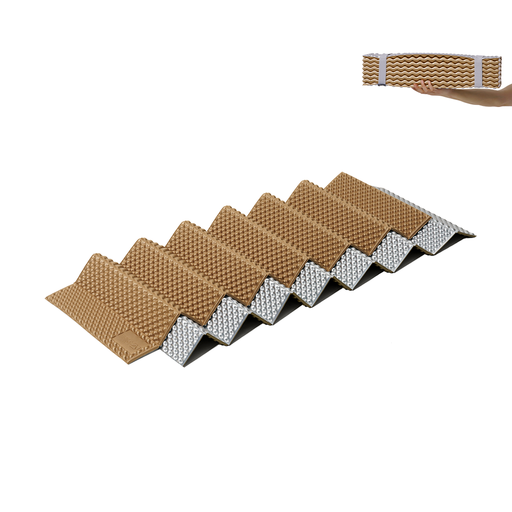
Why This Fits Their Persona: This compact sand-coloured option suits occasional campers, festival-goers and trekkers who want a simple foam pad without an inflatable setup.
Its 1.7 cm XPE foam structure gives more defined cushioning than a very thin foil sheet, while the water-repellent surface helps reduce contact with damp ground.
Approx. 500 g; open size 183 × 55 × 1.7 cm; folds or rolls for transport and can link with other pads.
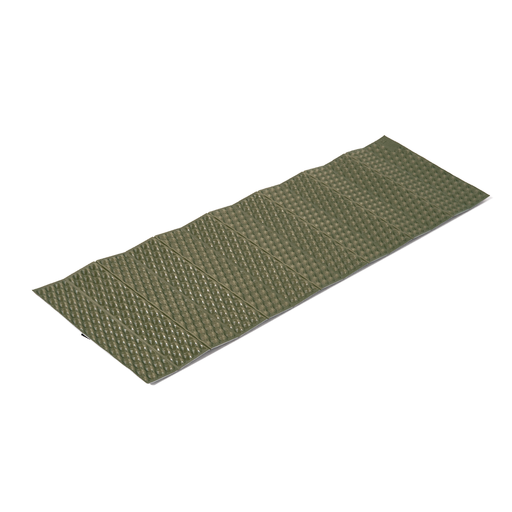
Why This Fits Their Persona: Its thicker construction suits regular tent campers and anyone placing comfort higher than the smallest possible packed size.
The 2.6 cm open thickness and one-piece egg crate cavities address the problem of choosing a thin moisture barrier when cushioning and ground insulation are required.
R-value R2.6; open size 183 × 63 × 2.6 cm; approx. 750 g; wear-resistant polyester surface with double-sided use.
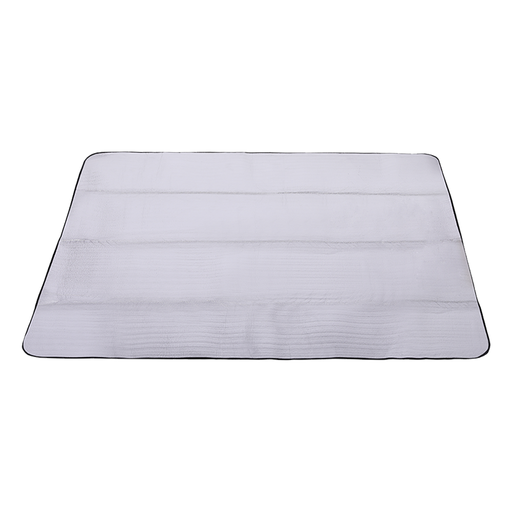
Why This Fits Their Persona: This is suited to hikers, families and outdoor users needing a large picnic and beach mat, tent base or additional moisture layer.
Its stated purpose is clear: use it as a moisture barrier or supplementary layer, rather than treating a 0.25 cm sheet as a complete cold-weather sleeping system.
180 × 200 cm coverage; approx. 300 g; wipe-clean surface; can be trimmed and rolled for storage.
Even a wear-resistant mat can be damaged by poor campsite preparation. Before use:
For long-term storage, avoid leaving foam compressed for extended periods. Roll it loosely or store it flat where space allows. A dry storage routine is particularly important after camping on wet grass.
We have compiled a complete, real-time list of products that fully satisfy these strict selection criteria and UK safety regulations.
Not every camping sleeping mat is fully waterproof. A water-repellent fabric surface can help resist dew, while an aluminium foil mat is designed as a moisture barrier. Check the product description carefully and use a separate tent groundsheet where appropriate.
A foam camping mat can be used on its own in conditions that match its insulation and cushioning limits. In colder weather, combining it with an inflatable mattress or another insulated ground mat can add comfort and reduce heat loss. A thin foil mat should generally be treated as a supplementary layer rather than a complete overnight bed.
Brush off sand and dirt, wipe stains gently, then allow the mat to dry completely. Do not machine wash, use solvents or dry it in strong direct sunlight. Store it loosely rolled or flat, away from heat and sharp objects, to help preserve the foam and surface coating.