
24/7 全天候客户支持

免费退货

当日/次日达

品质保障

开启新人专享福利: 全场免邮 | 低至 2 折 | 免费试用 30 天 JoyPlus 会员
下载 Joybuy
A sleeping pad can make the difference between waking up refreshed and spending the night feeling every stone beneath your tent. However, product listings often focus on inflated thickness, compact packing sizes or impressive-sounding comfort features without explaining how those details work in real UK conditions.
Whether you are preparing for a weekend at a campsite, a hiking trip in the Highlands, a festival or a car-based family holiday, compare the specifications carefully. The right camping sleeping pad should match your sleeping position, transport method, expected temperatures and available tent space.
A thick inflatable camping mat may feel comfortable, but thickness alone does not indicate how well it limits heat loss to cold ground. In damp or chilly conditions, you need to consider the pad’s construction and, where supplied, its R-value.
Foam pads with raised cells can trap air between your body and the ground. An insulated ground pad may also be used beneath an inflatable mat for added separation from cold, moisture and uneven surfaces. If a product does not state an R-value, avoid assuming that it is suitable for very cold weather.
Some listings use “self-inflating sleeping mat” broadly, although the product still requires foot pressure or manual assistance. A built-in foot pump is useful, but it is not the same as a pad that inflates independently.
Check how long inflation takes, whether the pump is built in and how the valves operate. Fast deflation is equally important when you are packing away in rain or trying to leave a busy festival site.
A pad that looks compact in an image may still occupy valuable rucksack space. Likewise, a double camping mattress can be comfortable for couples but too wide for a small footprint tent or impractical for backpacking.
Compare open dimensions, packed dimensions and weight together. Side sleepers may prefer additional thickness and width, while solo hikers often benefit more from a low-weight design.
A single camping sleeping pad around 180–200 cm long can accommodate most adults, but width varies considerably. A narrow design may suit a lightweight shelter, while a wider pad offers more room for turning.
The VXOYO single pad measures 192 x 58 cm and is listed at 15 cm thick when inflated, with an integrated pillow. Its 690 g weight and 26 x 10 cm packed size are useful reference points for backpackers comparing packability with comfort.
For couples, the VXOYO double pad measures 200 x 140 cm and 8 cm thick when inflated. Its 1.7 kg listed weight is more suitable for car camping, family tents or guest use than long-distance carrying.
Look for a water-resistant outer layer, sealed construction and clear cleaning instructions. TPU-coated polyester or nylon can be wiped clean after contact with damp grass, but no inflatable pad should be placed directly on sharp stones, thorns or broken ground.
Dual-layer valves can make inflation and deflation easier, but they must be closed securely. Check for air loss before relying on a new pad overnight and store it completely dry. Avoid strong detergents, prolonged direct sunlight and unnecessary compression.
An egg crate foam sleeping pad is usually quicker to deploy than an inflatable design and cannot puncture in the same way. The trade-off is a larger packed shape and less cushioning on uneven ground.
The Mobi Garden foam options use cross-linked foam with moulded cavities. One model lists an R-value of 2.6, a 2.6 cm thickness and an approximate weight of 750 g. Its lighter NT version is approximately 500 g, with a 1.7 cm thickness and a smaller packed format. In colder conditions, pairing a foam pad with an inflatable mattress can provide extra cushioning and separation from the ground.
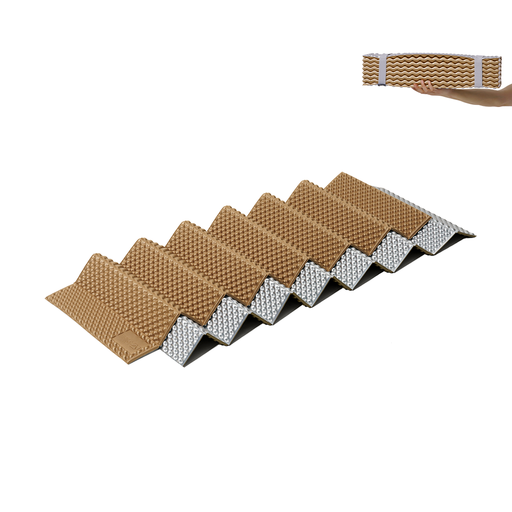
Why This Fits Their Persona: A straightforward portable sleeping mat for occasional campers, festival-goers and trekkers who want simple setup without carrying an inflation pump.
Its stated 500 g weight and listed dimensions make the carrying requirement clear, while the moulded foam construction avoids puncture-related air loss.
Lightweight IXPE foam base; raised egg-crate cavities help create an insulating air layer.
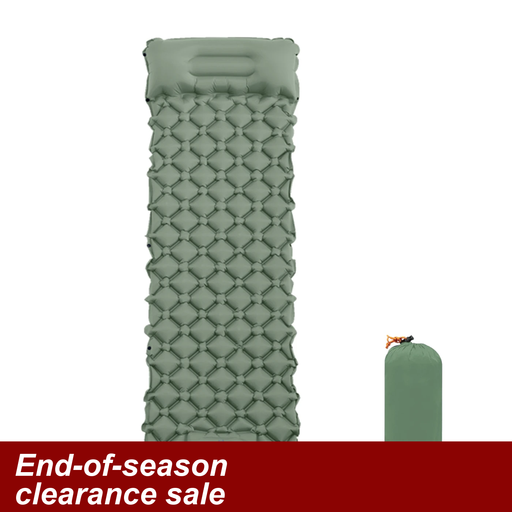
Why This Fits Their Persona: Suitable for hikers and campers prioritising a compact load, integrated pillow and substantial inflated height for uneven pitches.
The listing specifies its 690 g weight, packed size, inflation method and dual-layer valves, so convenience claims can be compared with practical details.
Built-in foot pump; side buttons allow two pads to be connected as a double camping mattress.
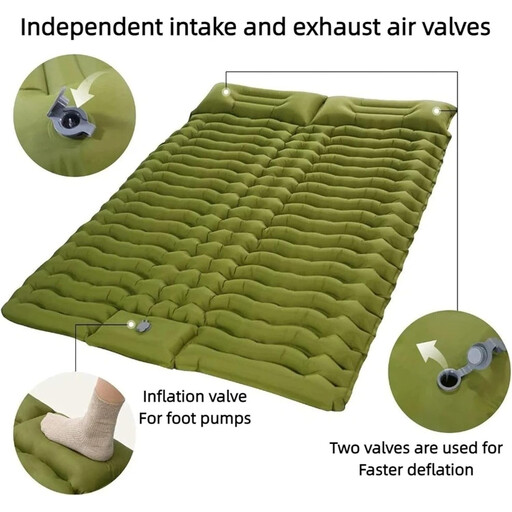
Why This Fits Their Persona: Designed for couples, families and car campers who value a broad sleeping surface over minimum pack weight.
Its 200 x 140 cm inflated dimensions and 1.7 kg listed weight make its space and transport requirements easier to assess before purchase.
Built-in foot pump; waterproof TPU-coated polyester construction listed by the manufacturer.
We have compiled a complete, real-time list of products that fully satisfy these strict selection criteria and UK safety regulations.
For home use, a mattress topper can refresh the feel of an existing bed but should not replace a proper mattress or bed base. The NightComfort Super King topper uses box-stitched hollowfibre filling and an 800 GSM fill, while the Emma topper has reversible foam sides and a removable cover. Compare dimensions with your mattress before ordering.
After a camping trip, a storage bench can keep sleeping bags, blankets and outdoor accessories together. The JOYFURNOS padded ottoman measures 110 x 38 x 38 cm and has a listed 120-litre capacity in the product title. A smaller white entryway bench includes concealed storage and open shelving for shoes. These are household furniture items, not camping equipment, so check weight limits and use instructions before sitting on them.
Use a level tent floor, remove loose debris and place the pad on a dry groundsheet. Some sleeping bags and pads have textured surfaces that help, but friction varies by material. Avoid placing the pad on sharp objects or excessive moisture.
They resist different types of damage. Foam pads cannot lose air from a puncture, while inflatable pads can offer greater thickness and cushioning but require more careful ground preparation. Store either type dry and follow the manufacturer’s cleaning instructions.
Not necessarily. Thickness can improve separation from the ground and comfort, but warmth depends on the materials, internal construction and stated insulation rating. For colder UK conditions, check the R-value where available and consider combining an inflatable mat with an insulated foam ground pad.