
24/7 全天候客户支持

免费退货

当日/次日达

品质保障

开启新人专享福利: 全场免邮 | 低至 2 折 | 免费试用 30 天 JoyPlus 会员
下载 Joybuy
A hot meal or a steaming cup of tea can transform a good day outdoors into a great one. But choosing the right camping stove can feel like navigating a minefield of marketing claims and technical jargon. Many outdoor enthusiasts in the UK end up with gear that isn't suited for our damp and breezy conditions, leading to frustration and wasted money.
As the Joybuy Product Recommendation Officer, my role is to help you sidestep these common issues. Before you make a decision, let's look at the three most common pitfalls that catch buyers out and how you can avoid them.
To make a smart purchase, focus on a few core parameters that determine a stove's real-world performance.
The fuel your stove uses dictates its convenience, performance and running costs.
Your choice here depends on whether you prioritise flexibility or all-out efficiency.
The ideal balance between weight and power depends entirely on your activity. For multi-day treks where every gram is accounted for, a titanium stove weighing under 50g is a sensible choice. For family car camping or festival use, a slightly heavier but more stable and powerful stove that can support larger pots is often the more practical option.
Instead of a single "best" model, the right stove is one that matches your specific needs. Here are our recommendations for three distinct types of outdoor adventurers.
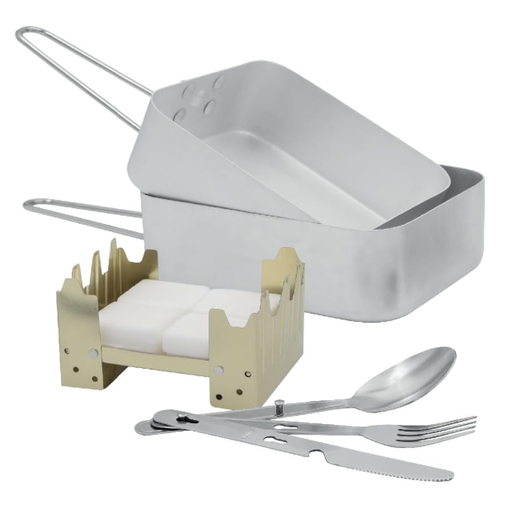
Why This Fits Their Persona: An excellent starting point for festival-goers or those new to camping. It provides a complete, no-fuss cooking and dining solution without requiring a large initial investment or separate purchases.
This kit sidesteps the "flimsy all-in-one" trap by using durable aluminium for the mess tins and stainless steel for the cutlery, offering better longevity than many entry-level sets.
It's a comprehensive camping cooking set that includes solid fuel blocks, meaning you are ready to cook straight out of the box. The entire kit packs down into a compact size for easy transport.
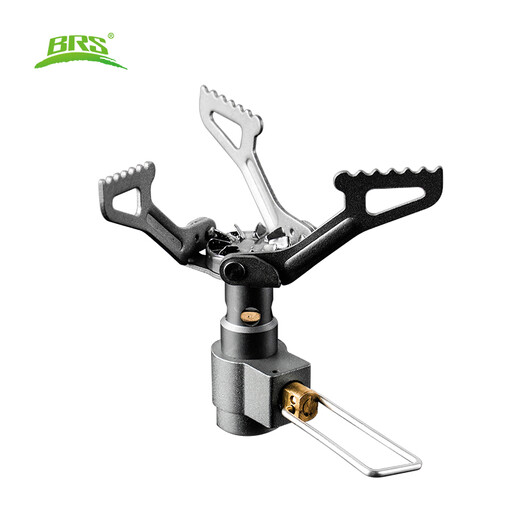
Why This Fits Their Persona: For the minimalist hiker, thru-hiker or wild camper where pack weight is the single most critical factor. This stove is for those who count every gram before heading into the hills.
It directly solves the problem of bulky, heavy gear. At an astonishing 26 grams, it provides essential cooking power without the weight penalty, freeing up valuable pack space and energy.
Extreme portability and a durable titanium construction. This ultralight backpacking stove is one of the lightest available, yet still delivers a powerful and controllable flame for quick boils.
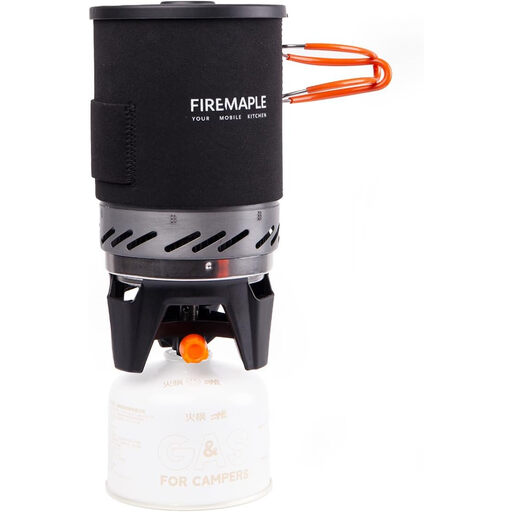
Why This Fits Their Persona: Ideal for serious solo trekkers who face unpredictable British weather. This system is built for efficiency and reliability when a hot meal is a necessity, not a luxury.
It masterfully solves the "poor wind performance" problem. The integrated pot and burner with a heat exchanger create a highly effective windproof gas stove that boils water rapidly, even in breezy conditions.
Outstanding fuel efficiency. The heat exchange technology significantly reduces boil times, which conserves gas—a critical advantage on multi-day trips where fuel is limited.
We have compiled a complete, real-time list of products that fully satisfy these strict selection criteria and UK safety regulations.
This depends heavily on the stove's power output, wind conditions and ambient temperature. As a general guideline, a standard 230g canister can provide approximately 60 to 70 minutes of burn time at maximum power. For the practical purpose of boiling water, this might translate to 15-20 boils of a one-litre pot. An efficient, wind-resistant stove will always make your fuel last longer.
While it might be possible on some very stable, wide-based stoves, it is generally not advisable. Household pots and pans are heavy, bulky and their handles are often made of plastic that is not designed for direct exposure to an open flame. Dedicated camping cookware is made from lightweight materials like aluminium or titanium that heat efficiently and pack away neatly.
No, absolutely not. You must never use any fuel-burning appliance—including a camping stove—inside a tent, campervan or any other enclosed space. These stoves produce carbon monoxide (CO), a colourless and odourless gas that is extremely dangerous and can be fatal. Always cook in a well-ventilated outdoor area, away from the entrance of your tent.