
24/7 Customer Support

Free returns

Same-day & Next-day Delivery

Quality Guaranteed

Unlock Your Welcome Offers: FREE Delivery | Up to 80% OFF | Free 30-day JoyPlus trial
Download the APP
A good camping tent is your home away from home, whether you're at a music festival, on a family holiday or trekking through the Highlands. Yet, choosing the right one can feel overwhelming. The market is flooded with claims of "instant setup" and "storm-proof" designs, but many fall short when faced with a classic British downpour. Before you invest, it's crucial to understand the common pitfalls that lead to a disappointing purchase.
As a Joybuy Product Recommendation Officer, my role is to help you see past the marketing jargon. Let's look at the frequent issues buyers face and how to avoid them.
pop up tent is appealing, but many automatic mechanisms are not built to last. Flimsy joints and complex folding instructions can mean your "instant" shelter becomes a one-trip wonder that's impossible to get back in its bag.To ensure your outdoor shelter is fit for purpose, focus on these core parameters. They are the true indicators of a tent's performance and value.
The single most important specification for a waterproof tent in the UK is its Hydrostatic Head (HH) rating, measured in millimetres (mm). This figure indicates how much water pressure the fabric can withstand before it starts to leak.
Also, check for taped seams. This is a waterproof strip that covers the stitching on the tent's flysheet, preventing water from seeping through the tiny holes made during manufacturing.
Don't take the "person" number at face value. This "berth" count is a maximum, not a comfortable recommendation. A better approach is to size up.
2 person tent is often tight. Consider a 3-person or even a 4 person tent to have enough room for two people and their gear.family tent should not only have enough sleeping space but also a porch or vestibule area. This provides a crucial zone for storing muddy boots, cooking out of the rain and general living.lightweight hiking tent is the exception, where every gram counts. Here, a 2 person tent is designed for two sleeping mats and little else, prioritising low pack weight over spaciousness.The materials determine a tent's weight, durability and cost.
family tent models. They are heavier and can splinter over time but are perfectly adequate for car camping. Aluminium alloy poles are lighter, stronger and more durable, making them the standard for a lightweight hiking tent where performance is key.Based on these practical criteria, here are some options tailored to different types of campers.
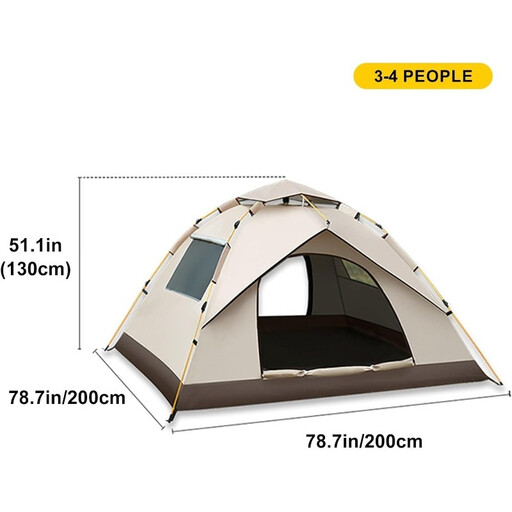
Why This Fits Their Persona: This automatic tent prioritises speed and simplicity, making it ideal for a festival or a spontaneous weekend away. Its 2-3 person capacity is realistic for a couple wanting extra space for their gear.
It addresses the "waterproof" myth with a clearly stated 3000mm HH rating, offering reliable protection for typical UK conditions. The automatic hydraulic system is more robust than many basic pop-up designs.
The dual-layer design with a detachable outer tent offers versatility; use it as a full tent or as a simple sunshade. Two doors provide excellent ventilation.
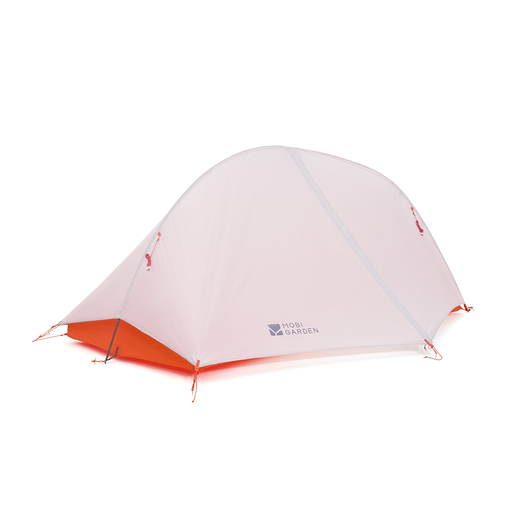
Why This Fits Their Persona: Designed for long-distance hiking, its primary feature is an extremely low weight (approx. 1.18 kg). This is a technical tent for those who prioritise a light pack above all else.
It directly addresses the weight vs. durability trade-off by using premium materials like 20D ripstop nylon and ultralight aluminium poles. The capacity is clearly defined for two backpackers, managing expectations of space.
Its tiny packed size (48 × 11 cm) is a major benefit for backpackers. The double-door design is a welcome feature for easy access in a compact tent.
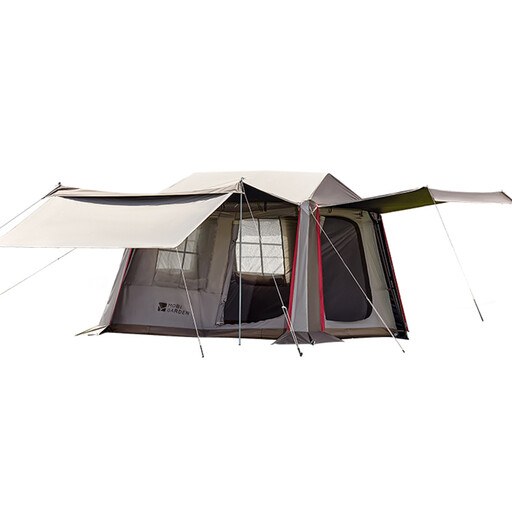
Why This Fits Their Persona: This is a true family tent, focusing on livable space and comfort. The large interior, panoramic windows and integrated canopies create a comfortable base for a multi-day camping trip.
It solves the "cramped capacity" problem by offering a generous 5.9 m? internal area, plus extended canopies. The automatic aluminium frame simplifies the setup of what would otherwise be a complex family tent.
The blackout fabric is a standout feature for families, keeping the tent dark for lie-ins and cooler during the day. The PU2000mm rating is reliable for typical holiday weather.
We have compiled a complete, real-time list of products that fully satisfy these strict selection criteria and UK safety regulations.
This refers to the Hydrostatic Head (HH), a measure of how waterproof a fabric is. It's determined by the height of a column of water that can be placed on the fabric's surface before any moisture seeps through. A 2000mm rating means the fabric can withstand a 2-metre-high column of water. For the variable and often wet UK climate, a rating of 2000mm or higher provides a good level of confidence for 3-season camping.
The lifespan of a tent depends on its quality, how often it's used and how well it's cared for. A budget festival tent might only be intended for a few uses. A mid-range family tent, if properly cleaned and stored dry, can last for five or more years of annual holidays. High-performance lightweight tents are durable but their ultralight fabrics require careful handling. The most important factor for longevity is always ensuring the tent is completely dry before storing it to prevent mould and fabric degradation.
An automatic tent or pop up tent is an excellent choice for casual campers, festival-goers and anyone who values a quick and effortless setup. They remove one of the main hassles of camping. However, their packed size can be bulky and awkward (often a large disc shape) and the mechanisms on cheaper models may not be as robust as traditional poles. For serious trekking or exposure to high winds, a manually pitched pole tent generally offers greater stability.