
24/7 Customer Support

Free returns

Same-day & Next-day Delivery

Quality Guaranteed

Unlock Your Welcome Offers: FREE Delivery | Up to 80% OFF | Free 30-day JoyPlus trial
Download the APP
Choosing among camping tents can feel straightforward until product descriptions begin using phrases such as “instant”, “waterproof” and “family-sized” without enough detail to explain what they mean in practice. A tent that looks suitable online may prove awkward to carry, poorly ventilated or too cramped once pitched.
For UK campers, the right choice depends on more than appearance. Rain, damp ground, changing temperatures, wind and limited storage space all affect comfort. This guide breaks down the specifications worth checking before you buy, then matches several options to different camping styles.
A PU rating, such as PU2000mm, indicates the water-pressure resistance of the coated fabric under laboratory-style measurement. It does not guarantee that a tent will remain dry if it is badly pitched, exposed to pooling water or used with damaged seams.
Check whether the floor has taped seams, whether the flysheet covers the sleeping area properly and whether the groundsheet is made from a durable, coated material. Always pitch on level ground and avoid hollows where rainwater can collect.
A pop-up camping tent may open quickly, but it still needs pegging, guy lines and correct flysheet positioning. These steps help improve stability and keep rain away from vulnerable areas. A fast frame is useful, particularly for festivals or family trips, but it does not remove the need for careful pitching.
Also check the packed dimensions. A tent can be quick to open yet bulky in a small car boot or awkward to carry from a campsite entrance.
A tent labelled for four or five people may offer limited room for luggage and wet clothing. Look at the open dimensions, peak height, door arrangement and whether a canopy or porch is included. For families, a little additional living space can be more useful than simply increasing the stated sleeping capacity.
For general UK spring, summer and early autumn trips, a 3-season tent is usually the relevant category. It is designed for moderate conditions rather than winter blizzards or extreme mountain weather.
A waterproof camping tent should provide clear information about:
A higher rating can be useful, but construction and pitching technique matter too. For instance, the Mobi Garden YADEEN UL2 has a PU2000mm flysheet, a PU-coated floor with taped seams and an inner mesh structure designed for lightweight backpacking.
Weight is a major consideration when comparing a 2-person hiking tent, an ultralight backpacking tent and a larger family model. A compact shelter may be easier to carry on foot, while a roomier tent is often more practical when travelling by car.
As a reference:
These figures illustrate why a spacious family shelter is not normally interchangeable with an ultralight waterproof tent for long-distance walking.
Condensation is common when warm, damp air meets a cooler tent surface. Large mesh panels, double doors and adjustable vents can improve airflow while helping keep insects outside.
A blackout camping tent can also be useful during bright summer mornings or at festivals. However, blackout fabric may retain heat if ventilation is restricted, so look for mesh windows and doors that can be opened safely.
Some models list UPF50+ and UV blocking as product features. Treat this as protection offered by the fabric rather than a reason to remain inside the tent during strong sun. Use shade, ventilation and suitable sun protection when spending time outdoors.
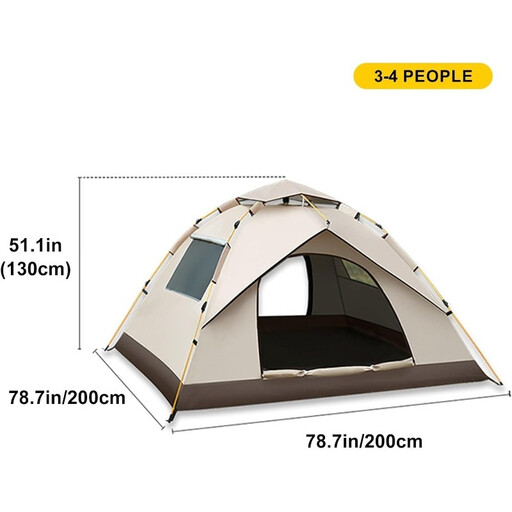
Why This Fits Their Persona: A practical option for beginners, occasional campers and festival-goers who want a quick-opening shelter without carrying a heavier family tent.
The detachable outer and inner layers make its construction easier to understand than a single-layer shelter, while two doors and two windows support airflow.
Automatic opening structure, 3,000mm stated water-resistance index and a packed weight of approximately 3kg.
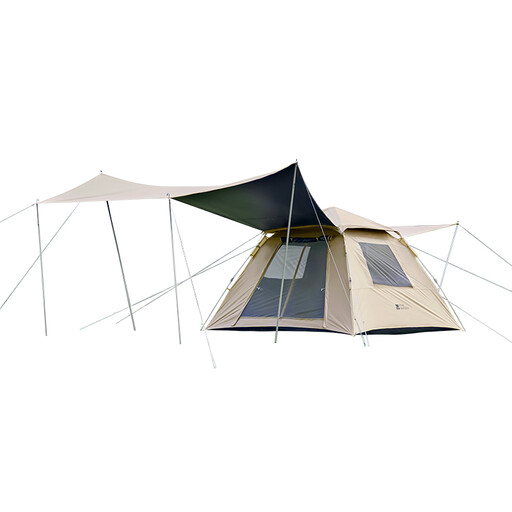
Why This Fits Their Persona: Suited to couples or families who prioritise interior space, quick pitching and daytime shade for UK campsite stays and outdoor picnics.
Its five-sided mesh ventilation, blackout flysheet and separate tarp address the common problems of heat, brightness and limited living space.
240 × 240 × 155cm open size, UPF50+ fabric and PU2000mm waterproof flysheet and floor with taped seams.
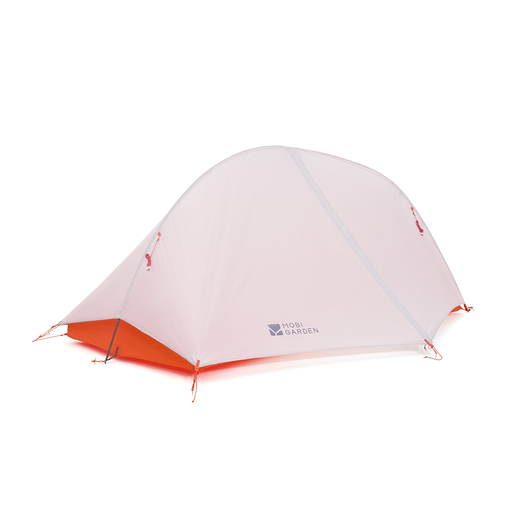
Why This Fits Their Persona: Designed for hikers and backpackers who need to keep pack weight low on long-distance routes, mountain traverses and 3-season trips.
The specifications clearly identify its 3-season limitation, helping prevent buyers from treating an ultralight shelter as a winter or extreme-storm tent.
Approximately 1.18kg, aluminium poles, two doors, breathable mesh and a PU2000mm waterproof flysheet.
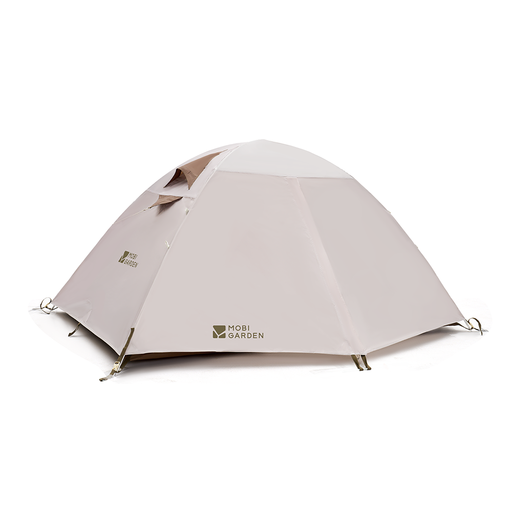
Why This Fits Their Persona: A middle-ground option for two people who want a compact hiking tent with more fabric weight and a highly rated groundsheet than an ultralight model.
Its listed outer PU2000mm rating and PU4000mm inner groundsheet rating make the intended protection levels easier to compare before purchase.
Two-person layout, approximately 2.64kg packed weight and 41 × 16 × 16cm packed dimensions.
We have compiled a complete, real-time list of products that fully satisfy these strict selection criteria and UK safety regulations.
Choose ground that is level and slightly raised rather than sitting in a dip. Remove stones and sharp objects before laying down the tent, then fit the flysheet securely and tension the guy lines. Keep doors closed when possible and avoid touching the inner tent against the flysheet, as contact can encourage water transfer.
Lifespan depends on fabric, sunlight exposure, pitching frequency, storage and cleaning. Dry the tent completely before packing it away, clean mud with water and a soft cloth, and store it in a cool, dry place. Avoid machine washing, open flames and repeated folding along exactly the same creases.
Blackout fabric can reduce incoming light and may limit heat build-up in direct sunlight, but ventilation remains important. Open mesh panels and doors when conditions allow, use the canopy for shade and never cook or use an exposed flame inside a tent.