
24/7 Customer Support

Free returns

Same-day & Next-day Delivery

Quality Guaranteed

Unlock Your Welcome Offers: FREE Delivery | Up to 80% OFF | Free 30-day JoyPlus trial
Download the APP
Choosing among camping tents can look straightforward until you compare packed weight, waterproof ratings, sleeping capacity and set-up systems. A tent that works well for a summer festival may be unsuitable for a windy mountain route, while a roomy family camping tent can become inconvenient if it is too heavy to transport.
The following guide focuses on the specifications that matter in typical UK conditions, helping hikers, couples, families and casual campers avoid costly mismatches.
A “2-person” tent generally describes sleeping capacity, not generous living space. Two adults with large rucksacks may find a 2-person hiking tent tight, particularly during wet weather when equipment needs to stay inside.
For more usable room, consider a 2–4 person tent or a model with vestibules, canopies or separate storage areas. Families should also check the internal dimensions rather than relying on the capacity label alone.
A hydrostatic-head figure, such as PU2000mm or PU3000mm, indicates the water pressure the fabric is designed to resist under testing conditions. It does not guarantee that a tent will remain dry if it is pitched incorrectly, exposed to prolonged heavy rain or used with damaged seams.
Look for:
A waterproof camping tent still needs suitable pitching, ventilation and maintenance.
An instant tent or pop-up camping tent can reduce pitching time, but automatic frames may add weight and create a larger packed size. This is usually manageable for car-based trips but less practical for train journeys, festivals involving long walks or backpacking.
Conversely, an ultralight backpacking tent may weigh little but require poles, pegs and guy lines to be assembled carefully. Always compare the packed dimensions and total weight, not just the set-up description.
For regular 3-season camping, check the outer fabric, floor construction and waterproof rating together. The Mobi Garden LUNTA uses 68D 190T tear-resistant polyester, with a PU2000mm outer tent and PU4000mm inner tent and groundsheet specification. Its description also lists a waterproof groundsheet designed to help block morning dew and short showers.
Lighter fabrics can reduce carrying weight. The YADEEN UL2 uses 20D ripstop nylon, silicone-treated with a PU coating, and has taped floor seams. Its listed weight is approximately 1.18kg, but lightweight material should be handled away from thorns, sharp gravel and rough surfaces.
For hiking, the difference between 1.18kg and 2.64kg can become noticeable over a long route. The YADEEN UL2 packs to approximately 48 × 11 × 11cm, while the LUNTA packs to approximately 41 × 16 × 16cm.
An aluminium frame tent may offer a useful balance of low weight and structural support. The YADEEN UL2 uses ultralight aluminium poles, and the LUNTA uses an aluminium alloy frame. Larger automatic tents can also use aluminium, but their extra living space naturally increases the overall load. The Holiday Mountain Lodge 5.9 weighs approximately 11.8kg, making it more suitable for car-based camping than backpacking.
Condensation is common when warm, damp air meets a cooler flysheet. Mesh inner panels, adjustable vents and opposing doors can improve airflow. The YADEEN UL2 has a large mesh inner tent and front and rear doors, while the VXOYO model provides two doors and two windows.
For exposed campsites, do not rely on a “wind-resistant tent” label alone. Pitch with the narrowest side facing the prevailing wind where possible, use every supplied peg and secure guy lines correctly. A 3-season tent is not intended for winter blizzards or extreme storm conditions.
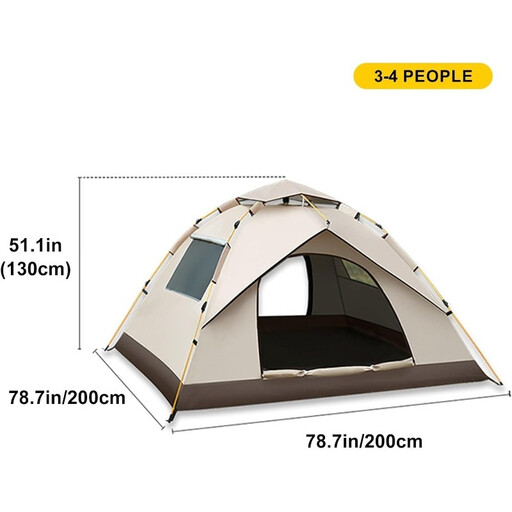
Why This Fits Their Persona: A practical option for beginners, short breaks and campsite trips where simple pitching matters more than minimal pack weight. The listed weight is approximately 3kg.
Its automatic hydraulic system and pre-attached poles address the common problem of complicated first-time set-up.
210T polyester outer fabric, listed water resistance up to 3000mm, two doors and two windows.
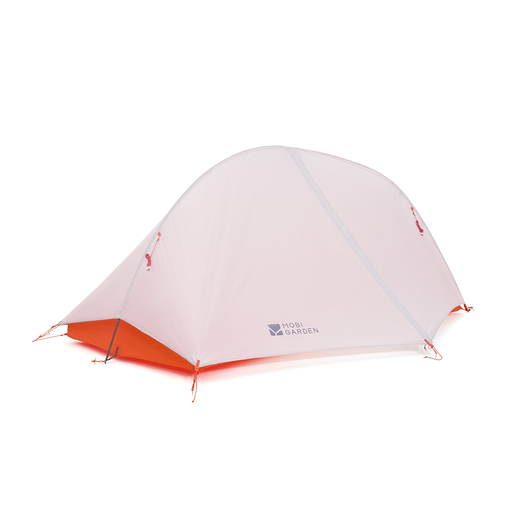
Why This Fits Their Persona: Designed for couples and backpackers prioritising low carry weight on long-distance hikes, mountain traverses and 3-season trips.
The 1.18kg listed net weight and compact 20D construction make its backpacking purpose clear, rather than presenting a heavy campsite shelter as a hiking model.
Ultralight aluminium poles, taped floor seams, dual doors and a mesh inner for ventilation.
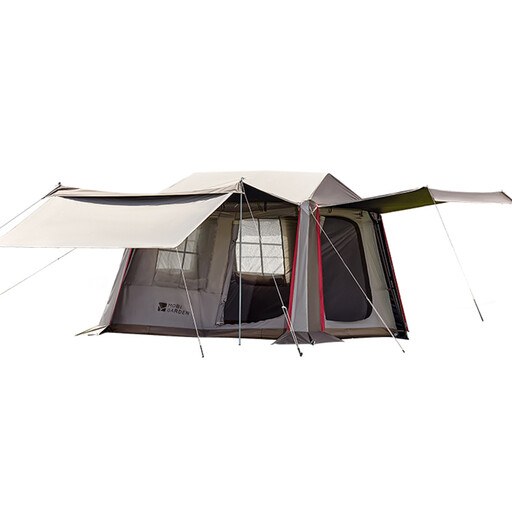
Why This Fits Their Persona: Suited to families and groups using a car to reach parks or campsites, particularly where standing height and daytime living space are priorities.
Its stated 11.8kg weight and 107 × 24 × 24cm packed size make it less likely to be mistaken for a lightweight outdoor shelter.
2–4 person capacity, 190cm height, blackout coating, four mesh windows and extendable canopies.
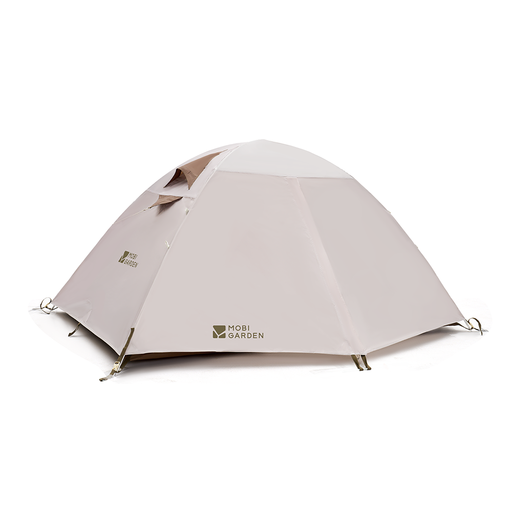
Why This Fits Their Persona: A middle-ground 2-person tent for hikers who want a compact shelter without moving to the lightest specialist construction.
Its stated 2.64kg weight, 210 × 140 × 110cm size and 41 × 16 × 16cm packed dimensions provide clearer expectations for carrying and sleeping space.
68D tear-resistant polyester, aluminium alloy frame and listed 3-season use.
We have compiled a complete, real-time list of products that fully satisfy these strict selection criteria and UK safety regulations.
To improve performance and extend the usable life of camping tents:
A 2-person tent is suitable when low weight is important and both users are comfortable with limited storage. For longer stays, bulky equipment or wet UK weather, a 2–4 person tent may provide more practical room.
A pop-up camping tent can be convenient, but set-up speed does not determine wind performance. Check the frame, guy lines, peg points and flysheet design. Pitch it correctly and avoid exposed locations, particularly during strong winds.
Lifespan depends on fabric, UV exposure, pitching surfaces, weather and storage. Drying the tent before packing, avoiding sharp ground and keeping it away from prolonged direct sunlight can help preserve waterproof coatings and fabric. Inspect seams, zips, poles and the groundsheet before every trip.