Choose no-drain tuna when disposing of liquid and washing up will be awkward; its value at a campsite is convenience, not an automatic nutritional advantage. Standard chunks suit meals where you can manage the liquid, while steak-format tuna is worth considering if larger pieces or a claim about its sourcing matter to you. Check the exact pack’s ingredients, usable quantity, opening method and storage instructions before choosing.
Who is each format for?
Campers with limited washing-up facilities
If there is no convenient sink or place to dispose of liquid, a no-drain pack removes a step before eating. Check the opening method too: a no-drain label does not tell you whether a particular can needs an opener.
Campers cooking simple meals
Chunks can be mixed into pasta, rice or wraps when you have a way to handle the packing liquid. Compare pack sizes with the portions you expect to use, particularly if you cannot chill leftovers.
Shoppers choosing texture or stated sourcing
Steak-format tuna offers a different choice from chunks for meals where the pieces remain visible. If fishing method or traceability matters, check the claim on the individual product rather than assuming it applies to every tin from a brand.
What matters when choosing?
For camping, start with how you will open and use each tin, then consider whether you can store anything left over.
| Concern |
What to check |
Who this matters to |
| Eating without draining |
Look for an explicit no-drain claim and check whether the opening method suits the equipment you are taking. |
With nowhere convenient to tip away liquid, I want to open a portion and eat without extra washing-up. About 33% of consumers put avoiding draining first. |
| Flexible meal ingredients |
Check the packing medium and compare nutrition on the same basis, such as per 100g drained where stated. |
If tuna is going into pasta or wraps, I need chunks that fit the meal rather than a particular presentation. Flexible cooking is the primary need for about 27% of consumers. |
| Texture and stated sourcing |
Confirm that the exact pack identifies steak-format tuna or makes the fishing-method or traceability claim you want; note any bone warning. |
When the tuna will be served in larger pieces, its format and the pack’s sourcing information may decide my choice. About 20% of consumers prioritise those details. |
| Portions and leftovers |
Match each can to a meal and read its instructions for any unused contents before relying on campsite refrigeration. |
Without dependable chilling, I would rather finish a can than keep opened tuna for later. Managing portions is the main concern for about 20% of consumers. |
Camping checks that are easy to miss
-
Keeping an opened tin as though it were unopened
Opening changes the storage decision. Tesco instructs buyers of its spring-water tuna chunks to transfer unused contents to a non-metallic container, cover and refrigerate them, then consume them within two days.
Choose a can you expect to finish at one meal unless you can follow the exact pack’s instructions for leftovers. The Food Standards Agency advises keeping chilled camping food at 5°C or below.
A larger opened portion may have to be discarded if it cannot be chilled as directed.
-
Assuming every premium-style pack solves the same problem
No-drain packaging addresses liquid handling. Steak-format tuna addresses the presentation of the fish, while a stated fishing method is a claim about the particular product. None of those features establishes the others.
Decide which distinction matters for your meal, then compare the exact packs’ ingredients, usable quantities and opening methods.
-
Overlooking allergens or a bone warning
Fish is an allergen identified on UK prepacked-food ingredient labels. M&S also warns that bones may remain in its named tuna steak product.
Read the label of the tin you pack, particularly when serving someone with a fish allergy or when a possible-bones warning matters.
-
Forgetting pregnancy-specific tuna guidance
NHS guidance sets weekly tuna limits for people who are pregnant or trying for a baby because tuna can contain mercury. A camping trip with several tuna meals does not change that guidance.
Check the current NHS guidance when planning meals for someone to whom it applies.
Brands to consider
John West
John West offers a no-drain spring-water chunks format for meals where handling liquid would be inconvenient.
- John West describes the named no-drain product as ready to eat and lists 27g protein per 100g.
- The no-drain description and opening method are product-specific; check the particular pack rather than applying them to all John West tuna.
Princes
Princes spring-water chunks are an option for campers using tuna in prepared meals.
- Princes lists tuna and spring water as the ingredients of its named spring-water chunks, with 23.5g protein per 100g drained.
- Those details do not establish a no-drain format or a particular opening method; check the pack if either matters at camp.
Tesco
Tesco’s spring-water chunks multipack gives shoppers separate tins to plan around several meals.
- Tesco lists its cited four-pack as four 160g tins, each with a 139g drained weight.
- For that product, Tesco says to transfer, cover and refrigerate unused contents and consume them within two days.
M&S
M&S tuna steak in spring water is relevant when the format and stated sourcing are deciding factors.
- M&S describes the named product as pole-and-line caught and traceable.
- Its product information warns that bones may remain and calls for refrigeration after opening; check the current pack for its instructions.
Joybuy tuna selections
These tins cover no-drain portions and chunks for camp meals, including spring-water, sunflower-oil and brine options. Choose by the packing medium and portion format you intend to use; do not assume that a standard chunks tin has no-drain packaging.
 No image available
John West No Drain Tuna Chunks in Springwater, 3 × 100g
The no-drain format suits a meal where disposing of liquid would be awkward. This pack contains three 100g cans in spring water; check the opener on the actual pack if you are not taking a can opener.
View on Joybuy
 No image available
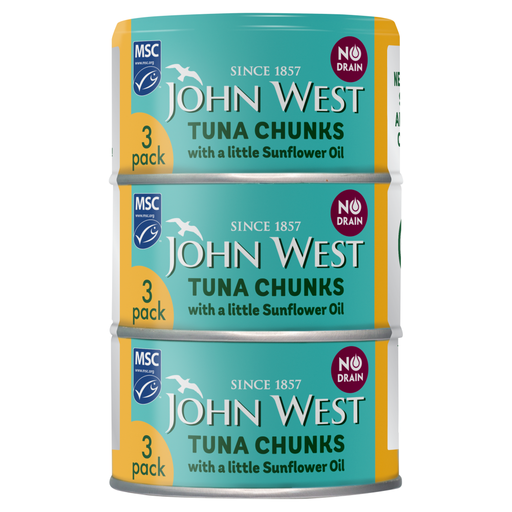
John West No Drain Tuna Chunks in Sunflower Oil, 3 × 100g
The separate no-drain cans suit meals planned across a trip when you want a sunflower-oil rather than a spring-water format. The pack contains three 100g cans; follow its instructions for any contents left after opening.
View on Joybuy
 No image available
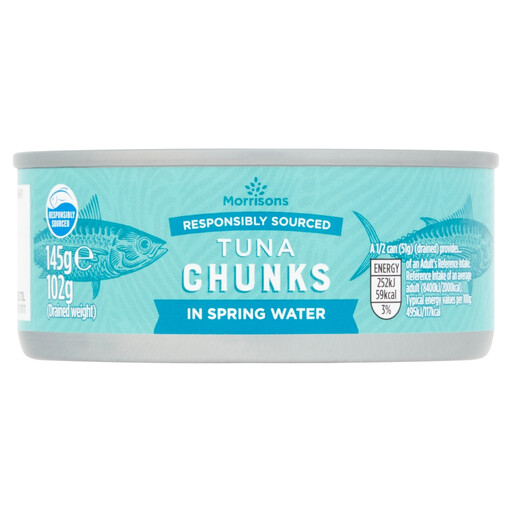
Morrisons Fad Free Tuna Chunks in Spring Water, 145g
This single can suits a camp meal built around spring-water tuna chunks. Check whether its 145g size fits the portion you will use at once, and confirm the opening method before leaving a can opener behind.
View on Joybuy
 No image available
John West Tuna Chunks in Springwater, 4 × 125g
Four separate cans suit a plan to add tuna chunks to several camp meals. This is a spring-water chunks pack, not one identified as no-drain; arrange to handle the liquid and check each can’s opening method.
View on Joybuy
 No image available
Princes Tuna Chunks in Brine, 4 × 145g
The four separate cans offer portions for meals where you can manage draining. This tuna is packed in brine rather than spring water; check the opening method and the pack’s instructions for leftovers.
View on Joybuy
Common questions
Can I save opened tuna for the next camp meal?
Only if you can follow that product’s storage instructions. For its cited spring-water chunks, Tesco says to move unused tuna to a non-metallic container, cover and refrigerate it, and consume it within two days. The Food Standards Agency advises keeping chilled camping food at 5°C or below.
Is no-drain tuna safer to keep at camp?
No-drain describes how much liquid you need to handle, not an exemption from storage instructions. Once a pack is opened, follow its label for any leftovers and consider whether you can keep them chilled as directed.
What should I check for fish allergens?
Read the ingredients on the exact pack before serving it. GOV.UK explains that fish is among the allergens that must be clearly identified in the ingredients list when present in prepacked food; product labels may also carry warnings relevant to that particular tin.


