
24/7 Customer Support

Free returns

Same-day & Next-day Delivery

Quality Guaranteed

Unlock Your Welcome Offers: FREE Delivery | Up to 80% OFF | Free 30-day JoyPlus trial
Download the APP
A suitable mat can make a wet picnic, chilly tent floor or long festival day noticeably more comfortable. However, “camping mats” covers several very different products, from thin moisture barriers to inflatable camping mattresses. Choosing by appearance alone can lead to a bulky sleeping pad for a short hike, a thin ground mat that offers little cushioning, or a picnic blanket that is unsuitable for overnight sleeping.
This guide explains the practical specifications to check, the common buying traps to avoid and which options may suit different outdoor routines in the UK.
A waterproof camping mat may resist grass damp, sand or light moisture, but that does not mean it is puncture-proof. Aluminium-coated sheets can provide a moisture barrier while remaining too thin for sharp gravel. Even thicker foam and inflatable designs should be placed on ground cleared of stones, twigs and other sharp objects.
Look for the product’s surface material, underside construction and care instructions, rather than relying on a headline such as “all-weather”.
A compact mat is convenient for backpacking, but a very thin design may offer limited cushioning and insulation. An insulated sleeping pad generally uses foam, air cells or both to reduce contact with cold ground. Check the stated R-value where available: a higher R-value indicates greater resistance to heat transfer, although warmth also depends on your sleeping bag, clothing and the conditions.
A lightweight foam pad can work well in mild weather or as a base layer. For colder camping, pairing it with an inflatable camping mattress may provide a more suitable combination of cushioning and insulation.
Some camping sleeping mats inflate by mouth, while others include a built-in foot pump or require a separate pump. If you are travelling by train, walking to a campsite or arriving late at a festival, inflation time and equipment can affect convenience.
Before ordering, check whether the pump is included, how the valve works and how the mat is deflated. Also inspect the packed dimensions and weight, not just the inflated size.
A single sleeping pad is typically designed for one person and a narrower tent footprint. A double camping sleeping pad offers more room for couples or family camping but weighs more and occupies more storage space. Measure the inside of your tent, particularly if it has sloping walls or a narrow bedroom compartment.
For sitting and picnics, prioritise the unfolded surface area. A large picnic blanket measuring 300 × 200 cm can accommodate several people, while a compact camping seat cushion is more suitable for hiking breaks or outdoor events.
Foam camping mats are straightforward to use and do not require inflation. Egg-crate structures can create small air pockets while improving cushioning. Inflatable designs usually offer more thickness for their packed size, but they need careful handling around sharp surfaces and should not be over-inflated.
For cool or damp UK ground, consider a water-repellent surface, an insulating foam core or an aluminium-film moisture barrier. A thin foil mat is best treated as a simple ground layer rather than a complete overnight sleep system.
Common materials include XPE foam, polyester, PVC, TPU-coated fabric and aluminium film. Each has practical trade-offs:
For UK trips, check whether the mat can be wiped clean, how it should be dried and whether it can be stored rolled or folded. Damp storage can contribute to unpleasant odours or material deterioration.
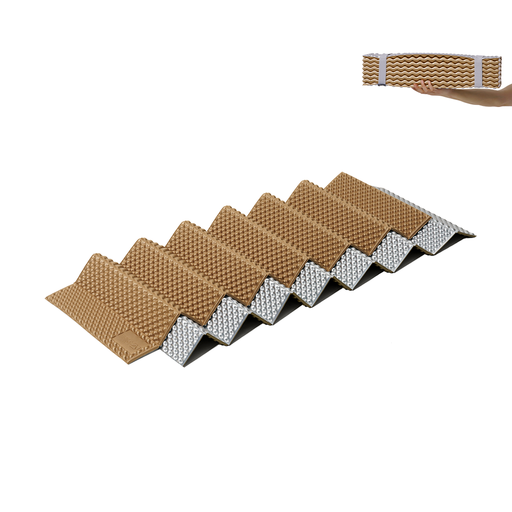
Why This Fits Their Persona: This is a practical option for new campers, trekkers and festival-goers who want a simple sleeping layer without dealing with valves or pumps. It weighs approximately 0.5 kg and packs to 56 × 13 × 14 cm.
Its XPE foam construction avoids dependence on an external pump and reduces the risk of choosing a thin foil sheet as a standalone bed.
Egg-crate cavities create an insulating air layer; the water-repellent surface helps protect against damp grass.
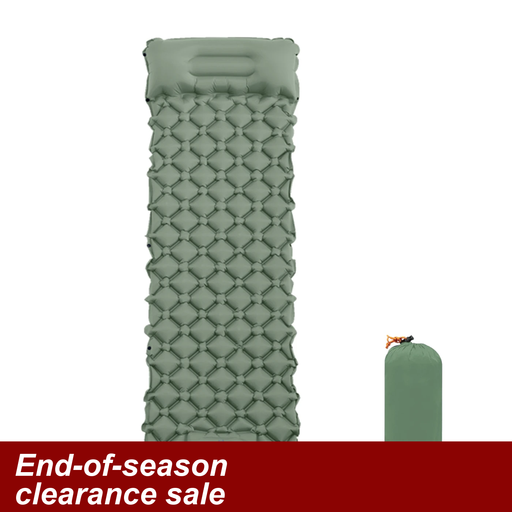
Why This Fits Their Persona: Backpackers and campers who want a thicker inflatable sleeping surface with a small packed size may value its 192 × 58 × 15 cm inflated dimensions and approximately 690 g weight.
The built-in foot pump means a separate pump is not required, while dual-layer valves are specified for inflation and deflation.
The 50D nylon and TPU construction is described as waterproof and wipe-clean; side buttons allow two mats to be connected.
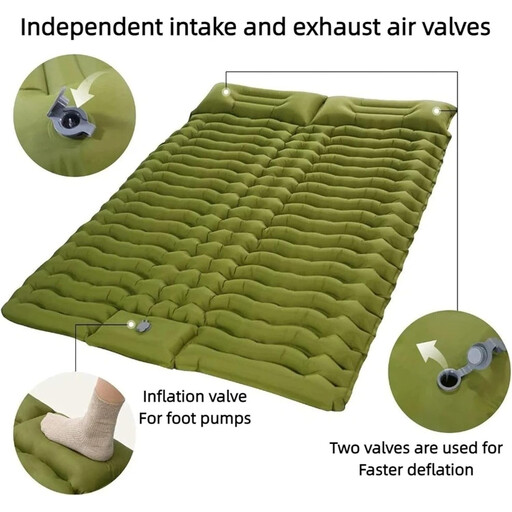
Why This Fits Their Persona: Couples, family campers and car campers may prefer the 200 × 140 cm double format, which provides a shared sleeping surface for tents or guest use.
The built-in foot pump avoids relying on a missing accessory, while the 8 cm thickness provides more separation from uneven ground than a thin sheet.
It includes a built-in pillow and packs to approximately 29 × 16 × 16 cm; the listed weight is approximately 1.6–1.7 kg.
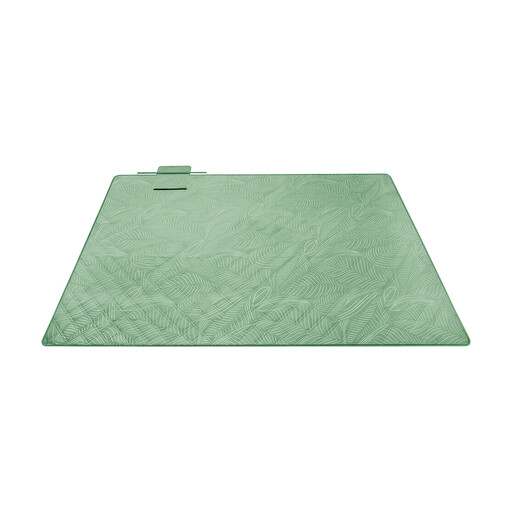
Why This Fits Their Persona: Families and groups visiting parks, beaches or festivals may need a broad outdoor ground mat rather than a sleeping pad. This blanket weighs approximately 1.7 kg and folds to around 42 × 19 × 19 cm.
The water-repellent base is intended to separate users from damp ground, while four supplied pegs help secure it on grass or sand.
Its four-layer construction includes a soft surface and foam padding; the carry handle and strap support transport between car, park and beach.
We have compiled a complete, real-time list of products that fully satisfy these strict selection criteria and UK safety regulations.
Yes, a foam or aluminium ground layer can help reduce contact with damp ground and provide some protection from abrasion. It should not be treated as a guarantee against punctures, so remove sharp debris first and use the correct sleeping system for the expected temperature.
Lifespan depends on material, frequency of use, storage and exposure to sharp objects or heat. Check valves regularly, avoid over-inflation, clean the surface and store the mattress completely dry. If you notice a leak or damaged seam, stop using it until the issue has been assessed.
A picnic blanket can provide a comfortable surface for sitting and may resist damp grass, but it is not normally designed to provide the insulation, thickness or body support required for overnight sleeping. For camping, choose a dedicated sleeping pad or combine a blanket with a suitable insulated mat.