
24/7 Customer Support

Free returns

Same-day & Next-day Delivery

Quality Guaranteed

Unlock Your Welcome Offers: FREE Delivery | Up to 80% OFF | Free 30-day JoyPlus trial
Download the APP
Upgrading your car's lighting from dull, yellowing halogens to crisp, modern LEDs seems like a simple weekend task. Yet, many UK drivers find themselves caught in a frustrating cycle: buying bulbs advertised as a simple "plug-and-play" upgrade, only to be met with a persistent dashboard warning light or flickering. This is especially common when dealing with versatile W5W LED bulbs, also known as T10, 194 or 501 LED bulbs.
As the Joybuy Product Recommendation Officer, my role is to help you navigate the market and find reliable components that work as intended. Before you add any bulbs to your basket, let's look at the common pitfalls that lead to disappointment and wasted money.
To ensure a successful upgrade, you need to look past the marketing hype and focus on a few key technical details. Understanding these will help you select error free LED car bulbs that are bright, reliable and compatible.
Your car's Canbus system is its onboard computer network. It monitors the electrical system and when it detects the very low power draw of a standard LED, it often assumes the bulb has failed, triggering a dashboard warning.
Proper Canbus W5W LED bulbs have a built-in resistor or intelligent IC driver. This component mimics the electrical resistance of a traditional halogen bulb, satisfying the Canbus system and preventing error codes. When shopping, look for bulbs that explicitly mention having a built-in load resistor or Canbus driver, not just the generic "error-free" tag. This is the single most important factor for modern European and UK vehicles.
An LED's lifespan is directly linked to how well it manages heat. A bulb that runs too hot will not last.
The terms T10 LED bulb, W5W, 501 and 194 all refer to the same small, wedge-style base. While the base is standard, the overall length and width of the LED bulb can vary significantly. Before purchasing, it's a good idea to check the housing you intend to place it in. A bulb that is too long or wide simply will not fit, which is a common issue in tight spaces like map lights or number plate housings. Many product descriptions provide exact dimensions in millimetres—a quick comparison can save you a lot of hassle.
Instead of a generic list, we've matched specific bulbs to the needs of different UK drivers. This ensures you get a product that not only works but is also suited to your specific goals.
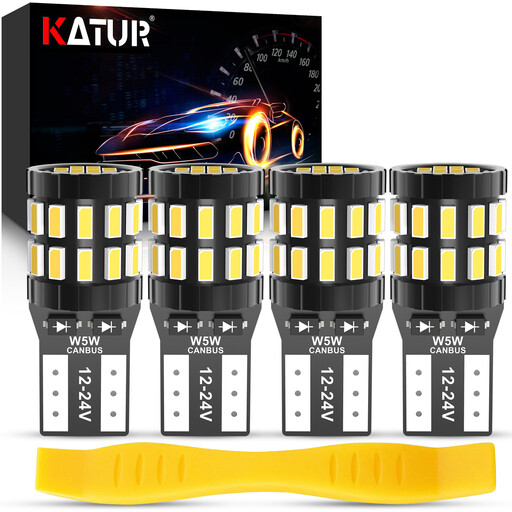
Why This Fits Their Persona: This is for the driver who wants a reliable, clean white light to modernise their vehicle's appearance. Ideal for upgrading multiple points at once, such as interior dome lights, door courtesy lights and number plate bulbs, for a consistent, premium look.
It directly addresses the "Error-Free Myth" by including a Canbus-compatible driver that works with a wide range of UK vehicles. The 6063 aviation aluminium body tackles the heat dissipation flaw, promoting a longer operational life than basic plastic bulbs.
Features 30 high-power 3014 SMD LED chips per bulb for a bright, 360-degree light output with no dark spots. The 6000K-6500K xenon white colour provides a crisp, modern aesthetic.
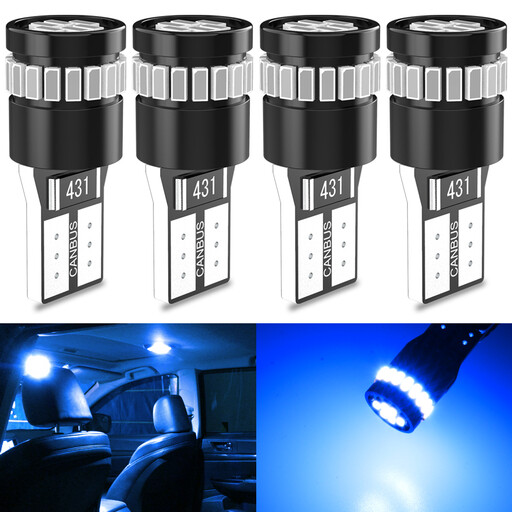
Why This Fits Their Persona: For the car enthusiast who wants to add a personal touch to their vehicle's interior. This bulb is perfect for changing the ambient lighting in footwells, door cards or map lights to a distinct, stylish blue without compromising on quality.
Coloured LEDs are notorious for causing errors. These bulbs feature the same error-free Canbus design as their white counterparts, ensuring you get the custom look without the dashboard warnings. They avoid the inconsistent colour pitfall by providing a uniform, rich blue across all bulbs in the pack.
Offers a simple, plug-and-play way to achieve a custom interior aesthetic. The 1:1 mini design ensures it fits into the original housing without modification, making the upgrade quick and reversible.
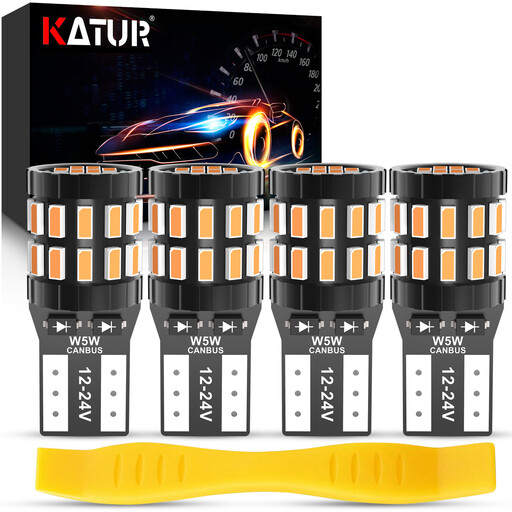
Why This Fits Their Persona: This driver prioritises visibility. These amber/yellow bulbs are an excellent upgrade for front or rear side marker lights, making the vehicle's presence and width more obvious to other road users in low-light conditions, especially on motorways and country lanes.
It provides a significant increase in brightness over a standard incandescent bulb while maintaining the legally required amber colour for its application. The Canbus-ready design helps prevent the common "hyper-flash" (fast blinking) or error codes that can occur when upgrading indicator or side marker bulbs.
The instant on/off nature of LEDs provides a sharper, more responsive signal than the slow fade of a halogen. The bright, crisp amber light is more noticeable in poor weather, contributing to overall road safety.
We have compiled a complete, real-time list of products that fully satisfy these strict selection criteria and UK safety regulations.
While Canbus-ready bulbs are designed to be compatible with the vast majority of modern vehicles, some highly sensitive systems (often found in premium German marques) may still require an additional, external load resistor to fully prevent errors. It is always advisable to check forums for your specific car model to see what other owners have experienced. However, starting with a quality Canbus bulb solves the issue for most drivers.
A quality LED bulb with good thermal management, like those with aluminium bodies, can have an operational life of 30,000 to 60,000 hours. This is many times longer than a typical halogen bulb, which may only last for 1,000-2,000 hours. The key is avoiding cheap, all-plastic bulbs that trap heat and lead to rapid failure.
This depends entirely on the application. For interior lighting (map, dome, footwell), you can use any colour you like. For exterior lights, you must adhere to UK law. This means white for front position (sidelights) and number plate lights, and amber for side indicators and side repeaters. Using blue, green or other non-standard colours on the exterior of your vehicle is illegal and will result in an MOT failure.