
24/7 Customer Support

Free returns

Same-day & Next-day Delivery

Quality Guaranteed

Unlock Your Welcome Offers: FREE Delivery | Up to 80% OFF | Free 30-day JoyPlus trial
Download the APP
Canned eight-treasure congee is a practical cupboard option for busy UK households, students, commuters and anyone who enjoys traditional Chinese grain-based flavours without preparing rice and beans from scratch. A can can be opened for breakfast, a late-night snack, a light meal or a convenient addition to an Asian grocery order.
However, product names can make similar recipes appear more alike than they are. Before buying a 12-can congee pack, check the serving size, allergen declaration, sweetness, grain blend and heating instructions rather than relying only on phrases such as “nourishing”, “eight treasures” or “whole grains”.
As the Joybuy Product Recommendation Officer, I filter the practical details that matter at the point of purchase, helping shoppers compare products without being distracted by exaggerated packaging claims.
Eight-treasure porridge is a broad style rather than one fixed ingredient list. Recipes may contain glutinous rice, red beans, mung beans, longan, lotus seeds, black rice, oats, corn, peanuts or sesame. Some are dessert-like and sweet, while others have a more grain-forward flavour.
For example, a longan and red date congee may taste fruitier, while black rice congee or purple sweet potato porridge usually offers a deeper grain flavour and a darker colour. Always read the ingredients in descending order by weight.
Many canned porridges contain wheat, oats, barley, buckwheat, peanuts, sesame or soya. A product can look like a simple rice pudding but still contain several regulated allergens.
UK shoppers with allergies or food intolerances should check the current packaging and allergen statement before purchase. The product information supplied online is useful for comparison, but labels can change. Do not assume that a “vegetarian” or “traditional” description means the product is suitable for every diet.
A 360g congee can contains more food than a 280g can, but the larger format may not suit someone who eats a small breakfast or wants to avoid storing leftovers. Compare the price per can and price per 100g, not just the box price.
A 12-can congee pack is convenient for regular consumption, sharing or keeping in a student cupboard, but check your preferred flavour first if you have not tried it before.
Compare the first five ingredients and the nutrition panel per 100g. Several products list sugar, syrup or brown sugar near the beginning of the ingredients list. Tai Sun Mixed Congee Okinawa 340g, for instance, lists brown sugar and provides 10g of sugars per 100g according to the supplied product information.
Other products have different figures. Daliyuan Longan & Lotus Seed Assorted Congee lists 5.5g of sugars per 100g, while its longan and lotus seed content is declared as 1% each. This does not make one recipe suitable for everyone; it simply shows why the label deserves closer attention than the product title.
The main formats in this selection are 280g congee, 340g congee, 360g congee and individual 375g cans. A 280g can may be easier to finish in one sitting, whereas a 360g can may feel more substantial as a breakfast or light meal.
Remember that nutrition information is generally shown per 100g. To estimate the contents of a full 360g can, multiply the per-100g values by 3.6. This is especially useful when comparing energy, carbohydrate, sugars, fat and salt.
Unopened cans are generally designed for storage in a cool, dry place, but the exact directions vary. After opening, most products should be consumed promptly or refrigerated according to the label.
Heating methods are not interchangeable. Some products can be poured into a microwave-safe bowl or saucepan, while Daliyuan Longan & Lotus Seed Assorted Congee specifically warns against heating directly in a microwave or on a stove. Never heat a sealed can unless the packaging expressly provides a safe method. Check for swelling, leaks or damage before opening, and do not consume a visibly compromised can.
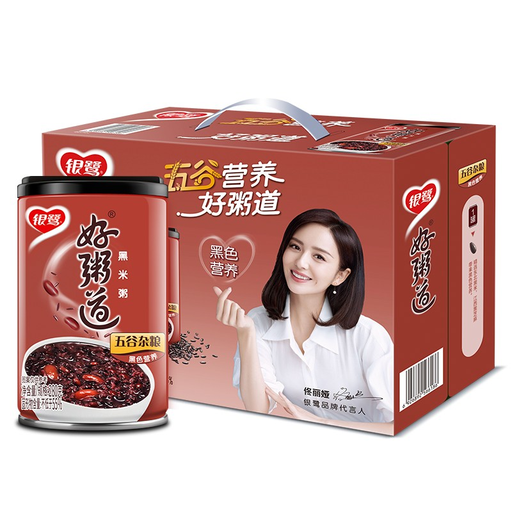
Why This Fits Their Persona: The 280g format is manageable for first-time buyers, students and shoppers who prefer a smaller portion for breakfast or a snack.
The product specifies its black glutinous rice content and identifies gluten-containing cereals and sesame, making the recipe easier to screen before ordering.
280g cans; ready to eat at room temperature or heated; per-100g nutrition is provided for comparison.
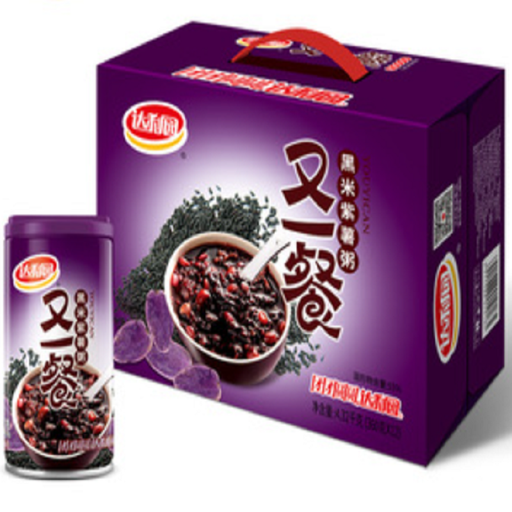
Why This Fits Their Persona: Suitable for shoppers looking for a more varied mixed grain porridge with black rice, purple sweet potato and multiple seeds.
Its listed recipe identifies 12 grains and seeds, while the allergen statement highlights gluten-containing cereals, peanuts and sesame.
360g cans; includes black rice, oats, buckwheat, red beans and purple sweet potato; can be served hot or cold.
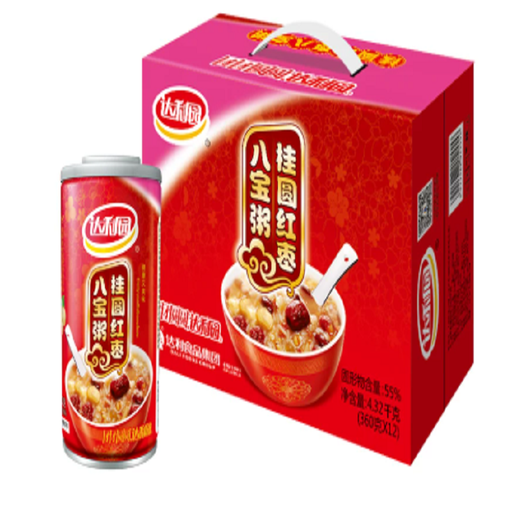
Why This Fits Their Persona: A convenient choice for shoppers who enjoy longan, red date and soft bean flavours in an instant Chinese porridge.
The ingredients and allergen details are shown clearly, including wheat and peanuts, rather than relying only on the traditional recipe name.
360g cans; contains longan, red dates, mung beans, red beans and silver ear mushroom; suitable hot or cold.
We have compiled a complete, real-time list of products that fully satisfy these strict selection criteria and UK safety regulations.
Yes. The listed products are cooked and ready to eat after opening. They can commonly be served at room temperature, chilled or warmed, but always follow the individual can’s instructions.
Storage guidance differs by product. Some instructions say to consume immediately, while others advise refrigeration and consumption within 24 hours. Treat the packaging as the controlling source and avoid keeping opened congee at room temperature.
It can be practical if you eat congee regularly and have suitable dry storage. Compare the total weight, price per can and price per 100g. For occasional use, a single 280g or 360g can may reduce the risk of buying a flavour you do not enjoy.