What should a canteen check?
Start with the dietary requirement, then compare labels on the same per-100ml and intended-portion basis.
No-added-sugar dairy
Choose when: The offer calls for a flavoured milk drink without added sugar.
Check: It can still contain naturally occurring sugars and milk; sweeteners vary by product.
Conventional dairy
Choose when: A sweetened milkshake fits the intended lunch offer.
Check: The Yazoo Strawberry and Müller FRijj Chocolate examples list added sugar or sugar syrup, so compare their total sugars by portion.
Lactose-free dairy
Choose when: The exact drink is labelled lactose free and its stated protein per serving meets the intended choice.
Check: Lactose-free dairy can still contain milk and is not suitable for someone avoiding milk as an allergen.
Dairy-free drink
Choose when: A customer needs to avoid milk rather than lactose alone.
Check: Review the exact drink’s ingredients and allergen information; a plant-based description alone is not a complete allergen check.
| Priority | What to check | Your needs |
|---|
| Sugar and sweeteners |
Compare the no-added-sugar claim with total sugars per 100ml and per served portion. Read the ingredients for sweeteners: Tesco lists 6.5g sugars per 100ml and sweeteners in its Mars no-added-sugar drink listing. |
I want to offer a drink without added sugar, but I also need to show customers how much total sugar is in their serving. |
| Milk and allergens |
Check the exact product’s milk declaration and full ingredient list. A lactose-free label does not establish that a dairy drink is milk-free; keep allergen information accessible when serving. |
For someone avoiding milk, I need a checked dairy-free choice, not a lactose-free dairy shake. |
| Protein and portion |
Compare protein per bottle alongside bottle size. Tesco’s Valio PROfeel Vanilla Fudge listing states 25g protein per 250ml bottle and also declares milk. |
If protein is part of my lunch-drink choice, I want to know the amount in the portion I would actually take. |
| Serving and storage |
Check whether the drink is ready to serve or needs preparation, then follow its own unopened and post-opening storage directions. Keep the delivered pack’s label available to staff. |
A grab-and-go bottle suits a different service set-up from a powder mixed with milk at the counter. |
Joybuy dairy shake options
These ready-to-drink dairy protein shakes represent the portioned, no-added-sugar route for a canteen lunch. They are not dairy-free options; check each delivered pack’s ingredients, nutrition, allergens and storage directions before service.
 No image available
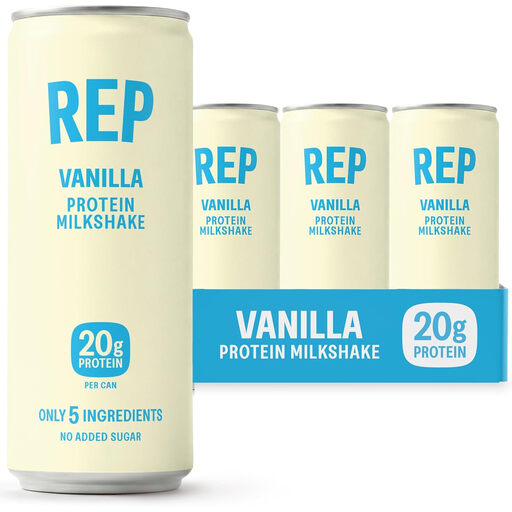
REP Protein Shake, Vanilla, 8 × 250ml
The 250ml can gives a defined portion for ready-to-serve lunches. It is listed as no added sugar but contains milk; check total sugars and the current storage directions on the delivered pack.
View on Joybuy
 No image available
Applied Nutrition Protein Nutrition Shake, Strawberries & Cream, 8 × 330ml
This ready-to-drink 330ml bottle suits a service without mixing. The listing describes it as no added sugar and declares milk; compare total sugars per bottle and check the delivered label for sweeteners and storage directions.
View on Joybuy
 No image available
Applied Nutrition Protein Nutrition Shake, Vanilla Ice Cream, 8 × 500ml
The 500ml bottle is a larger portion than the other shakes shown here, so compare nutrition for the whole bottle as well as per 100ml. It is listed as no added sugar but contains milk; check the delivered pack’s allergens and storage directions.
View on Joybuy
Questions about canteen milkshakes
Does ‘no added sugar’ mean sugar-free?
No. A no-added-sugar milk drink can still contain naturally occurring sugars. Tesco’s Mars listing gives 6.5g sugars per 100ml, or 13g per 200ml serving; use the current label to compare total sugars and portion size.
Can someone with a milk allergy have a lactose-free dairy shake?
No: lactose-free does not mean milk-free. Tesco’s lactose-free Valio PROfeel listing still declares milk, so choose an appropriately checked dairy-free drink for a customer who must avoid milk.
What allergen information should be available at the canteen?
Keep accurate ingredient and allergen information accessible for each drink, including products poured or mixed before serving. Food Standards Scotland states that allergen information must be provided for prepacked and non-prepacked food and drink in Scotland; Food Standards Agency technical guidance covers England, Northern Ireland and Wales. Check the delivered product, not just a shelf description.
How should opened milkshakes be stored?
Follow the directions on the exact product’s delivered label rather than applying one rule to every shake. Storage requirements differ by product; Tesco’s Valio PROfeel listing, for example, specifies refrigeration between 0°C and +8°C.


