
24/7 Customer Support

Free returns

Same-day & Next-day Delivery

Quality Guaranteed

Unlock Your Welcome Offers: FREE Delivery | Up to 80% OFF | Free 30-day JoyPlus trial
Download the APP
A convenient cup of cappuccino coffee can suit a rushed commute, a home office break or a quiet weekend morning. However, the format you choose affects preparation time, cost, ingredients and storage. A low shelf price may also be misleading if a pack contains fewer servings than expected or requires a specific machine.
This guide explains the main buying traps and compares practical options, including instant cappuccino coffee, cappuccino sachets, cappuccino pods, decaffeinated drinks and ready-to-drink formats.
Coffee machines do not all use the same capsule system. A product described as Dolce Gusto compatible cappuccino is intended for compatible Dolce Gusto machines, while Tassimo cappuccino pods or T DISCs are made for Tassimo machines. Check the exact machine system before ordering. A lower price is not useful if the capsules cannot be inserted or recognised.
An unsweetened cappuccino may have no added table sugar, but its nutrition can still include sugars from ingredients such as milk powder or glucose syrup. Read the nutrition panel and ingredient list rather than relying only on the front label. This is particularly important when comparing coffee mix sachets.
Terms such as “creamy”, “frothy” and “barista-style” describe the intended drinking experience, not a universal quality standard. Instant mixes usually prioritise speed, pods offer machine preparation and ready-to-drink cappuccino is convenient but may require more cupboard or fridge space. Choose according to your routine rather than promotional language.
The coffee percentage helps indicate how much of the mix is coffee, although it does not alone determine taste. For example, NESCAFÉ Cappuccino Instant Coffee lists 12% instant coffee, while the unsweetened NESCAFÉ option lists 15% instant coffee plus roast and ground coffee. Other mixes may contain more creamer, milk powder or sugar than coffee.
Check for:
A sachet may require anything from approximately 70ml to 250ml of hot water, depending on the product. Using too much water can create a weaker drink, while too little may produce a concentrated mix.
Compare the number of servings, not only the total pack weight. A 12-sachet box, a three-pack bundle and a six-serving flavoured pack serve different purchasing needs. Follow the preparation instructions on the packaging, especially where the product specifies hot rather than boiling water.
For pods, confirm the machine system and whether the product contains one combined pod or separate coffee and milk components. Tassimo products use T DISCs and are designed for Tassimo machines. Dolce Gusto compatible products should be checked against the machine instructions before use.
Instant cappuccino sachets are easy to store in a cool, dry cupboard. Ready-to-drink cans and bottles need closer attention to storage instructions. Once opened, refrigerate where stated and consume within the recommended period.
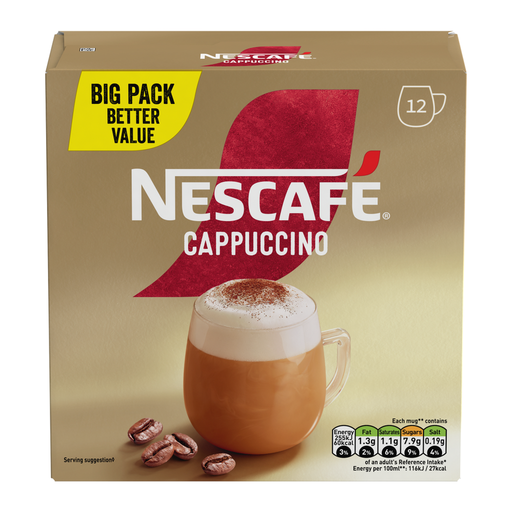
Why This Fits Their Persona: Twelve individual sachets provide a straightforward way to keep cappuccino coffee at home, in a student kitchen or at work without buying equipment.
The serving count is clearly stated, and the preparation does not depend on a particular coffee machine.
Single-serve format; listed at 60 calories per mug when prepared according to the product information.
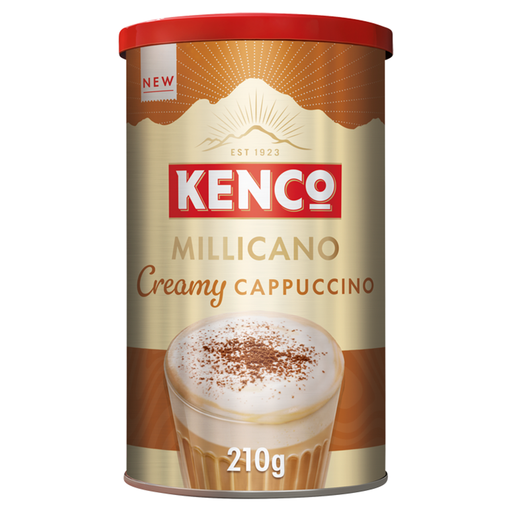
Why This Fits Their Persona: The tin format suits home coffee enthusiasts who prefer to adjust the strength instead of using a fixed single sachet.
The instructions specify 3 to 4 teaspoons and 170ml of hot, not boiling, water, making portion control clear.
Contains instant coffee and finely ground Arabica coffee; adjustable serving strength.
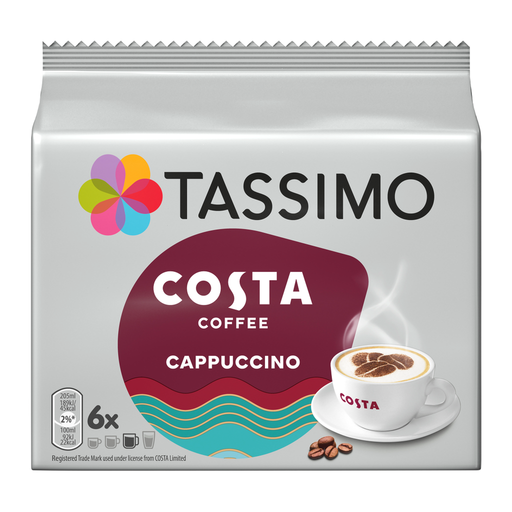
Why This Fits Their Persona: A suitable choice for regular Tassimo users who want machine-prepared drinks during busy mornings or office breaks.
The pack is specifically identified as 12 Tassimo discs, reducing uncertainty about serving quantity and machine format.
Designed for Tassimo machines; contains concentrated milk preparation and roast and ground coffee.
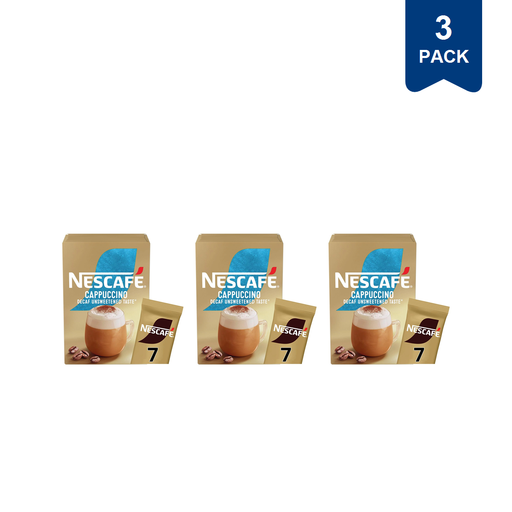
Why This Fits Their Persona: The decaf format works for shoppers who want cappuccino-style drinks later in the day without selecting a standard caffeinated mix.
It is explicitly labelled decaffeinated and unsweetened, while the ingredient and allergen information identifies milk content.
Seven sachets per pack; nutrition information lists 25 kcal per 100ml as prepared.
We have compiled a complete, real-time list of products that fully satisfy these strict selection criteria and UK safety regulations.
Empty one sachet into a mug and add the volume of hot water stated on the packaging. Many products advise using hot water that is not boiling. Stir thoroughly to dissolve the powder and develop the foam.
The answer depends on the price per serving, machine ownership and electricity use. Calculate the pack price divided by the number of discs, pods or sachets, then include the cost of operating and cleaning the machine. Sachets generally require no equipment, while pods can be practical if a machine is already part of your routine.
Follow the product label. Several ready-to-drink products specify refrigeration after opening and consumption within 24 hours. Unopened storage conditions and best-before information also vary, so check the packaging before purchase and consumption.