Space-first cappuccino makers
You need espresso and steamed milk but have little spare worktop width. The machine’s published dimensions matter, but so does the space needed to refill and operate it.


Choose a slim manual espresso machine if worktop width matters most and you are willing to prepare the coffee and steam the milk yourself. A compact machine with automatic milk texturing reduces the hands-on milk work but takes more width; bean-to-cup convenience needs a larger footprint. Check depth, refill access and room to use the portafilter and steam wand as well as the stated width.
You need espresso and steamed milk but have little spare worktop width. The machine’s published dimensions matter, but so does the space needed to refill and operate it.
You want less hands-on milk texturing while keeping the machine practical for a small kitchen. Check the exact milk system: an integrated grinder does not necessarily mean automatic milk preparation.
You are willing to practise preparing ground coffee and using a steam wand in exchange for direct control over the cappuccino routine.
Start with the space available for the whole routine, then decide how much of the coffee and milk preparation you want to do yourself. The three routes below make different demands on both.
Choose it when: Width is the binding constraint and you are happy to prepare ground coffee and steam milk yourself. De’Longhi lists the Dedica Style EC685 at 149 mm wide.
Allow for: Portafilter and steam-wand working room, tank access and practice with manual milk texturing.
Choose it when: You can spare more width to reduce hands-on milk work. Colombia Coffee Roasters lists the Sage Bambino Plus at 19.5 cm wide with adjustable automatic milk texturing.
Allow for: Ground-coffee preparation and milk-system cleaning; the automatic wand does not make it a bean-to-cup machine.
Choose it when: Built-in grinding matters more than minimum footprint. De’Longhi’s Magnifica Start ECAM222.20.B grinds beans before brewing.
Allow for: Its 240 × 440 × 360 mm body and a traditional milk frother that still calls for manual milk preparation.
| Concern | What to check | Who this matters to |
|---|---|---|
| Worktop fit | Compare the exact model’s width, depth and height with your available space; allow access for refilling and using the portafilter and milk jug. | If my worktop is crowded, the machine must be usable as well as able to sit there. Around 45% of consumers put practical fit first. |
| Milk-drink routine | Identify whether milk preparation uses a manual wand, an automatic wand or another milk system, and check the cleaning steps. | When I make cappuccinos often, I want to know how much attention steaming milk will take each time; roughly 33% of consumers prioritise that convenience. |
| Hands-on control | Check the supported coffee format and whether you are willing to practise dosing, tamping and steaming. | I would rather take part in preparing the espresso and milk than minimise every step. For about 22% of consumers, that control is the primary concern. |
A narrow machine can still be awkward to refill or use if its tank, portafilter or steam wand needs space you have not allowed for.
Mark out the full footprint on the worktop and check the operating clearances before ordering.
An automatic steam wand can assist with milk temperature and texture, while a bean-to-cup machine may still have a manual frother. The coffee-preparation and milk-preparation steps are separate decisions.
Read the exact model’s milk-system description and choose the amount of daily hands-on work you want.
A headline pressure number does not describe the whole espresso workflow. Grind, dose, basket design and temperature control also affect extraction, as Joybuy Insights notes in its coffee-machine guidance.
Compare the coffee format, controls, milk system and usable footprint rather than treating a bar rating as the deciding specification.
Frequent cappuccinos mean regular attention to parts that contact coffee and milk, alongside the model’s descaling requirements.
Check the exact manual for steam-wand or milk-system cleaning, removable parts and any applicable filter requirements.
Its named models illustrate different space and preparation choices: the 149 mm-wide Dedica Style EC685 is a manual espresso machine, while the larger Magnifica Start ECAM222.20.B has built-in bean grinding and a traditional milk frother, according to De’Longhi.
The Bambino Plus is a ground-coffee espresso machine listed by Colombia Coffee Roasters at 19.5 × 32 × 31 cm, with an automatic steam wand offering adjustable milk temperature and texture.
Gaggia UK describes the Classic range as having a professional steam arm and a stainless-steel filter holder, making it relevant to a hands-on espresso routine.
These choices span manual espresso machines and a bean-to-cup option for making cappuccino. Compare each model’s preparation steps and usable worktop space; a narrow-looking design or a built-in grinder does not settle both questions.
 No image available
Consider this for a hands-on cappuccino routine where you can make room to operate a portafilter and steam wand.
The product name specifies a milk-frothing steam wand and a 15-bar rating. Check the complete dimensions, operating clearance and plug configuration for your worktop and socket.
 No image available
Consider this manual espresso model if you are willing to prepare the coffee and steam milk yourself.
Its product name identifies a milk steam wand and Cold Brew function. Confirm its full dimensions, room for the portafilter and wand, and plug configuration before choosing it for a tight counter.
 No image available
Consider this semi-automatic espresso option if hands-on cappuccino preparation suits your routine.
The product name specifies adjustable temperature, hot and cold settings, and a 20-bar rating. Confirm which dimension faces across your worktop rather than relying on the name’s slim-design wording.
 No image available
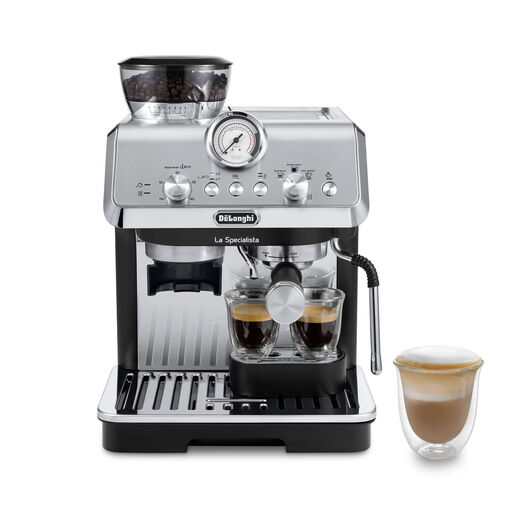
Consider this if you want bean-based espresso preparation but still prefer a hands-on cappuccino routine.
The product name describes a semi-automatic bean-to-cup machine with a milk frother. Check its full footprint, preparation space and plug configuration rather than treating it as a slim manual model.
 No image available
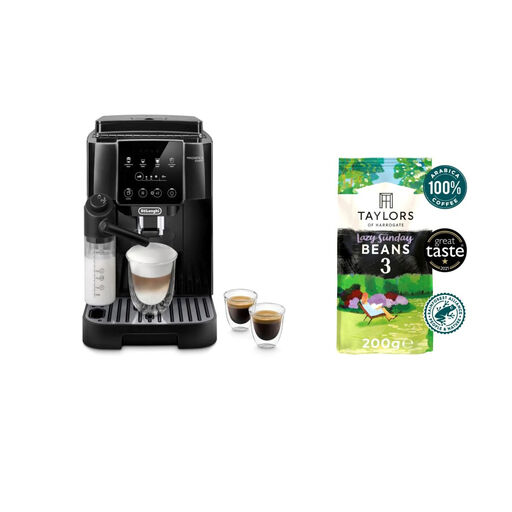
Consider this bean-to-cup option if reducing hands-on coffee and milk preparation matters more than keeping the machine narrow.
The product name specifies automatic milk preparation and four one-touch recipes. Measure the full worktop area and access needed, and check the model’s cleaning instructions and plug configuration.
Allow room to use and refill it, not just enough space for its body. Check the available width, depth and height, then account for the portafilter handle, steam wand and milk jug where applicable.
Yes, if you are willing to practise steaming milk. Sage’s milk-texturing guidance describes the attention needed to manage air and temperature; an automatic steam wand offers more assistance if you would rather spend less time on that step.
No: a pump-pressure figure alone cannot tell you how the espresso will turn out. Grind, dose, basket design and temperature control also matter, so compare the brewing routine rather than choosing by the headline number.
Follow the instructions for your exact model, particularly for parts that contact milk. Sage advises cleaning most parts weekly when making two to five coffees a day; check the model manual separately for steam-wand care and descaling.
Check that the exact appliance is suitable for your mains supply and has an appropriate plug or conversion adaptor rather than a travel adaptor, as Electrical Safety First advises. For Great Britain, GOV.UK describes the Electrical Equipment (Safety) Regulations 2016 as requirements for electrical equipment placed on that market; its Great Britain guidance does not settle the requirements for Northern Ireland.