Choose a fully automatic bean-to-cup machine with an automatic milk system if several people want cappuccinos with little instruction. A manual or assisted-manual machine suits a smaller group willing to learn milk steaming and share the cleaning work; either way, check access to the water tank and milk parts before committing counter space.
Who is the machine for?
Users who want little training
When colleagues or housemates have different levels of coffee-making experience, an automatic cappuccino selection avoids asking everyone to learn grinding, tamping and milk steaming. Philips lists cappuccino selection on its 5400 Series.
Hands-on cappuccino makers
A small group willing to practise espresso preparation and steam milk manually may prefer direct control. Sage’s Barista Express Impress and De’Longhi’s La Specialista Opera pair grinding and tamping assistance with manual steam wands.
Kitchen sharers focused on cleaning
If milk residue, grounds and handovers are likely to cause friction, choose a workflow everyone can maintain. Philips describes the 5400 Series LatteGo milk system as having two parts and no tubes; the group still needs to follow the machine’s cleaning instructions.
What matters when choosing?
Automatic bean-to-cup with automatic milk
Choose it when: Several people need to select a cappuccino without learning steam-wand technique.
Trade-off: Users have less hands-on control over milk texturing, and the milk system still needs cleaning.
Manual or assisted-manual with a steam wand
Choose it when: The group wants to adjust espresso preparation and texture milk itself.
Trade-off: Users must learn the preparation steps and take responsibility for the wand, portafilter and grounds after use.
| Concern |
What to check |
Who this matters to |
| Easy cappuccino preparation |
Check how the exact machine makes a cappuccino and whether milk frothing requires a separate step. |
If different people use the kitchen, I want to make a cappuccino without teaching each person how to steam milk. Around 42% of consumers may put straightforward preparation first. |
| Cleaning and handover |
Check the instructions for cleaning milk parts, the drip tray and grounds container, and decide who will do it. |
Milk residue left for the next user would make the kitchen harder to share. For around 33% of consumers, a manageable cleaning handover may be the primary concern. |
| Hands-on drink control |
Check grinder adjustments, tamping assistance and whether the machine has a manual steam wand. |
I would rather adjust the espresso and texture the milk myself, even if each drink takes more work. That control may come first for around 25% of consumers. |
Shared-kitchen mistakes to avoid
-
Choosing a steam wand when everyone expects one-touch milk drinks
Manual milk texturing adds a skill-dependent step, even on a machine that assists with grinding or tamping.
Agree who is willing to learn and clean the wand. If most users want to select a drink and leave the milk preparation to the machine, consider an automatic milk system instead.
-
Measuring the counter but not access around the machine
A machine can fit its allotted space yet be awkward to refill or clean if the tank, bean hopper or removable parts cannot be reached.
Measure the proposed location and check the exact model’s dimensions and access requirements before buying.
-
Treating an easy-clean milk system as maintenance-free
Detachable milk components still need attention after use. Food Standards Agency hygiene guidance for food businesses identifies cleaning and sanitising as part of maintaining equipment.
Follow the model instructions and agree who handles after-use cleaning, emptying and scheduled maintenance.
-
Assuming an annual PAT label settles workplace approval
The Health and Safety Executive says annual portable appliance testing is not itself a legal requirement; appropriate checks depend on the equipment and its environment.
Before bringing a machine into a workplace kitchen, ask the site operator about its approval, inspection and maintenance arrangements.
Relevant brands to consider
Sage
A reference for groups considering an assisted-manual espresso workflow.
- Sage lists an integrated grinder, assisted tamping, 25 grind settings and a manual steam wand for the Barista Express Impress.
- Milk texturing remains a hands-on task for this model, so users need to learn and clean the wand.
De’Longhi
A reference for assisted-manual machines combining grinding and tamping support with a manual milk wand.
- De’Longhi lists an integrated grinder, tamping station, 2 L tank and removable drip tray for the La Specialista Opera EC9555.M.
- Check that this model and the space needed to access its removable parts suit the shared counter.
Philips
A reference for a fully automatic cappuccino workflow with a detachable milk system.
- Philips lists cappuccino selection and describes its 5400 Series EP5446/70 LatteGo system as two parts without tubes.
- Follow the exact model’s milk-system cleaning instructions rather than assuming automatic preparation removes that task.
Joybuy product choices
These choices cover bean-to-cup machines with either automatic milk preparation or a manual wand, plus capsule-based alternatives for groups willing to use a pod system. Check the milk-preparation steps for the exact variant: an automatic coffee machine does not necessarily make the milk automatically.
 No image available
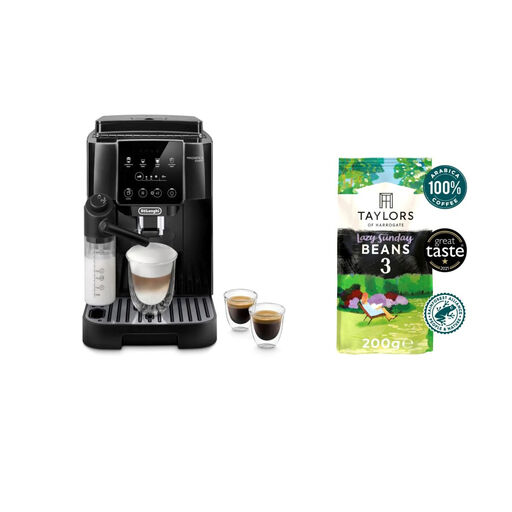
De’Longhi Magnifica Start ECAM220.60.B with Taylors of Harrogate Lazy Sunday beans, 200 g
Consider this bean-to-cup variant if the group wants cappuccino preparation with automatic milk frothing rather than a manual wand.
The bundle includes Taylors of Harrogate Lazy Sunday coffee beans, 200 g. Check the exact milk-system cleaning instructions and leave room to access removable parts.
Joybuy
 No image available
Lavazza A Modo Mio Deséa 18000393 pod machine, cream
Consider this pod-based option if users prefer an integrated milk frother to learning a steam-wand routine.
The named variant has a hot-and-cold milk frother, glass mug and 1.1 L capacity. Check that the Lavazza A Modo Mio capsule system and the frother’s cleaning steps suit the group.
Joybuy
 No image available
De’Longhi Magnifica Start ECAM220.22.GB, black and grey
This bean-to-cup variant suits a group willing to froth cappuccino milk with its manual milk nozzle.
Do not confuse its one-touch coffee recipes with automatic milk preparation. Agree on wand cleaning and check the installed clearance before buying.
Joybuy
 No image available
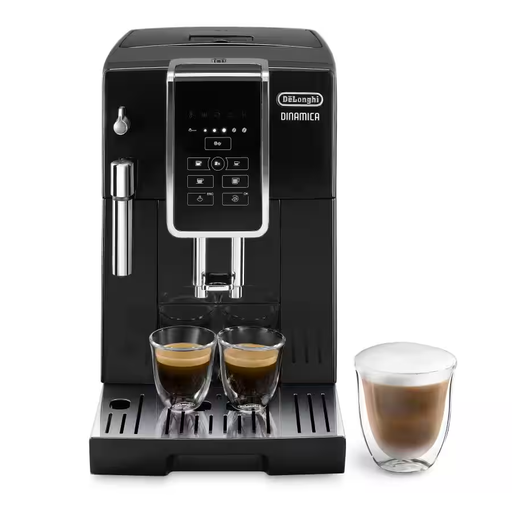
De’Longhi Dinamica ECAM350.15.B, black
This bean-to-cup machine is worth considering if users accept a manual steam-wand step for cappuccino milk.
Its name identifies a milk-frother steam wand. Confirm the exact cappuccino sequence before buying, since a listed cappuccino option does not by itself establish automatic milk handling.
Joybuy
 No image available
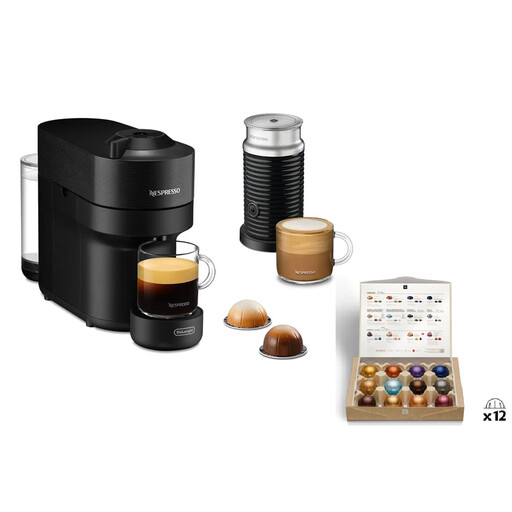
Nespresso X De’Longhi Vertuo Pop with Aeroccino, black
This pod-machine bundle suits a group prepared to make the coffee and froth the cappuccino milk in separate components.
An Aeroccino milk frother is included. Check the capsule system, the space needed for both components and how the group will clean the frother.
Joybuy
Common questions
Does a workplace cappuccino machine need annual PAT testing?
Not necessarily: the Health and Safety Executive says annual portable appliance testing is not itself a legal requirement. Electrical equipment that could cause injury must be maintained safely, so ask the workplace operator what approval and checks apply to this machine and kitchen.
Does putting a coffee machine in a shared kitchen require food-business registration?
A shared kitchen alone does not determine whether registration is required. GOV.UK says food businesses that sell, prepare, handle or distribute food or drink need to register with their local authority; check the operating arrangement with the relevant authority if drinks are supplied as part of a business.
What needs cleaning after a cappuccino?
Follow the exact machine’s instructions for every part that contacts milk, and agree who empties trays and grounds containers. A manual steam wand and a detachable automatic milk system have different cleaning steps; Philips’ two-part LatteGo design, for example, does not remove the need for milk-system care.


