
24/7 Customer Support

Free returns

Same-day & Next-day Delivery

Quality Guaranteed

Unlock Your Welcome Offers: FREE Delivery | Up to 80% OFF | Free 30-day JoyPlus trial
Download the APP
By Joybuy Product Recommendation Officer
A useful set of car accessories should solve a specific problem without creating another one. For UK drivers, that may mean restarting a flat battery on a cold morning, checking tyre pressure before a motorway journey or replacing a failed bulb. For families, it may mean choosing a children’s electric ride-on product with suitable speed, size and supervision requirements.
The difficulty is separating useful specifications from sales language. Three common pitfalls deserve attention before you buy.
A large amp figure does not automatically mean a booster is suitable for your vehicle. Engine type, engine size and voltage are equally important. A compact car jump starter may support a petrol engine but be unsuitable for a diesel vehicle or a 24V system.
Always check:
A replacement car bulb must match the original fitting and electrical system. A 9005 HB3 LED bulb is not a substitute for a D4S LED bulb, while T10 W5W LED bulbs are commonly used in interior, number plate, side-marker and courtesy-light positions.
The fitting code, voltage, polarity, physical dimensions and beam position all matter. “Universal fit” should not replace checking your handbook or removing the original bulb to compare it.
LED headlight bulbs may advertise very high lumen figures, but beam pattern, heat management, installation position and headlamp alignment affect what the driver and other road users actually see. Poorly positioned bulbs can create glare even when the bulb itself is bright.
For exterior lighting, check the vehicle’s requirements and confirm that the finished installation is suitable for road use. After fitting, inspect the beam pattern and have the headlamps correctly aligned where necessary.
For a portable car battery booster, match the product to your engine rather than choosing solely by capacity. For example, the WOLFBOX 2000A model is listed for 12V petrol engines up to 5.0 litres and does not support diesel vehicles or 24V systems. The WOLFBOX 3000A model supports 12V petrol engines up to 8.0 litres and diesel engines up to 6.0 litres.
A display showing battery level can help you identify when the unit needs charging. Some models also include a torch, USB outputs or an emergency light. Store the booster in a dry place and recharge it at the interval stated in the instructions.
A car air compressor or 12V tyre inflator should have:
The CARSUN 150PSI inflator connects to a 12V cigarette-lighter socket and includes a digital display, LED light and 3m cord. A combined jump starter and inflator can save storage space, but a standalone pump may be more straightforward for regular pressure checks.
Always use the vehicle manufacturer’s recommended cold-tyre pressure. The maximum PSI printed on a pump is not the correct target pressure for every car.
Before buying LED headlight bulbs, confirm the original code, such as 9005/HB3 or D4S. Check whether the vehicle monitors bulb resistance, as some cars may display an error warning, flicker or switch off after an LED conversion.
Products described as CANbus error-free LED bulbs may reduce compatibility problems, but no fitting should be assumed to work with every vehicle. T10 W5W bulbs are available in white, amber and red versions for applications such as car interior light bulbs, map lights, door lights and number plate lights. Confirm the colour is appropriate for the intended position and compare the bulb length with the original.
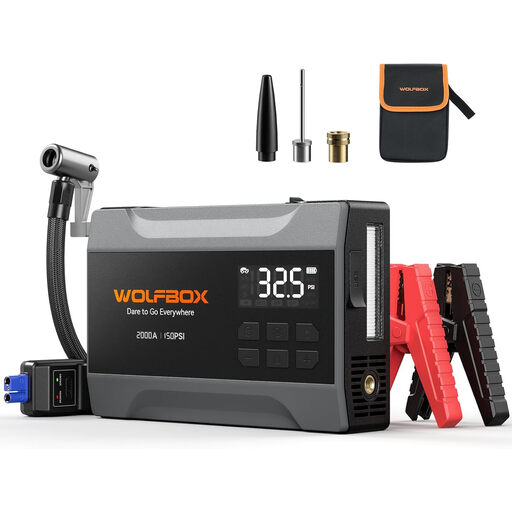
Why This Fits Their Persona: A practical combined unit for drivers of compatible 12V petrol cars who want emergency starting and tyre inflation in one device.
The listing clearly limits compatibility to 12V petrol engines up to 5.0L and excludes diesel vehicles and 24V systems.
Includes a 150PSI inflator with automatic shut-off and an LED illumination/SOS function.
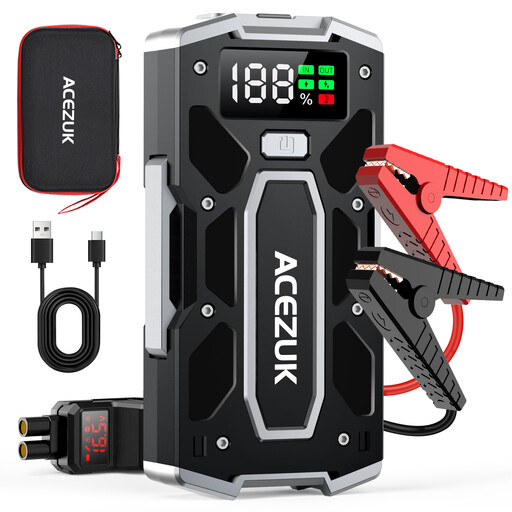
Why This Fits Their Persona: Suits owners of larger petrol or diesel vehicles who want a higher-capacity emergency device with status information.
Its stated capacity is matched to vehicles up to 10.0L petrol and 8.0L diesel, making the intended use clearer.
Provides an LCD display, two USB outputs and safety protections including reverse-polarity and over-temperature protection.
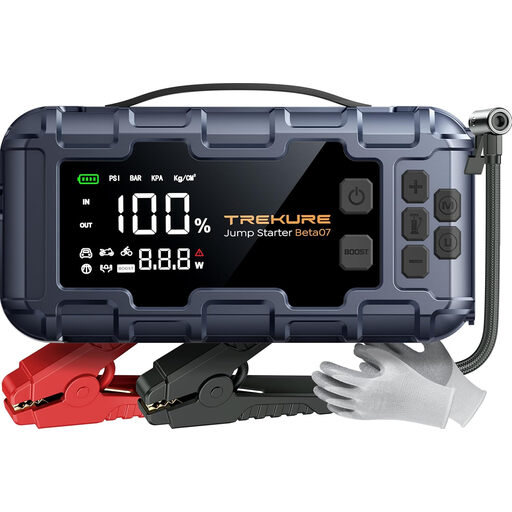
Why This Fits Their Persona: A multi-function choice for frequent travellers, larger vehicles or households wanting starting, inflation and device charging together.
The specifications identify 12V petrol and diesel support, a 160PSI compressor and preset pressure modes rather than relying on one headline figure.
Includes a 3.3-inch display, USB-C PD charging, a 600-lumen emergency light and insulated gloves.
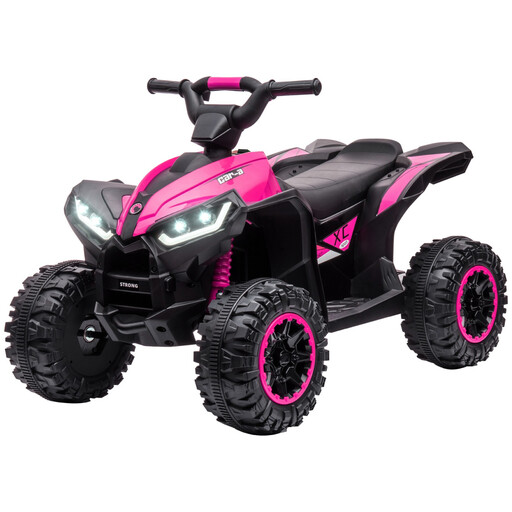
Why This Fits Their Persona: Designed for younger children aged approximately 3–5, with walking-speed settings and four wide tyres for supervised private-land riding.
The age range, 25kg maximum load, 3km/h and 6km/h speed settings are stated clearly, so parents can compare suitability.
Includes LED lights, a horn, music and a 45-minute stated run time; adult supervision is required.
For older children, the SPORTNOW kids electric scooter lists a 200W motor, up to 16km/h, a 12km maximum range, kick-to-start operation and a 70kg load capacity. In the UK, privately owned electric scooters cannot be ridden in public places, including roads, pavements and cycle paths. Use is restricted to private land with the landowner’s permission.
We have compiled a complete, real-time list of products that fully satisfy these strict selection criteria and UK safety regulations.
They can be useful for vehicles that may sit unused, make short journeys or travel in rural areas. Choose a model that matches the vehicle’s engine type and size, charge it fully before storage and check its battery level periodically.
The listed operating life varies by product and does not guarantee the same service life in every vehicle. Heat, vibration, electrical compatibility and usage affect durability. Aluminium housings, cooling fans and suitable installation can help manage operating temperature, but always follow the fitting instructions.
Privately owned electric scooters are not permitted on public roads, pavements, cycle paths, parks or other public open spaces. They may only be used on private land with the landowner’s permission. Children should wear suitable protective equipment and ride under responsible adult supervision.