
24/7 Customer Support

Free returns

Same-day & Next-day Delivery

Quality Guaranteed

Unlock Your Welcome Offers: FREE Delivery | Up to 80% OFF | Free 30-day JoyPlus trial
Download the APP
Selecting the correct car antifreeze can feel like a daunting task. With different colours and technical terms like 'OAT' on the labels, it's easy to feel unsure about which product is right for your vehicle. Using the wrong type of engine coolant can lead to poor performance, corrosion and even costly engine damage.
As the Joybuy Product Recommendation Officer, my role is to help you navigate these choices with clear, practical information. This guide will break down what you need to know to choose the right coolant, ensuring your engine stays protected all year round. We will look at key specifications and highlight some reliable options available for UK drivers.
Before adding a product to your basket, it's helpful to understand a few key factors. This will ensure you get a coolant that is compatible with your vehicle and provides the protection it needs.
The colour of an antifreeze is a general indicator of its chemical makeup, but the technology inside is what truly matters.
Mixing these types is not recommended, as it can neutralise their protective properties and potentially lead to sludge or gelling in your cooling system.
The single most reliable source of information is your vehicle's handbook. It will specify the type of coolant required by the manufacturer. Additionally, look for products that meet recognised industry standards. In the UK, a key standard to look for is BS6580 coolant. This indicates the product has passed the British Standard for corrosion-inhibiting engine coolants, giving you confidence in its performance and quality.
You will find antifreeze sold in two main forms:
Based on their specifications and suitability for common UK vehicles, here are our recommendations to help you make an informed choice.
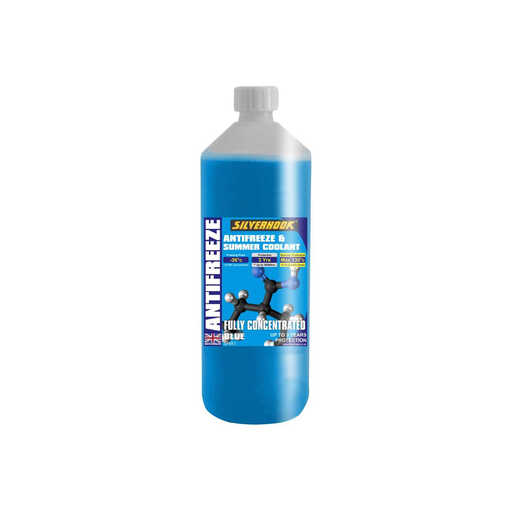
Why It Stands Out: This is a traditional, ethylene glycol-based coolant designed for all-year-round performance. Its formulation is suitable for a wide range of engine types and provides robust protection against freezing, corrosion and scale buildup, helping to maintain the health of your radiator, hoses and water pump.
Pros:
Who is it for? This is a practical choice for owners of vehicles that specify a traditional blue antifreeze, or for anyone needing a reliable, BS-compliant coolant for general top-ups.
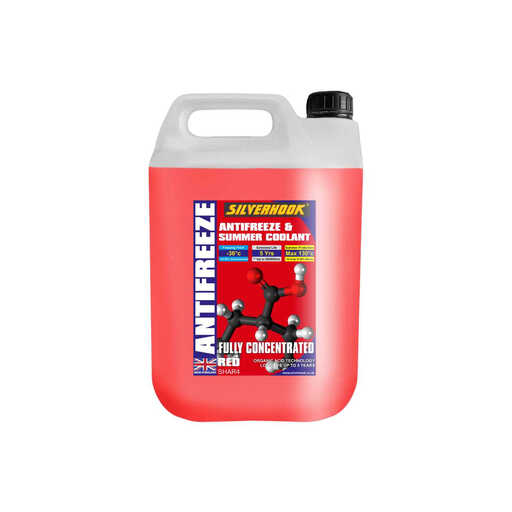
Why It Stands Out: Featuring advanced OAT antifreeze technology, this coolant offers long-life protection for up to five years. It is specifically formulated to be silicate-free, making it an excellent antifreeze for aluminium engines and other modern cooling system components. The large 4.5-litre container offers great value for money for a complete system flush.
Pros:
Who is it for? This is ideal for DIY mechanics or vehicle owners planning a full coolant change on a modern car that requires a long-life red antifreeze. The 4.5-litre size provides enough volume for most passenger vehicle cooling systems.
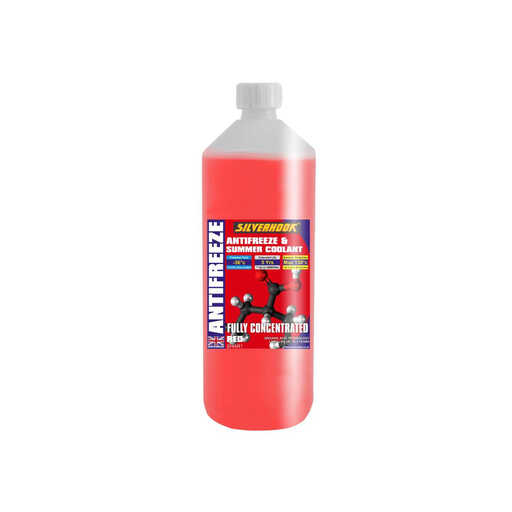
Why It Stands Out: This product offers all the benefits of modern OAT technology in a smaller, 1-litre bottle. It provides the same long-life corrosion and temperature protection as its larger counterpart, making it perfect for topping up a system that already contains a red OAT coolant.
Pros:
Who is it for? This is the right choice for drivers of modern vehicles who need to top up their coolant level and want to ensure they are using a compatible, high-performance OAT antifreeze.
While these recommendations cover common needs, every vehicle is different. If you're looking for other formulations or sizes, it's worth exploring a wider selection.
Explore our full range of Silverhook vehicle maintenance products to find the perfect match for your car.
It is strongly advised not to mix different types of antifreeze, such as red (OAT) and blue (IAT). The chemical additives can react, reducing their effectiveness and may lead to the formation of gel or sludge that can clog your radiator and cooling channels. Always stick to the type specified by your vehicle's manufacturer.
The replacement interval varies depending on the vehicle and the type of engine coolant used. Traditional IAT (blue) coolants typically require changing every 2 years or around 30,000 miles. Modern long-life OAT (red) coolants can last for 5 years or up to 100,000 miles. Always consult your vehicle's service schedule for the correct interval.
The terms are often used interchangeably, but there is a technical difference. Antifreeze is the concentrated product, usually based on ethylene glycol. When this concentrate is mixed with water (ideally deionised), the resulting fluid is called engine coolant. This is the mixture that circulates through your engine to regulate its temperature.