
24/7 Customer Support

Free returns

Same-day & Next-day Delivery

Quality Guaranteed

Unlock Your Welcome Offers: FREE Delivery | Up to 80% OFF | Free 30-day JoyPlus trial
Download the APP
Is your phone battery always hovering in the red by the time you reach your destination? A slow, unreliable car charger can be a major point of frustration for commuters, families on the go and professionals who depend on their devices. The market is flooded with options, but many fail to deliver on their promises, leaving you with a cluttered dashboard and a barely-charged phone.
As the Joybuy Product Recommendation Officer, my role is to help you navigate the marketing clutter. Before you spend your money, let's look at the common pitfalls that catch out UK drivers and what really matters when choosing a reliable power source for your vehicle.
Many chargers look the part but hide critical flaws. Here are the three most common issues that lead to buyer's remorse:
To ensure you get a charger that performs as expected, focus on these three non-negotiable specifications.
This is the most critical factor. Wattage (W) tells you the total power, but the protocol determines if your device can actually use it.
The ideal charger for 2026 offers a mix of ports to handle both new and older devices.
Never compromise on safety. A good car charger should be made from durable, heat-resistant materials (like a zinc alloy or flame-retardant polycarbonate) and fit snugly in your car's 12V socket. Look for chargers with built-in safety systems that protect against over-current, over-voltage and overheating. This ensures both your device and your vehicle's electrical system are safe.
Instead of a one-size-fits-all approach, we've matched our recommendations to specific types of users.
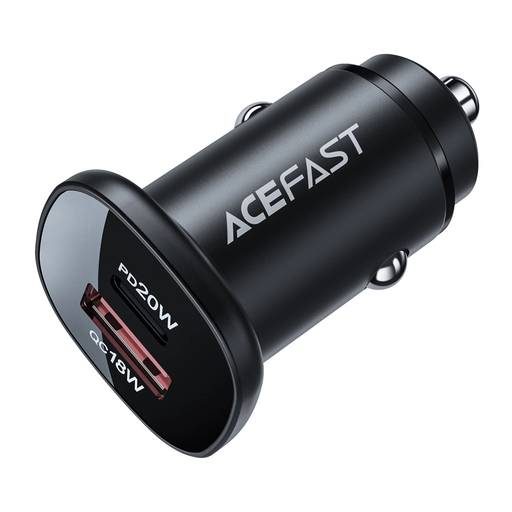
Why This Fits Their Persona: Perfect for the everyday driver who needs to reliably charge a phone and perhaps another accessory. It's compact, powerful enough for fast-charging a single smartphone and the built-in coiled cable keeps the console area tidy.
It avoids the "fake fast charge" trap by offering both 20W PD and 18W QC 3.0, covering most modern phones. The shrapnel snap-in design ensures it stays put, avoiding the loose connection issue.
Features a dual-port design (USB-C and USB-A) for versatility. The built-in 1.2m coiled USB-C cable is a major convenience, reducing cable clutter.
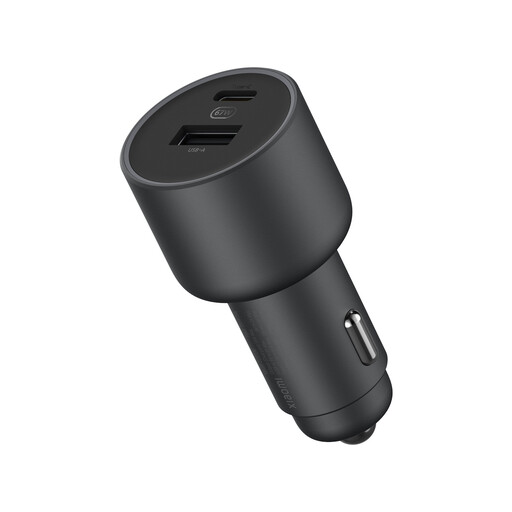
Why This Fits Their Persona: For the user who needs serious power for a high-end smartphone or even a small laptop like a MacBook Air. This charger delivers a high single-port output and comes from a brand known for reliable electronics.
It delivers a genuine 67W max output from its USB-C port, enough for many modern ultrabooks. The manganese steel and brass connector ensures a secure, stable fit, preventing disconnections.
Includes a high-quality 6A USB-C to USB-C cable, saving you a separate purchase. The colour-changing LED ring provides an intuitive visual cue of the charging status and power level.
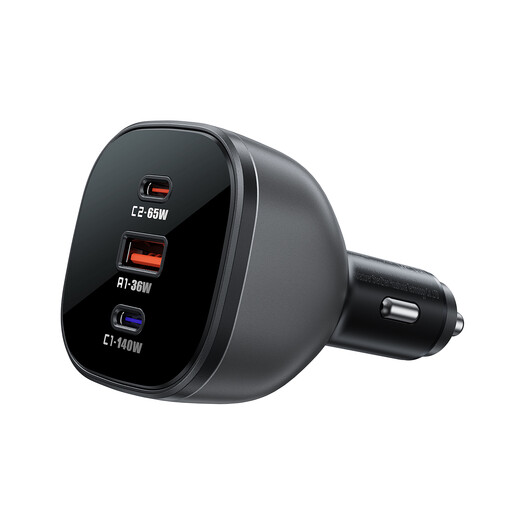
Why This Fits Their Persona: This is the ultimate solution for anyone who needs to power multiple demanding devices at once—think sales reps with a laptop and phone, or a family with tablets and smartphones on a long journey.
It demolishes the "mismatched power" trap by offering a massive 165W total output, with a dedicated 100W USB-C port capable of powering a full-size laptop. It intelligently distributes power across all three ports without compromising speed.
The smart digital LED display shows real-time voltage and power output for each port, giving you full visibility. It features two USB-C ports and one USB-A port for maximum device compatibility.
We have compiled a complete, real-time list of products that fully satisfy these strict selection criteria and UK safety regulations.
When your car's engine is running, the charger draws power from the alternator, not directly from the battery. Therefore, it won't drain your battery while you're driving. However, some vehicles keep the 12V socket powered even when the engine is off. In this case, it's good practice to unplug the charger when you park for an extended period to prevent slow battery drain.
Yes, the cable is just as important as the charger. To achieve maximum charging speeds, especially for high-wattage devices like laptops, you need a cable rated for that power. For example, to get 100W from a charger, you need a USB-C cable with an "E-Marker" chip that is rated for 100W. Using a standard, low-quality cable will bottleneck the charging speed and can be a safety risk.
Most smartphones will give you a visual indication on the lock screen. For example, an iPhone might show the standard charging icon but will charge noticeably faster. Many Android phones will explicitly display messages like "Fast charging," "Super Fast Charging" or show a double lightning bolt icon. If your charger has an LED display like the ACEFAST B14, you can see the exact wattage being delivered.