
24/7 Customer Support

Free returns

Same-day & Next-day Delivery

Quality Guaranteed

Unlock Your Welcome Offers: FREE Delivery | Up to 80% OFF | Free 30-day JoyPlus trial
Download the APP
Keeping your devices powered up on the move is no longer a luxury; it's a necessity. Whether you're a daily commuter navigating with your phone, a family on a road trip with tablets in the back or a trade professional who relies on powered tools, a reliable in-car power source is crucial. However, the market is flooded with options, and it's easy to make a purchase you'll regret.
As a Joybuy Product Recommendation Officer, my role is to help you see past the marketing clutter. Many drivers end up with a drawer full of useless adapters that either charge at a snail's pace or, worse, stop working after a few weeks. Let's look at the common traps to avoid.
To ensure you get a car charger that performs as expected, focus on these key specifications.
The power a charger can deliver is measured in Watts (W). A basic 5W charger will slowly top up a phone, but for modern devices, you need more.
The type and number of ports determine a charger's versatility.
For needs that go beyond USB, you should consider a 12v to 240v inverter. This device plugs into your car's 12V socket and provides a standard 3-pin UK mains socket, allowing you to power items just as you would at home.
Sometimes, the power problem isn't your phone, but your car itself. A modern portable car battery booster is a compact lifesaver. These devices hold enough charge to jump-start a flat car battery and typically include USB ports to function as a high-capacity power bank for your gadgets, making them an excellent all-in-one emergency tool.
We've filtered through the options to find products that solve specific problems for UK drivers, steering clear of the common pitfalls.
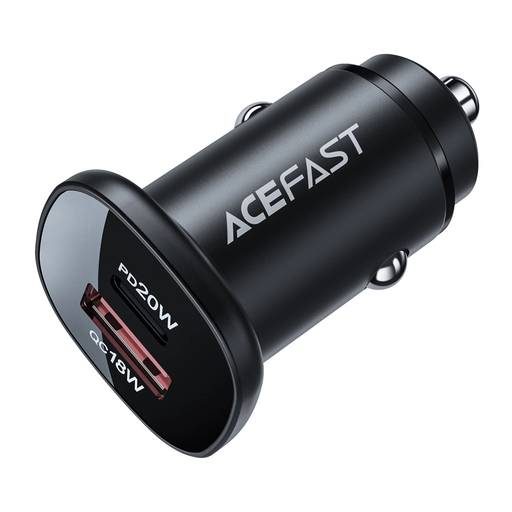
Why This Fits Their Persona: Perfect for keeping a smartphone topped up during the daily drive to work. Its compact design doesn't clutter the dashboard, and the built-in coiled USB-C cable means you're never caught without the right connection.
It clearly supports both PD (20W) and QC (18W) fast charging protocols, ensuring compatibility. The power is clearly defined per port, avoiding the misleading "total wattage" trap.
Features a built-in 1.2m coiled USB-C cable, preventing tangles and ensuring a cable is always on hand. Dual ports allow simultaneous charging of two different devices.
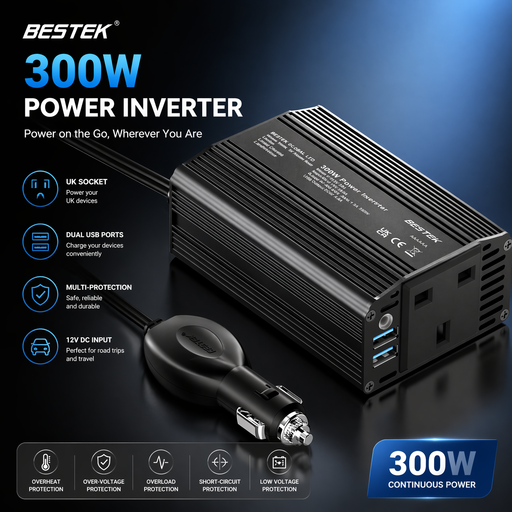
Why This Fits Their Persona: For those who need more than just USB power. Ideal for family holidays to power a small cooler or games console or for professionals needing to charge tool batteries or a laptop in their van.
It sidesteps the underpowered USB charger trap entirely by providing a proper 300W AC mains socket. This allows you to use the original charger for your laptop or other device, guaranteeing compatibility and full-speed charging.
Offers a standard 3-pin UK plug alongside dual USB ports, providing ultimate versatility. Built-in safety features like a 40A fuse and overheating protection safeguard both your devices and your vehicle.

Why This Fits Their Persona: For the driver who values peace of mind above all. This isn't just about charging a phone; it's about ensuring you're never stranded by a flat battery, especially on a cold winter morning or in a remote location.
It addresses a far more critical problem than slow charging—a non-starting vehicle. Its smart clamps with reverse polarity protection prevent the dangerous and costly mistake of connecting the leads incorrectly.
A multi-function tool: it's a powerful car jump starter, a 13800mAh power bank for charging devices and a three-mode LED torch for emergencies. It's compact enough to live in the glove box.
We have compiled a complete, real-time list of products that fully satisfy these strict selection criteria and UK safety regulations.
Yes, it is possible. While most modern vehicles cut power to the 12V socket when the ignition is off, some older models do not. A charger left plugged into a live socket will draw a small amount of power, which could drain a weak or older battery over several days. It is good practice to unplug your charger when you leave the car for an extended period.
Look for official safety markings like UKCA or CE on the product or its packaging. These indicate the product complies with UK and European safety standards. Reputable brands also incorporate multiple protection systems, such as safeguards against over-current, overheating and short-circuiting, which are usually listed in the product specifications.
A car charger is designed to charge low-voltage DC devices like smartphones and tablets directly via USB ports. A car power inverter is a more powerful device that converts your car's 12V DC electricity into 230V/240V AC electricity. This allows you to use a standard 3-pin plug to power or charge devices that you would normally use at home, such as a laptop, a camera battery charger or even small appliances.