
24/7 Customer Support

Free returns

Same-day & Next-day Delivery

Quality Guaranteed

Unlock Your Welcome Offers: FREE Delivery | Up to 80% OFF | Free 30-day JoyPlus trial
Download the APP
A car cover can help reduce exposure to rain, frost, bird droppings, tree sap, dust and sunlight. However, choosing by price or a generic “universal fit” label can create avoidable problems. A loose cover may flap against the paintwork, while an incorrectly shaped one can leave mirrors, bumpers or lower panels exposed.
The Joybuy Product Recommendation Officer’s practical approach is simple: identify the vehicle body type, measure the car accurately and check how the cover is secured before purchasing.
A cover designed for a hatchback car cover may not suit a saloon, estate or SUV. Roof height, mirror position, boot shape and bumper profile all affect the fit. A cover that is technically long enough can still be unsuitable if its proportions are wrong.
For example, an SUV cover should not be treated as interchangeable with a hatchback cover. The taller roofline and wider body require a different cut.
A waterproof car cover needs more than a water-resistant outer surface. Look for information about the internal waterproof membrane, seams, lining and storage instructions. A soft inner layer is also useful because trapped grit can cause friction when the cover moves in the wind.
Some multi-layer covers combine waterproof PE or PEVA layers, an aluminium UV layer and a cotton lining. These materials serve different purposes, so a product listing that explains the construction is more useful than a vague weatherproof claim.
A cover that is difficult to fit may be left unused. In exposed driveways, a windproof car cover should have practical restraints such as straps, an elasticated hem or a secure fastening system. Reflective stripes can also make a parked vehicle more noticeable in low light, although they should not be treated as a substitute for proper parking safety.
Measure from the front bumper to the rearmost point, including any unusual accessories. Compare this measurement with the seller’s stated range rather than relying only on the make and model.
The available options include:
These categories are not interchangeable. Check whether roof rails, spoilers, extended mirrors or other modifications affect the fit.
For outdoor storage, consider a cover with clearly described layers and functions. Waterproof PE or PEVA can help block rain and snow, while an aluminium layer is intended to reflect sunlight. A soft cotton or similar lining can reduce direct contact between the cover and the paintwork.
A UV-resistant car cover may help limit exposure to sunlight, but no cover removes the need to clean the vehicle before fitting. Dust and grit between the paint and fabric can still cause surface marks when the cover moves.
Useful design details include:
For occasional use, a lighter design with a storage bag may be more convenient. For vehicles left outside regularly, stronger restraint points and a soft lining may be higher priorities.
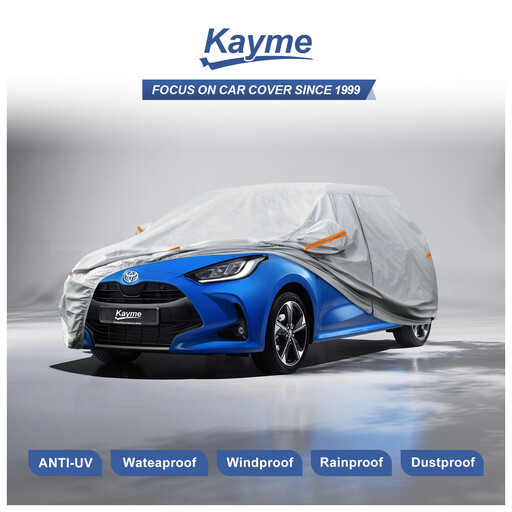
Why This Fits Their Persona: A practical option for UK hatchback owners who want outdoor coverage with features that make regular fitting and storage easier.
It is specified for hatchbacks only and states a maximum vehicle length, helping buyers avoid relying on a generic size label.
Multi-layer construction, soft cotton lining, windproof straps, mirror pockets and a built-in zip.
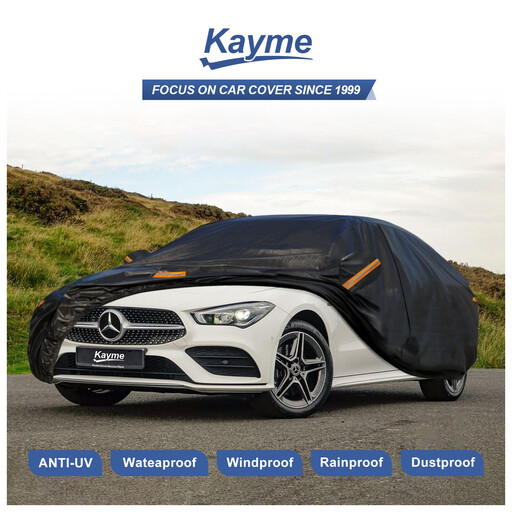
Why This Fits Their Persona: Suits saloon owners looking for a thicker outdoor cover with a soft inner layer and defined wind restraints.
The listing identifies it for saloons rather than hatchbacks or SUVs and includes three windproof straps.
Seven-layer material, waterproof construction, soft cotton lining and reflective stripes.
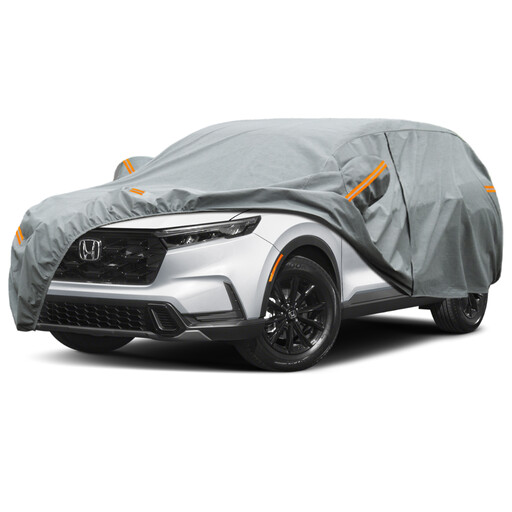
Why This Fits Their Persona: Designed for SUV owners who leave taller vehicles outside and need coverage across changing UK weather conditions.
Its stated SUV-only fit and 465 cm maximum length reduce the risk of choosing a shorter car-cover shape.
Five-layer non-woven fabric, waterproof inner membrane, soft lining, three straps and reflective stripes.
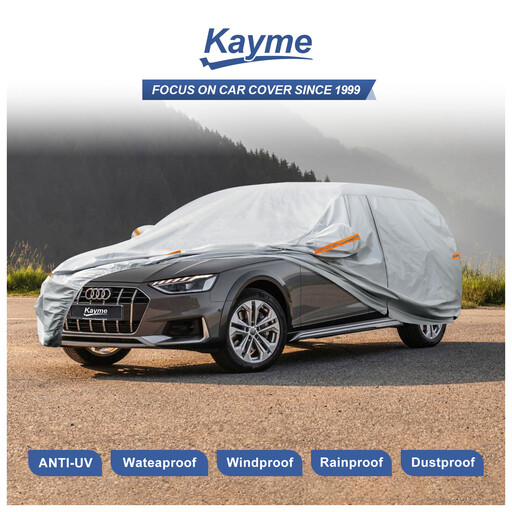
Why This Fits Their Persona: A useful match for estate owners whose longer rear section makes standard saloon covers unsuitable.
The stated 450–480 cm range makes the required length clear, while the estate-only specification avoids body-style confusion.
Waterproof multi-layer fabric, soft lining, mirror pockets, storage bag and reflective stripes.
Before installation, wash and dry the vehicle if possible. Remove loose grit from the surface and check that the cover’s inner lining is clean. Position the cover from front to rear, place the mirror pockets correctly and secure every strap. Do not pull the fabric aggressively over aerials, roof accessories or sharp edges.
For storage, fold the cover only when it is reasonably dry. Keeping a damp cover in its bag can encourage odours and may affect the material over time. Inspect straps, elastic and seams periodically, particularly after strong winds.
A car cover is also separate from replacement parts such as LED headlight assemblies, LED tail lights, Porsche Panamera 970 headlights, BMW M3 E92 tail lights and Nissan 370Z tail lights. Those products require vehicle-specific compatibility checks and, in some cases, coding or beam alignment. Keeping these categories separate helps prevent buying a cover or automotive accessory based on an incorrect fitment assumption.
Many are designed for outdoor conditions, but suitability depends on the material, lining and fastening system. Choose a waterproof or all-weather car cover with wind restraints and fit it only when the vehicle and inner surface are free from loose dirt.
Use all supplied straps, secure the elasticated hem and select the correct body-style fit. A loose cover is more likely to flap in strong wind. If severe weather is forecast, check the cover regularly and consider moving the vehicle to sheltered storage where available.
Lifespan depends on UV exposure, wind, cleaning, storage and how often it is fitted. Regularly inspect the fabric, seams, straps and lining. Replacing a cover when it becomes torn or abrasive can help avoid unnecessary contact damage to the vehicle.