
24/7 Customer Support

Free returns

Same-day & Next-day Delivery

Quality Guaranteed

Unlock Your Welcome Offers: FREE Delivery | Up to 80% OFF | Free 30-day JoyPlus trial
Download the APP
Choosing a car rear view camera and dash cam system is not simply a matter of selecting the highest resolution on the box. UK drivers, van owners and motorhome users also need to consider installation, screen visibility, storage, weather resistance and whether the system suits the vehicle’s size.
A sensible purchase should improve reversing visibility and provide useful journey footage without creating new problems.
A 4K dash cam can record detailed forward footage, but it may not provide a clear view directly behind a long van, truck or caravan. Conversely, a dedicated reversing camera kit may offer practical rear visibility but no front recording.
Check whether the product is:
Parking monitor functions commonly require a separate hardwire kit. A standard 12V socket may power recording while driving but usually will not provide continuous parked-vehicle surveillance once the ignition is switched off.
Before ordering, check:
A smart rear view mirror camera may fit over an existing mirror, but mounting dimensions still matter. One product may suit a compact car, while another needs a longer rear cable for a bus, truck or motorhome.
Also consider whether the rear camera is mounted inside the rear window or outside near the number plate. External cameras need suitable weather resistance, such as an IP67 rating, and secure cable routing.
Resolution describes the number of pixels recorded, not necessarily the quality of every clip. A 4K front camera can capture more detail than a 1080P camera in suitable lighting, while image processing, lens quality and exposure also affect the result.
For many drivers, a dual setup offers a practical balance:
For broader coverage, a 360-degree dash cam or four-channel system can record the front, rear and sides. This may be useful for larger vehicles or cars frequently parked in busy streets, although additional cameras create more installation and storage requirements.
A night vision car camera should be assessed by its stated features rather than broad marketing language. Look for infrared LEDs, WDR or HDR support, a suitable aperture and a camera position that is not blocked by tinted glass, dirt or condensation.
For reversing camera kits, check the protection rating. An IP67 waterproof camera is designed to resist dust and temporary immersion under specified test conditions, but connectors and cable joins still need careful installation.
Dash cams generally use loop recording, automatically replacing older unlocked files when storage is full. A high-endurance MicroSD card is important for regular recording, and some systems require the card to be formatted in the device before first use.
Useful additional features include:
Check the actual package contents. Some products include a 32GB or 64GB card, while others require a compatible card to be purchased separately.
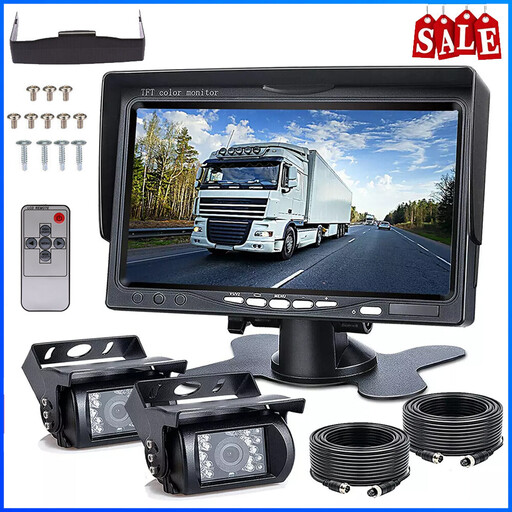
Why This Fits Their Persona: A practical option for owners of trucks, buses, vans, caravans and motorhomes who primarily need a dedicated reversing display rather than a smartphone-connected recorder.
It is presented as a reversing and rear-view system rather than a high-resolution journey recorder. The kit includes two cameras, a 7-inch monitor and a 10-metre video cable.
12V–24V operation, IP67 camera housing, 18 infrared LEDs and a 7-inch 800×480 display.
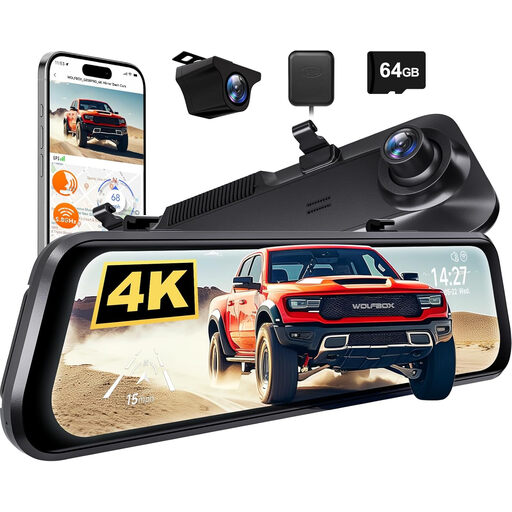
Why This Fits Their Persona: Suitable for drivers wanting a mirror-style screen, detailed front recording and added connectivity in a universal 12V–24V vehicle accessory.
The specification separates front 4K recording from rear 1080P recording and states that parking monitoring requires a hardwire kit, making the extra installation requirement clear.
12-inch IPS touchscreen, 5.8GHz and 2.4GHz Wi-Fi, GPS, included 64GB card, ADAS and BSD features.
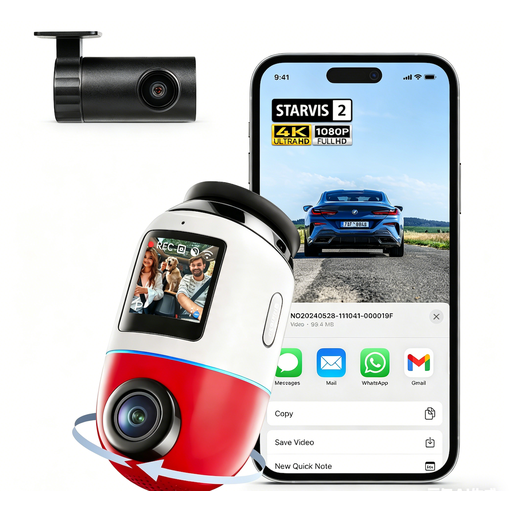
Why This Fits Their Persona: A comprehensive vehicle security camera for drivers seeking wide coverage, app access, parking surveillance and front-and-rear recording.
It specifies the separate hardwire requirement for parking functions and the need for a high-endurance MicroSD card, rather than implying every feature works straight out of the box.
4K 60FPS front recording, 1080P rear recording, 360-degree rotation, GPS, 5G Wi-Fi, 4G LTE and support for storage up to 512GB.
We have compiled a complete, real-time list of products that fully satisfy these strict selection criteria and UK safety regulations.
Keep cables away from pedals, steering components and airbag deployment areas. A rear camera should not obstruct the number plate, lights or the driver’s view. Adjust the monitor to minimise glare and distraction, particularly when driving at night.
If footage may include other people or vehicles, review the camera’s privacy settings and use recordings responsibly. For commercial vans, taxis or fleet vehicles, additional workplace and data protection considerations may apply.
No. A rear view or backup camera primarily assists with visibility behind the vehicle, especially while reversing. A dash cam records driving footage, usually from the front, and may also record the rear or sides. Some mirror systems combine both functions.
The main ongoing costs are replacement MicroSD cards and, where required, a hardwire kit or professional installation. Wi-Fi and GPS do not usually require a subscription, but 4G-connected functions may depend on a mobile data plan. Check the product and network requirements before purchase.
Lifespan depends on heat, cold, vibration, moisture, installation quality and memory-card wear. Supercapacitor-equipped models may be suited to temperature variation, while any camera benefits from protected cable connections, regular lens cleaning and periodic memory-card formatting. Always check that recordings are being saved correctly rather than assuming continuous operation.