
24/7 Customer Support

Free returns

Same-day & Next-day Delivery

Quality Guaranteed

Unlock Your Welcome Offers: FREE Delivery | Up to 80% OFF | Free 30-day JoyPlus trial
Download the APP
Taking pride in your vehicle's appearance means having the right equipment. But the market for car detailing tools is filled with products that promise a showroom finish and often fail to deliver. Many UK car owners find themselves with a collection of gadgets that either damage their vehicle or gather dust in the garage. Before you invest, it's crucial to understand the common pitfalls that lead to wasted money and disappointing results.
The most frequent issues stem from misleading marketing. You might be tempted by an "all-in-one" brush that claims to clean everything from wheels to paintwork, only to find its stiff bristles have left fine scratches on your car's clear coat. Another common trap is the budget cordless car polisher that boasts convenience but whose battery dies before you’ve finished a single door panel. Finally, many purchase a pressure washer car brush attachment, assuming it will fit their machine, only to discover it's incompatible or made from brittle plastic that cracks after a few uses.
This guide will help you navigate these challenges by breaking down the essential features to look for, ensuring your next purchase is a valuable addition to your car care routine.
To choose effective and safe auto detailing supplies, you need to look past the sales pitch and focus on a few key technical details. These parameters determine whether a tool will perform as needed or become a liability.
Not all car cleaning brushes are created equal. The bristles are the most critical component, and using the wrong type can cause irreversible damage.
A car buffer machine can transform your vehicle's paint, but choosing the wrong one can burn through the clear coat in seconds.
Instead of a one-size-fits-all approach, we have matched some practical tools to the people who will get the most from them.
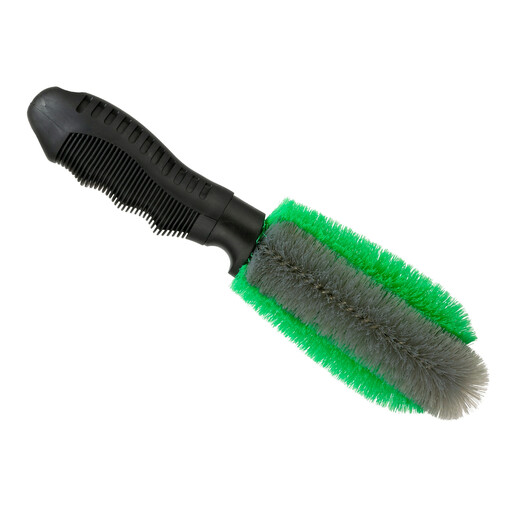
Why This Fits Their Persona: This user understands that wheels need a specialised tool. This brush is designed to get into the complex shapes of modern alloy wheels, a task where a generic brush would fail and risk scratching the finish.
It directly counters the "one-brush-fits-all" pitfall. Its purpose-built design with soft fibres is safe for all wheel types, preventing the transfer of abrasive brake dust to other parts of the car.
The double-loop fibre design allows for 360-degree cleaning around spokes, while the sturdy handle provides excellent grip and control for removing stubborn road grime.
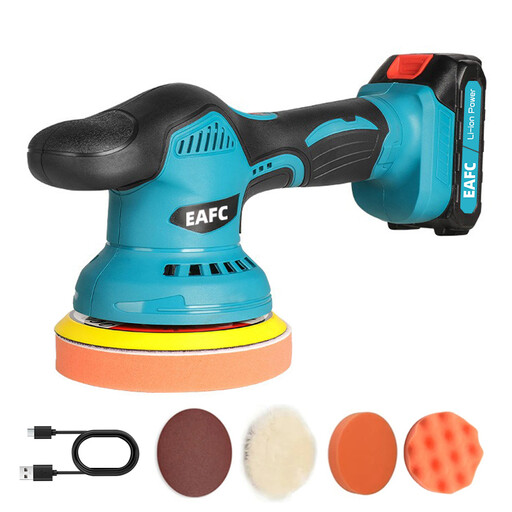
Why This Fits Their Persona: For those who want professional-looking results without spending an entire weekend polishing by hand. This powerful cordless tool offers the freedom and performance to wax or polish an entire vehicle efficiently.
It solves the weak battery problem with a substantial 7500mAh (5x1500mAh) 21V power system, providing enough runtime for a full car. The random orbit action makes it beginner-friendly and safe for paint.
Features 8-speed adjustability (2800-5500 RPM) for total control over polishing and waxing. Its lightweight design (1.13kg) and large 125mm disc improve comfort and coverage.
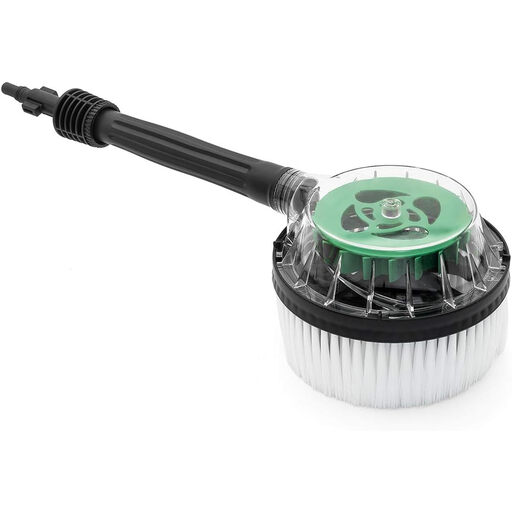
Why This Fits Their Persona: This user already has a compatible Turtle Wax pressure washer and wants to maximise its use for car cleaning. This attachment turns a pressure washer into an automated scrubbing tool, making weekly washes quicker.
It avoids the compatibility trap by being designed specifically for Turtle Wax TW110, TW120 and TW135 models. The soft bristles and rotating action provide a safer clean than a generic, static brush attachment.
The brush's rotation is powered by water flow, requiring no extra electricity and doing the hard scrubbing for you. It is effective at removing road film from paint, glass and plastic surfaces.
We have compiled a complete, real-time list of products that fully satisfy these strict selection criteria and UK safety regulations.
It is strongly advised not to. Wheels accumulate highly abrasive brake dust and sharp road grit. Using a car wheel brush on your paintwork will almost certainly cause deep scratches and swirl marks. Always use separate, dedicated brushes with soft, clean bristles for the bodywork.
This depends on the battery's capacity (measured in mAh), voltage (V) and the speed setting used. A quality polisher with a battery around 4000-7500mAh should provide 30-60 minutes of continuous use, which is typically enough for most cars. For larger vehicles or more intensive correction work, look for models that include a spare battery.
A pressure washer car brush designed specifically for vehicles is generally safe when used correctly. These brushes feature soft bristles and use the water flow to help lubricate the surface and lift dirt gently. The key is to always ensure the brush head is completely clean before it touches the paint, as any trapped grit can cause scratches. It provides a gentler clean than using a high-pressure jet nozzle directly on the paint.