
24/7 Customer Support

Free returns

Same-day & Next-day Delivery

Quality Guaranteed

Unlock Your Welcome Offers: FREE Delivery | Up to 80% OFF | Free 30-day JoyPlus trial
Download the APP
A car diagnostic scanner can help you understand warning lights, monitor live vehicle data and complete selected maintenance procedures without immediately booking a garage visit. However, choosing the right device is not simply a matter of selecting the scanner with the longest feature list.
For UK drivers, DIY car owners, mobile mechanics and small workshops, the main challenge is separating useful capability from vague marketing language. A low-cost OBD2 diagnostic tool may only read engine-related codes, while a more advanced model can access several electronic control units, perform service resets or run bi-directional tests.
This guide explains the practical specifications worth checking before you buy.
Some products use “full system” to describe access to the engine, transmission, ABS and SRS only. Others include additional modules such as body control, air conditioning, TPMS or steering systems.
Coverage also depends on the vehicle’s make, model, engine, equipment level and communication protocol. A scanner may support a function in one vehicle but not another, so check compatibility by VIN where possible.
Oil reset, battery registration, electronic parking brake reset, DPF regeneration and injector coding are useful features, but they are not automatically available on every car. Some tools include only a small number of free functions, while others charge for extra software or annual access.
Check whether the advertised functions are included permanently, available for a limited period or sold separately. “Lifetime free updates” should also be read carefully: it may apply to basic diagnostics but not every advanced vehicle software package.
A basic OBD2 code reader may work with standard engine diagnostics but struggle with newer networks. CAN FD and DoIP support can be important for selected newer vehicles, while FCA AutoAuth may be required for secure gateway access on certain Fiat, Chrysler, Dodge and Jeep models.
These protocols improve potential compatibility, but they do not guarantee that every function will work on every vehicle.
For occasional warning-light checks, a simple car fault code reader may be sufficient. Look for standard OBD2 functions such as:
A full-system diagnostic scanner should identify more than the powertrain. Check the exact modules listed, such as ECM, TCM, ABS, SRS, TPMS, HVAC and BCM.
If you carry out servicing at home or work on several vehicles, compare the specific functions rather than just the number advertised. Useful examples include:
The number of functions is only a guide. Availability varies by make, model and year, and some operations require a stable battery supply or a separate manufacturer account.
Handheld scanners offer a dedicated screen and do not rely on a phone. Bluetooth adapters are compact and convenient, but require a compatible Android or iOS device, an app and sufficient phone storage.
For workshops, consider processor performance, display size, battery capacity, report storage and connection stability. Also check whether updates are genuinely free, how activation works and whether an annual subscription applies after an introductory period.
Products carrying relevant conformity markings, such as CE, should still be used according to the supplied instructions. A diagnostic scanner is an information and service device, not a substitute for safe repair procedures or professional judgement where braking, airbags, steering or high-voltage systems are involved.
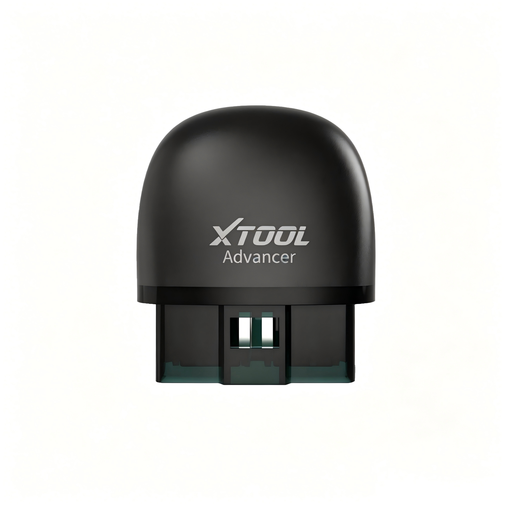
Why This Fits Their Persona: This compact Bluetooth automotive diagnostic tool suits UK drivers who want phone-based checks for multiple family cars, used-car inspections and routine maintenance.
It states no ongoing subscription for standard diagnostics and includes full-system scanning rather than engine-only code reading.
Wireless iOS and Android connection; includes live data, battery monitoring, oil reset and CAN FD support.
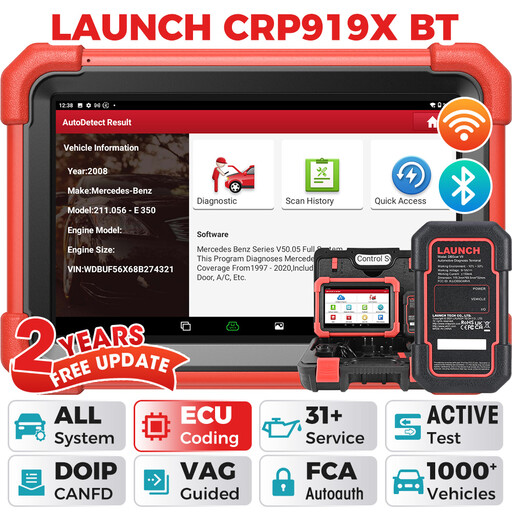
Why This Fits Their Persona: Its tablet format and wireless VCI suit independent garages and experienced home mechanics who need broader diagnostic and maintenance access.
The listing clearly separates its two years of free updates from ongoing ownership and notes that functions vary by vehicle.
All-system diagnosis, active testing, ECU coding, CAN FD and DoIP support; includes 31 reset services.
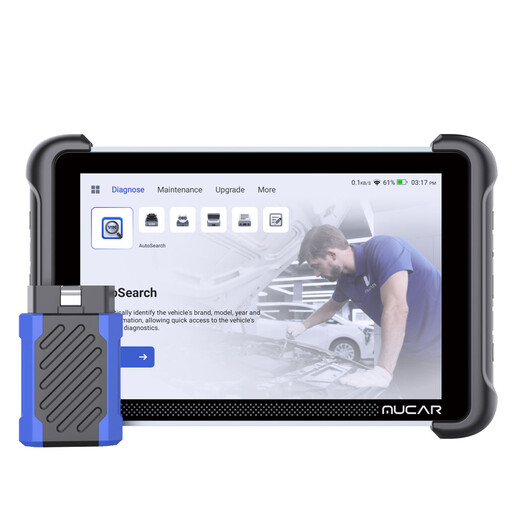
Why This Fits Their Persona: A larger tablet and magnetic VCI are practical for mobile mechanics, independent workshops and users handling varied vehicle models.
It lists protocol support, service-function limits and the need to confirm compatibility instead of presenting coverage as universal.
8-inch touchscreen, ECU coding, bi-directional control, 34+ service functions and CAN FD/DoIP support.
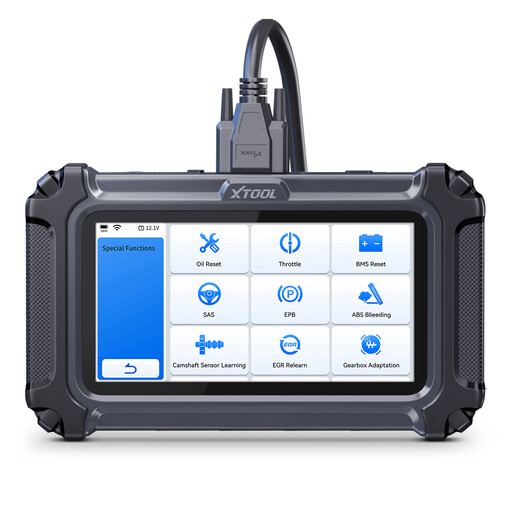
Why This Fits Their Persona: This wired touchscreen scanner is suited to DIY owners and small-footprint repair spaces that want numerous relearn and maintenance options without relying on a phone.
Its listing identifies the number of functions, lifetime update arrangement and vehicle-dependent availability in clear terms.
30+ maintenance functions, four-system diagnostics, live-data graphing, FCA support and CAN FD.
We have compiled a complete, real-time list of products that fully satisfy these strict selection criteria and UK safety regulations.
Many petrol cars sold in the UK from the relevant OBD2/EOBD period support standard engine diagnostics, while diesel compatibility can differ. Full-system access and special functions depend on the individual vehicle, so confirm the make, model, engine and VIN before purchase.
A scanner can read fault codes and display emissions-readiness information on supported vehicles. Clearing a code does not repair the underlying fault and may reset readiness monitors. Complete repairs first and allow the vehicle to complete any required drive cycles before an MOT test.
They can be, but the included scope varies. Check whether lifetime access covers all diagnostic software, only basic functions or excludes manufacturer authentication and optional service packages. FCA AutoAuth, for example, may require separate registration or payment where applicable.