
24/7 Customer Support

Free returns

Same-day & Next-day Delivery

Quality Guaranteed

Unlock Your Welcome Offers: FREE Delivery | Up to 80% OFF | Free 30-day JoyPlus trial
Download the APP
As a Joybuy Product Recommendation Officer, I often see UK drivers face the same dilemma: a mysterious warning light appears on the dashboard, followed by the daunting prospect of a hefty garage bill. A modern car diagnostic tool offers a way to take back control, letting you understand what’s wrong with your vehicle before you even speak to a mechanic.
However, the market is flooded with options, and it's easy to make a poor choice. Many buyers fall into common traps, purchasing a device that either costs more than expected in the long run or simply isn't up to the job. Before you buy, be aware of these three frequent pitfalls:
To avoid these pitfalls, focus on a few core parameters that determine a tool's true value and capability. Understanding these will help you select a device that meets your needs today and in the future.
The single most important factor is the depth of diagnosis. A basic OBD2 scanner is limited by law to emissions-related engine and transmission faults. For a complete vehicle health check, you need an all system diagnostic scanner.
Modern cars require electronic resets after many common maintenance jobs. A good diagnostic tool can save you a trip to the garage for these tasks alone. Look for key functions such as:
The number and type of available reset functions often separate a DIY tool from a professional one.
Vehicle technology is constantly evolving. To ensure your tool doesn't become obsolete, check for two things: support for modern communication protocols and a fair update policy.
Based on these criteria, we've matched a few standout options to different user needs. Instead of a one-size-fits-all approach, this is about finding the right tool for you.
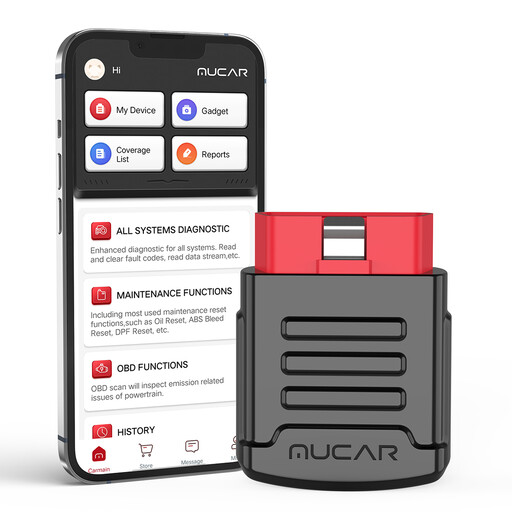
Why This Fits Their Persona: Ideal for the UK-based DIYer who wants to diagnose more than just the engine light without a large initial investment. This wireless car diagnostic tool connects to a smartphone, making it compact and easy to use for checking family cars or inspecting a used vehicle before purchase.
It directly counters the "superficial coverage" pitfall by providing a lifetime free full-system scan. Unlike basic readers, it can access ABS, SRS and transmission systems on over 128 car brands without any ongoing fees for diagnostics.
Lifetime Free Full-System Diagnostics: A true one-off purchase for comprehensive scanning.
Wireless & Portable: The Bluetooth OBD2 scanner design is convenient for diagnostics anywhere.
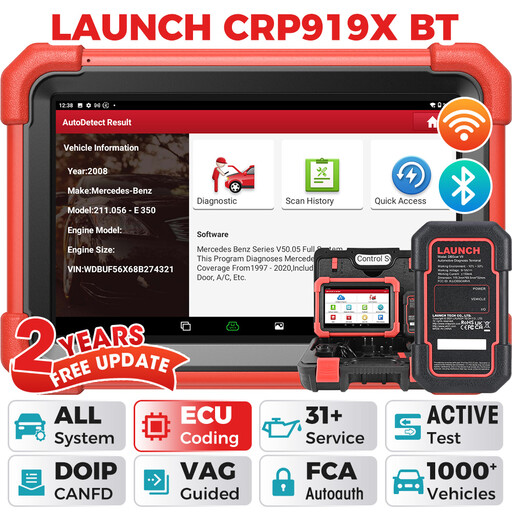
Why This Fits Their Persona: For the enthusiast or small workshop owner in the UK who needs to go beyond reading codes. This tool provides the ability to actively test components and perform a wide range of service resets, making it a powerful all-in-one solution for servicing multiple vehicles.
It avoids the "passive diagnostics" trap by offering full bi-directional control. This allows you to send commands to the car's ECU to test actuators, which is critical for efficient troubleshooting and something basic code readers cannot do.
Bi-Directional Control & ECU Coding: Perform active tests and basic coding.
31+ Reset Services: Covers a vast range of maintenance tasks.
CAN-FD & DoIP Support: Compatible with newer vehicle architectures.
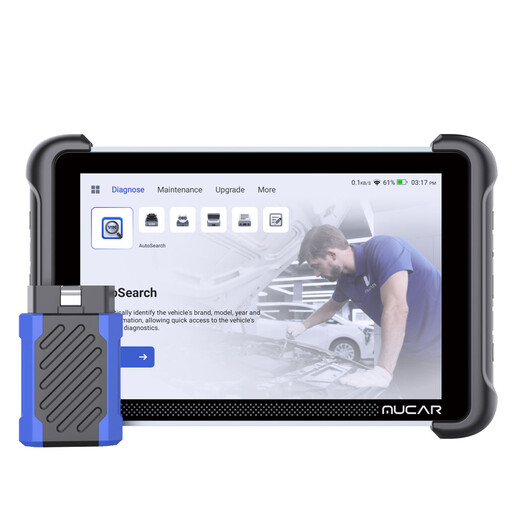
Why This Fits Their Persona: Built for the demanding environment of a professional UK workshop. This tablet-based scanner offers extensive vehicle coverage and advanced functions like ECU coding, all without the burden of annual fees. It's a long-term investment designed to maximise a workshop's diagnostic capabilities and efficiency.
This tool completely eliminates the subscription trap for professionals. It offers lifetime free updates for all functions, including advanced diagnostics, coding and service resets. This provides predictable ownership costs and exceptional long-term value.
Lifetime Free Updates: No annual fees for software, a major cost saving for workshops.
Advanced ECU Coding & 34+ Services: High-level capabilities for complex jobs.
Professional Hardware: 8-inch touchscreen and robust design for workshop use.
We have compiled a complete, real-time list of products that fully satisfy these strict selection criteria and UK safety regulations.
It depends entirely on the model. Some tools, particularly entry-level ones, may require a yearly subscription to access advanced features like all-system scans or special reset functions after an initial free period. Others, like some of the MUCAR models recommended above, offer lifetime free updates for all functions. Always read the product description carefully to understand the update policy before purchasing.
Generally, yes. All petrol cars sold within the EU (including the UK) from 2001 onwards and all diesel cars from 2004 onwards are required to be OBD2 compliant. This guarantees that any OBD2 scanner can read basic engine fault codes. However, for full access to all vehicle systems (ABS, SRS, etc.), compatibility can vary by the car's make, model and year. It is always a good idea to check the scanner's specific vehicle coverage list.
For standard diagnostic procedures like reading or clearing fault codes, the risk is virtually zero. These are read-only operations. However, tools with advanced functions like ECU coding or programming do write new information to your car's control modules. While powerful, these features should be used with caution and a clear understanding of the process, as incorrect coding could potentially affect your vehicle's operation. For beginners, it is wise to stick to diagnostics and standard reset functions.