
24/7 Customer Support

Free returns

Same-day & Next-day Delivery

Quality Guaranteed

Unlock Your Welcome Offers: FREE Delivery | Up to 80% OFF | Free 30-day JoyPlus trial
Download the APP
Modern vehicles are more complex than ever, with dozens of interconnected electronic control units managing everything from the engine and transmission to the airbags and infotainment system. For professional technicians and serious DIY enthusiasts, a basic code reader that only pulls engine fault codes is no longer sufficient. When a warning light appears, you need a tool that can see the whole picture, saving you time, money and the frustration of guesswork.
This guide is designed to help you navigate the crowded market for advanced diagnostic tools. We will outline the key features to look for and present a selection of scanners that offer a strong combination of capability, vehicle coverage and value, helping you find the right tool for your workshop or garage.
Selecting the right car diagnostic tool goes beyond price. Consider these factors to ensure your investment meets the demands of today's vehicle service and repair.
A standard OBD2 code reader typically only communicates with the Powertrain Control Module (PCM). A true professional automotive scanner offers OBD2 scanner full system capabilities, meaning it can access, read, and clear codes from all available modules. This includes the Anti-lock Braking System (ABS), Supplemental Restraint System (SRS/Airbag), Body Control Module (BCM), transmission and more. Furthermore, look for a car code reader with reset functions. Essential service functions like an oil reset tool, Electronic Parking Brake (EPB) service, steering angle sensor (SAS) calibration and battery registration are critical for completing common maintenance tasks without a trip to the dealership.
Reading data is only half the battle. A bi-directional scan tool allows you to send commands to a vehicle's modules to perform active tests. This function is invaluable for pinpointing faults. For example, you can command the fuel pump to turn on, cycle the ABS modulator valves or activate the cooling fans to verify if the component itself or its circuit is faulty. This level of control dramatically speeds up the diagnostic process and confirms repairs accurately.
The automotive industry is constantly evolving. Newer vehicles, particularly from manufacturers like General Motors and Fiat Chrysler Automobiles (FCA), use modern communication protocols like CAN FD. A CAN FD diagnostic tool ensures you can connect to and diagnose these later models. Similarly, some tools offer ECU coding tool functions, which can be necessary when replacing certain modules. Finally, consider the update policy. Tools with lifetime free updates provide excellent long-term value, ensuring your device keeps up with new vehicle models and software without recurring subscription fees.
Here are our recommendations, selected for their comprehensive features, wide vehicle coverage and overall value for professional and advanced users.
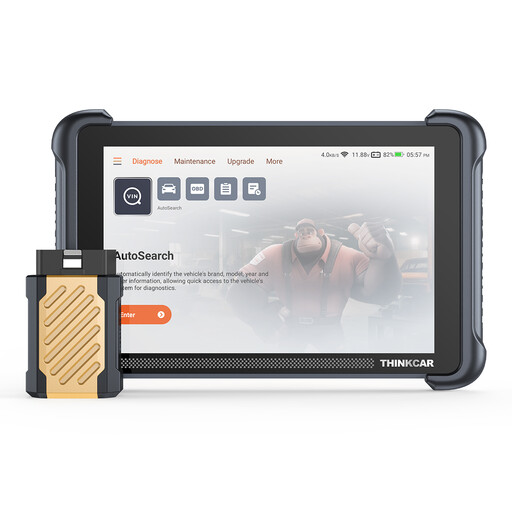
Why It Stands Out The ThinkScan 689BT packs an impressive range of professional features into a user-friendly, tablet-based format. Its support for bi-directional control, ECU coding and modern CANFD & DoIP protocols makes it a versatile choice for a busy workshop. The inclusion of over 34 reset functions combined with a lifetime free update policy presents a compelling, long-term value proposition.
Pros
Who is it for? This tool is well-suited for small to medium-sized garages and advanced DIY mechanics who require a single, powerful device that can handle a wide variety of vehicles and diagnostic tasks, from routine maintenance to more complex module coding.
View THINKCAR ThinkScan 689BT Details
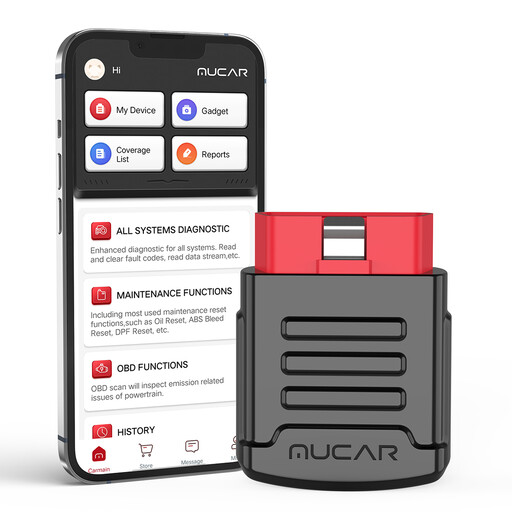
Why It Stands Out The MUCAR BT200 Pro offers a unique approach by turning your smartphone (iOS or Android) into a powerful diagnostic tool. Its standout feature is the lifetime free access to full-system diagnostics for over 128 car brands. This makes it an exceptionally cost-effective solution for those who need deep diagnostic access without the expense of a dedicated tablet.
Pros
Who is it for? Perfect for mobile technicians, car enthusiasts who want more than a basic code reader and workshops looking for an affordable secondary tool. Its portability and lifetime free system scans offer outstanding flexibility and value.
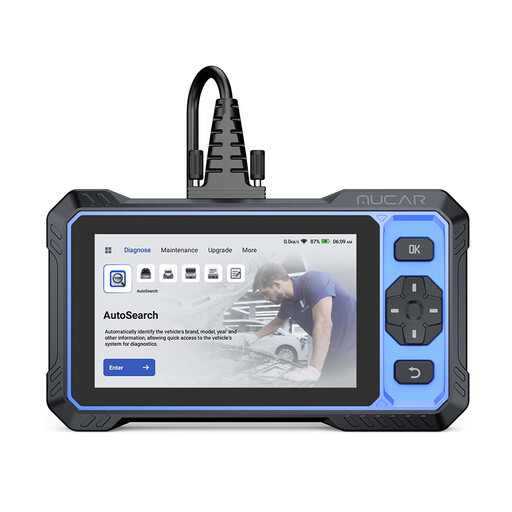
Why It Stands Out The MUCAR 682 is a rugged, dedicated handheld scanner built for the professional workshop environment. It delivers true bi-directional control and OE-level diagnostics, supported by lifetime free updates. Its compatibility with CAN-FD and official FCA AutoAuth access means it is ready to work on modern GM and Fiat-Chrysler vehicles without issue, a critical feature for any professional technician.
Pros
Who is it for? This scanner is aimed squarely at professional technicians and garage owners who need a reliable, all-in-one handheld unit that can perform deep diagnostics and active tests on a wide range of modern vehicles.
While these recommendations cover a broad range of needs, the world of vehicle diagnostics is vast. If you specialise in certain marques or require a different set of features, we invite you to browse our wider collection.
Discover more specialised tools in our European car diagnostic scanner tool category.
What is the difference between an OBD2 code reader and a full system diagnostic tool? An OBD2 code reader is limited to the engine and emissions-related systems, as mandated by law. A full system diagnostic tool can communicate with all of the vehicle's electronic modules, including ABS, airbags, transmission, climate control and body electronics, providing a complete health check of the entire vehicle.
Do I need a bi-directional scan tool? If your work involves more than just reading codes, then a bi-directional scan tool is highly recommended. It allows you to actively test components by sending commands from the scanner, which is essential for accurately diagnosing whether a fault lies with a component, the wiring or the control module itself.
Is an ECU coding tool necessary for a small garage? While not every repair requires it, an ECU coding tool becomes invaluable when replacing electronic modules, programming new keys or customising vehicle features for customers. It expands the range of services a workshop can offer, increasing profitability and reducing the need to send vehicles to a main dealer.