
24/7 Customer Support

Free returns

Same-day & Next-day Delivery

Quality Guaranteed

Unlock Your Welcome Offers: FREE Delivery | Up to 80% OFF | Free 30-day JoyPlus trial
Download the APP
That dreaded orange glow on your dashboard—the check engine light. It can signal anything from a loose fuel cap to a serious engine issue, leaving you with a choice: pay a garage for a diagnosis or invest in your own car diagnostic tool. But navigating the market is a minefield of confusing jargon and overblown claims. Many UK drivers end up with a device that’s either too basic for their needs or comes with costly hidden fees.
As the Joybuy Product Recommendation Officer, my role is to help you sidestep these issues. Before you spend a penny, be aware of these common purchasing traps:
lifetime free updates, but the reality can be disappointing. Often, this only applies to basic engine fault code reader functions. After a year, access to advanced diagnostics or new vehicle models gets locked behind an expensive annual subscription, quickly negating any initial savings.car code reader may be marketed as an all system diagnostic tool, but it often only scans the four main systems: Engine (ECM), Brakes (ABS), Airbags (SRS) and Transmission (TCM). It won't be able to access deeper modules like the Body Control Module (BCM), HVAC or lighting systems, leaving you in the dark about many potential faults.To make a smart investment, focus on the technical capabilities, not just the marketing buzz. Here are the non-negotiable parameters to check.
A standard OBD2 scanner is a one-way street: it reads fault codes and live data from your car's computer (ECU). A bi-directional scan tool, however, creates a two-way conversation. It can send commands to the vehicle to test specific components.
For example, you can command the tool to:
This "active test" capability allows you to pinpoint the exact point of failure without dismantling parts, saving immense time and preventing the costly guesswork of replacing perfectly good components. For anyone looking to do more than just read a code, bi-directional control is essential.
Modern cars require electronic resets after many common maintenance jobs. A good diagnostic tool should include a comprehensive suite of service functions. Key resets to look for include:
Crucially, verify the update policy. A tool with genuine lifetime free updates for all its functions, including new vehicle models and reset services, offers far greater long-term value than one requiring yearly subscriptions.
Vehicle technology is constantly evolving. To ensure your tool remains useful for years to come, it must support the latest communication protocols.
Based on these critical criteria, we've identified several tools that offer a clear and honest value proposition for different types of users in the UK.
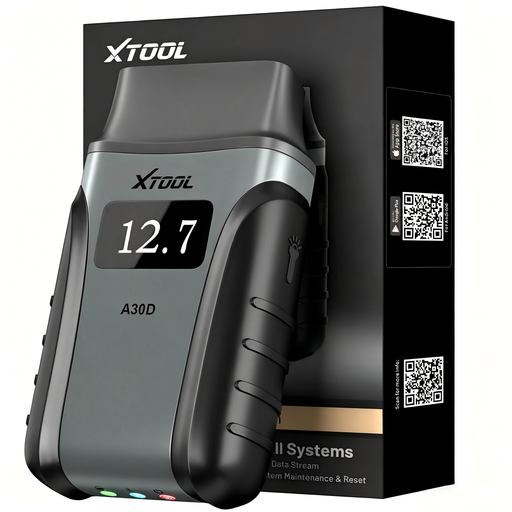
Why This Fits Their Persona: This compact bluetooth car diagnostic tool is ideal for the home mechanic who wants more than just a code reader. It turns your smartphone into a powerful diagnostic device, offering features usually found in much more expensive units. It's perfect for troubleshooting issues around the house or keeping in the glovebox for emergencies.
It offers full bi-directional control and lifetime free updates for its 19 reset functions, directly countering the trap of paying for a read-only tool or getting hit with surprise subscription fees after a year.
Bi-directional control at an accessible price point. It also supports CAN FD and FCA AutoAuth, providing good coverage for modern vehicles.
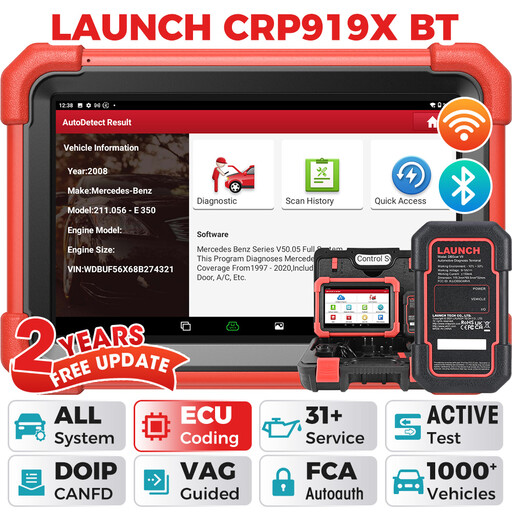
Why This Fits Their Persona: For the enthusiast or small workshop owner who tackles complex jobs, this tablet-based tool provides a significant step up. It offers workshop-level capabilities, including some ECU coding functions, making it suitable for module replacements and enabling hidden features on certain vehicles.
It delivers true all-system diagnostics with support for CAN FD and DoIP protocols, avoiding the compatibility trap of cheaper tools that fail on newer UK and European cars. The two-year free update period is also clearly stated.
A powerful combination of bi-directional control, 31+ reset services and ECU coding functions. The wireless VCI dongle provides freedom of movement around the vehicle.
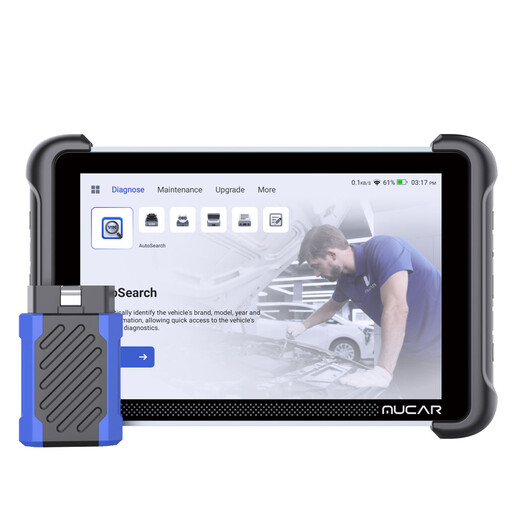
Why This Fits Their Persona: For a professional garage or mobile technician, controlling operational costs is paramount. This tool is a serious investment that pays for itself by eliminating annual software licence fees. It's built for heavy use, with advanced coding, broad protocol support and expandability for other workshop tools.
This tool's main selling point is its genuine lifetime free updates for all functions. This directly solves the biggest pitfall for professional users: the spiralling cost of annual subscriptions that can run into hundreds of pounds per year.
No subscription fees ever. It also features an advanced ECU coding tool, supports CAN-FD & DoIP and has a magnetic VCI for secure attachment in a busy workshop environment.
We have compiled a complete, real-time list of products that fully satisfy these strict selection criteria and UK safety regulations.
First, confirm your vehicle is OBD2 compliant. In the UK, this applies to all petrol cars sold from 2001 and diesel cars from 2004. However, for full system access and special functions, you must check the manufacturer's specific vehicle coverage list. Reputable brands provide detailed lists on their websites. Before purchasing, it is always a good idea to contact the seller with your vehicle's make, model, year and VIN to confirm compatibility for the functions you need.
This term can be ambiguous. For some brands, it means free updates for basic OBD2 code reading for the life of the product. For others, it includes all functions—all-system diagnostics, special resets and new vehicle coverage—without any future fees. It is vital to read the product description carefully and look for explicit confirmation that all software and functions are included in the lifetime update promise to avoid unexpected costs.
Using a bi-directional tool is generally safe if you follow the on-screen instructions carefully. These tools are designed to activate components within their normal operating parameters. However, functions like ECU coding or programming carry more risk and should only be performed if you understand the process and its consequences. For basic active tests like turning on a fan or light, the risk is minimal. For more advanced procedures, always ensure your car battery is stable (connect a charger if needed) and never interrupt the process once it has started.