
24/7 Customer Support

Free returns

Same-day & Next-day Delivery

Quality Guaranteed

Unlock Your Welcome Offers: FREE Delivery | Up to 80% OFF | Free 30-day JoyPlus trial
Download the APP
A reliable car fridge can transform any journey, whether you're a lorry driver on a long haul, a family heading to the coast, or a camper exploring the Highlands. It promises fresh food and chilled drinks, freeing you from service station snacks and soggy sandwiches. However, the market is filled with options that can easily lead to disappointment. Many buyers find their new gadget is little more than an insulated box, or worse, it leaves them with a dead car battery.
As the Joybuy Product Recommendation Officer, my role is to help you navigate these choices. This guide cuts through the marketing clutter to focus on what truly matters, ensuring you invest in a portable refrigerator that meets your needs. We'll highlight the common pitfalls and the key features to look for.
Before looking at models, it's crucial to understand the frequent issues that catch buyers out. Being aware of these can save you both money and frustration.
electric cool box expecting it to perform like a true portable fridge freezer. Thermoelectric units can only cool to a certain temperature below the ambient air temperature (typically 15-20°C lower). On a warm 25°C day, your unit might only reach 5-10°C, which is not cold enough to safely store meat or dairy. For true refrigeration, especially in summer, a compressor model is often necessary.mini car fridge might be perfect for a solo commuter but wholly inadequate for a family weekend. Always measure your vehicle's available space and consider how you will move the unit before purchasing.To make an informed decision, focus on these two non-negotiable specifications. They determine performance, reliability and suitability for your specific use.
This is the single most important factor.
12v compressor fridge works just like your kitchen refrigerator. It uses a refrigerant to actively cool the interior to a specific, set temperature, regardless of the outside weather. You can set it to 3°C for milk or -18°C to keep food frozen. This technology is essential for anyone on multi-day trips, carrying perishable food, or needing reliable freezing capability. They are more powerful and efficient for serious cooling.electric cool box or cooler/warmer, these use a principle called the Peltier effect. They are simpler, lighter and generally less expensive. They are a good choice for short trips to keep pre-chilled drinks and snacks cool. Many also offer a warming function. However, their performance is directly tied to the ambient temperature, making them less reliable for true refrigeration in warm conditions.A versatile camping fridge should offer flexible power options and safeguard your vehicle.
Instead of a generic list, we've matched specific models to the people who will get the most out of them.
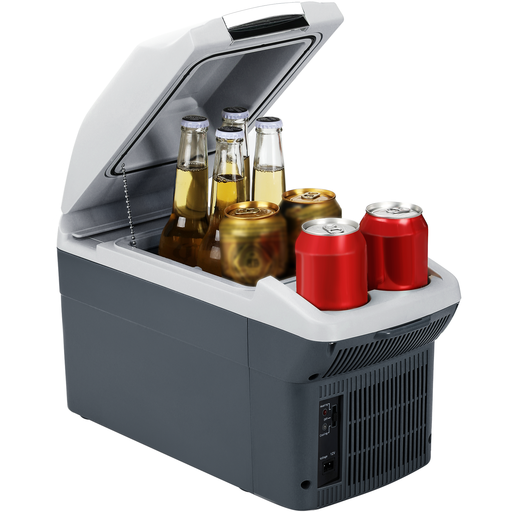
Why This Fits Their Persona: Ideal for keeping drinks and a packed lunch cool on a day out. Its compact 9L size fits neatly on a passenger seat, and the shoulder strap makes it easy to carry to a picnic spot. The dual cup holders are a practical touch for in-car use.
This is an honest thermoelectric cooler, not pretending to be a freezer. It's designed for keeping things cool, which is exactly what a day-tripper needs, avoiding the "Cooler vs. Fridge" confusion.
Lightweight and Portable: Easy to carry from the car. Cooling and Warming Functions: Versatile for both summer and winter outings.
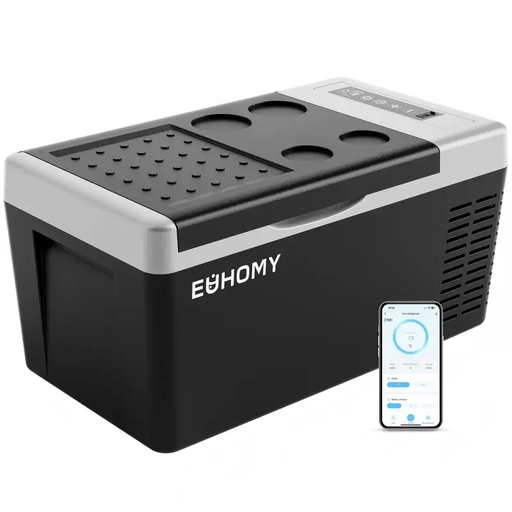
Why This Fits Their Persona: For those needing reliable refrigeration in their `campervan fridge` or for weekend trips. The 18L capacity is a great balance, holding essentials without being too bulky. It's a proper `portable fridge freezer` for keeping food safe for days.
Its compressor technology provides true cooling down to -20°C, solving the "Cooler vs. Fridge" problem. The integrated 3-stage battery protection prevents the "Battery Drain Nightmare".
True Freezing Capability: Functions as a fridge or freezer. Dual Power (AC/DC): Use it in the car or at home. APP control adds modern convenience.
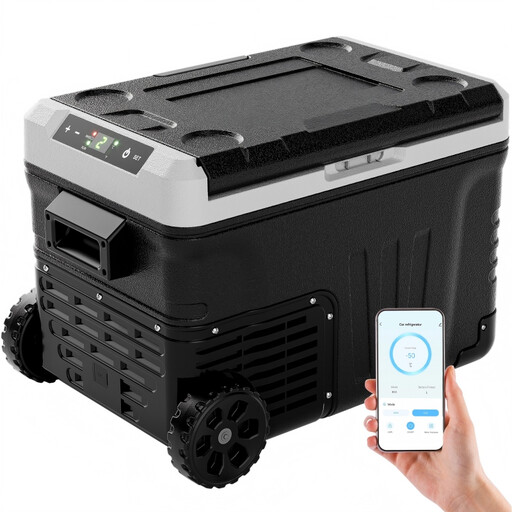
Why This Fits Their Persona: For lorry drivers, large families, or long-term caravanners who need serious capacity. The 35L dual-zone design allows for separate fridge and freezer sections. Wheels and handles help manage its size, addressing the practicality pitfall of larger units.
This is a high-performance 12v compressor fridge with robust battery protection, eliminating the two biggest technical pitfalls. The thoughtful design with wheels and handles directly counters the trap of buying a large, impractical box.
Large Dual-Zone Capacity: Keep items frozen and chilled simultaneously. Excellent Portability Features: Wheels and handles make it manageable despite its size.
We have compiled a complete, real-time list of products that fully satisfy these strict selection criteria and UK safety regulations.
You can, provided the unit has a reliable multi-stage battery protection system. Set the protection to 'High' or 'Medium'. This will command the fridge to shut down before the battery level becomes critically low, ensuring you can still start your vehicle. Without this feature, it is not recommended to leave it running overnight when the engine is off.
A compressor car fridge uses a refrigerant cycle to achieve and maintain a set temperature, just like a home fridge. It can freeze items even on a hot day. An electric cool box uses thermoelectric technology, which can only reduce the temperature by a fixed amount below the surrounding air. It cools, but it cannot guarantee a specific low temperature, making it less suitable for perishable foods in warm weather.
Power consumption varies. A thermoelectric cooler typically uses around 40-60 watts continuously. A 12v compressor fridge is more efficient; it uses a similar amount of power (e.g., 45-60 watts) but only runs intermittently to maintain the set temperature, much like your fridge at home. The total energy used over 24 hours is often lower for a compressor model, especially in an energy-saving or 'ECO' mode.