
24/7 Customer Support

Free returns

Same-day & Next-day Delivery

Quality Guaranteed

Unlock Your Welcome Offers: FREE Delivery | Up to 80% OFF | Free 30-day JoyPlus trial
Download the APP
A reliable car fridge can transform any road trip, camping adventure or long-haul drive. It means fresh food, cold drinks and freedom from the endless cycle of melting ice bags. However, the market is filled with options that look similar but perform very differently. Choosing the wrong one can lead to spoiled food, a drained car battery or a unit that simply gives up after a few bumpy journeys.
As the Joybuy Product Recommendation Officer, my role is to help you navigate these choices. Before you spend your money, be aware of these common pitfalls that catch out many UK buyers:
12v fridge.To ensure you get a portable fridge freezer that works for you, focus on the technical specifications, not just the marketing claims. Here are the non-negotiable features to analyse.
This is the single most important factor. Understanding the difference will save you from disappointment.
camping fridge or campervan fridge.mini fridge for car, these use a principle called the Peltier effect. They are simpler, lighter and generally less expensive. However, their cooling power is limited to approximately 15-20°C below the ambient temperature. If it's 25°C in your car, the cooler might only reach 5-10°C inside. They cannot freeze and are best suited for keeping already-cool drinks and snacks chilled on short trips.To avoid draining your car's starter battery or your campervan's leisure battery, look for a model with a 3-stage battery protection system. This feature automatically shuts the fridge off if the vehicle's battery voltage drops to a pre-set level. These levels are typically labelled:
A fridge without this adjustable feature is a significant risk, especially if you plan to run it while the engine is off.
Consider how you will use the fridge. A 9-litre unit is compact and easy to carry, perfect for a solo driver's lunch and drinks. A family heading out for a weekend will likely need 30 litres or more to store enough food. Also, check the unit's weight and dimensions to ensure it fits in your vehicle. Look for features like a shockproof design and a stated ability to operate on an incline (e.g., up to 30-45 degrees), which indicates it's built for the realities of travel.
We've matched some popular models to the people they are most suited for, helping you find a unit that fits your specific needs.
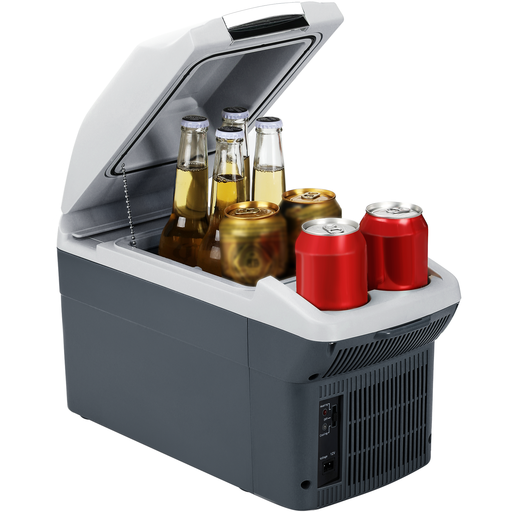
Why This Fits Their Persona: This thermoelectric cooler is ideal for keeping lunch and drinks chilled during a commute or a day out. Its compact design, integrated cup holders and shoulder strap make it incredibly convenient for simple, short-term use in a standard car.
By being an affordable and honest thermoelectric cooler, it avoids the trap of over-promising. It's designed for chilling, not freezing, which is exactly what this user needs, preventing them from overspending on a compressor they won't use.
Dual Function: Can both cool and warm. Vehicle-Friendly Design: Compact size with cup holders and a strap for easy transport and placement.
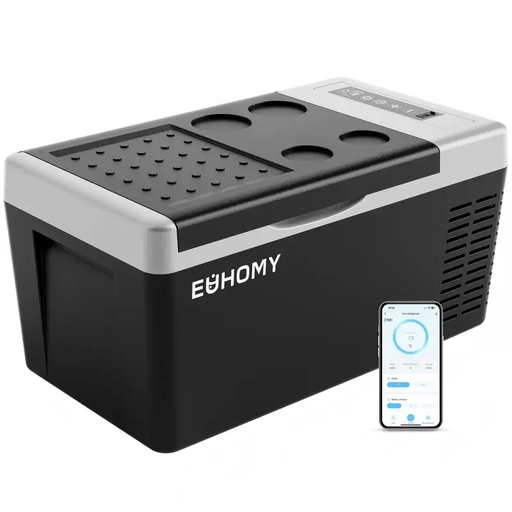
Why This Fits Their Persona: This is a true compressor fridge freezer, perfect for keeping food safely chilled or frozen over a weekend trip. The 18L capacity is a great balance for a couple or small family and its anti-shock design is built for campervan life and less-than-perfect roads.
It directly solves the "cooler vs. fridge" problem with its compressor technology and wide temperature range (-20°C to +20°C). The 3-stage battery protection prevents the dreaded dead battery and its anti-shock build addresses durability concerns.
True Freezing Capability: Functions as a proper fridge or freezer. Modern Features: Includes APP control for remote monitoring and a robust 3-stage battery protection system.
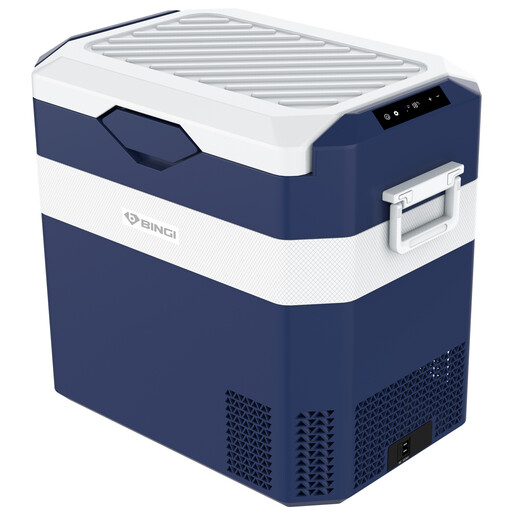
Why This Fits Their Persona: For those on the road for days or weeks at a time, capacity is king. This 38L compressor unit offers ample space for groceries, making it ideal for lorry drivers, boat owners or families on extended holidays. Dual power (12V/24V DC & AC) adds crucial versatility.
Its large capacity and true compressor freezing (-18°C) are designed for serious, long-term use, avoiding the limitations of smaller coolers. While battery protection isn't explicitly detailed as 3-stage, its design for lorry (24V) and home (AC) use implies a robust power management system.
Large 38L Capacity: Holds a significant amount of food and drink for long trips. Versatile Power Options: Runs on 12V/24V DC in a vehicle and 100-240V AC at home or a campsite.
We have compiled a complete, real-time list of products that fully satisfy these strict selection criteria and UK safety regulations.
A car fridge almost always refers to a unit with a compressor, which functions like a home refrigerator and can reliably cool and freeze to specific temperatures (e.g., -20°C) regardless of the outside weather. An electric cool box is typically thermoelectric and can only cool to a set amount below the ambient temperature, making it less effective in hot weather and incapable of freezing.
Yes, provided the fridge has a reliable, multi-stage battery protection system. When you park for the night, set the protection to 'High'. This ensures the fridge will shut off before the battery level drops too low to start your engine. If you are using a separate leisure battery in a campervan, you can often use a 'Medium' or 'Low' setting for longer run times.
A modern compressor car fridge is quite efficient. It typically draws around 45-60 watts, but only when the compressor is actively running to maintain the temperature. Once cold, the compressor cycles on and off, saving power. A thermoelectric cooler, by contrast, tends to draw a constant amount of power whenever it is switched on.