
24/7 Customer Support

Free returns

Same-day & Next-day Delivery

Quality Guaranteed

Unlock Your Welcome Offers: FREE Delivery | Up to 80% OFF | Free 30-day JoyPlus trial
Download the APP
Upgrading your vehicle's cabin with modern car interior lights can transform your driving experience, adding a touch of personal style and improving visibility. However, the market is flooded with options, and it's easy to make a purchase you'll later regret. Many UK drivers find their exciting DIY project turns into a frustrating ordeal with flickering lights, dashboard errors or a finish that looks cheap.
As the Joybuy Product Recommendation Officer, my role is to help you navigate these choices. We'll look past the marketing hype and focus on the practical details. Before you spend your money, be aware of these common pitfalls:
To ensure your car lighting upgrade is a success, focus on these core parameters. They are the difference between a satisfying, long-lasting modification and a waste of time and money.
The type of lighting you need depends entirely on your goal. There are two main categories:
This is non-negotiable for most cars made in the last 15 years. A true W5W canbus error free bulb has a built-in resistor that mimics the electrical load of a traditional halogen bulb. This satisfies the vehicle's bulb-check system and prevents it from triggering a false warning light on your dashboard. Always verify that the product explicitly states it has this feature, especially if you drive a European brand like VW, Audi, BMW or Mercedes.
Modern car ambient lighting kits offer a range of control methods. The most popular is Bluetooth app control, which unlocks a host of features:
We've filtered through the options to find products that address the common pitfalls and deliver on their promises. Here are our recommendations, matched to different types of UK car enthusiasts.
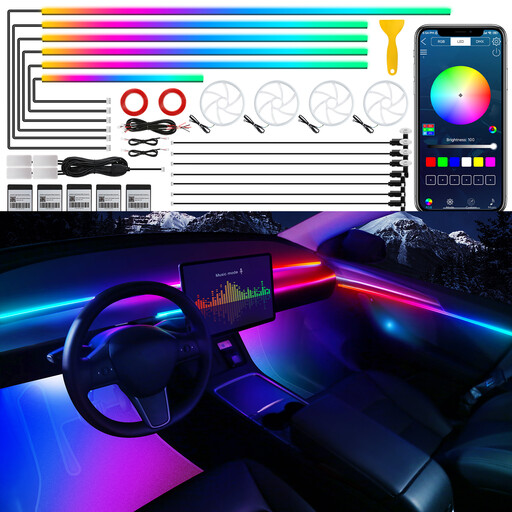
Why This Fits Their Persona: For the DIY enthusiast who wants a complete, cohesive lighting overhaul. This kit is designed to illuminate almost every part of the interior, from the dashboard and doors to footwells, storage bins and even speaker horns, creating a fully integrated look.
It directly counters the "universal fit" problem by providing a huge 22-piece set with multiple strip lengths, sub-controllers for easy wiring and a pry tool, ensuring you have the right components for a clean installation in most cars.
The acrylic strips provide a very uniform, soft glow, avoiding hotspots. The dual-zone control via the app allows for advanced customisation, letting you set different colours for the main strips and the accent lights.
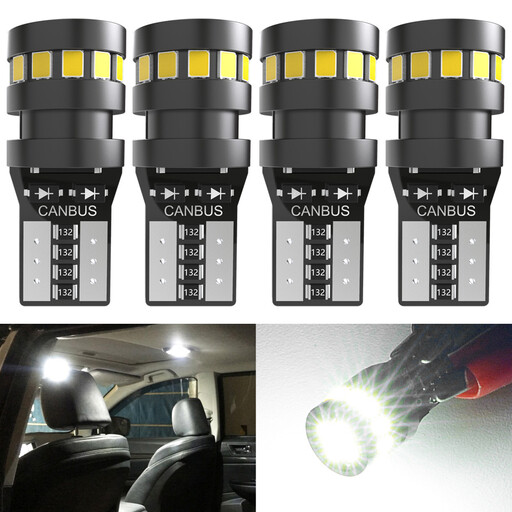
Why This Fits Their Persona: Perfect for the driver who wants a simple, effective upgrade without the complexity of an RGB kit. They just want to replace their car's standard interior bulbs with a crisp, bright white light for a more modern feel and better visibility.
These bulbs are specifically designed to be CANBUS error free for the vast majority of vehicles. The built-in intelligent IC driver ensures compatibility, directly solving the dashboard warning light problem for a simple plug-and-play installation.
The 360-degree lighting angle from its 18 chipsets eliminates the dark spots common with lesser LED replacement bulbs. The full aluminium body aids in heat dissipation, contributing to a longer operational life.
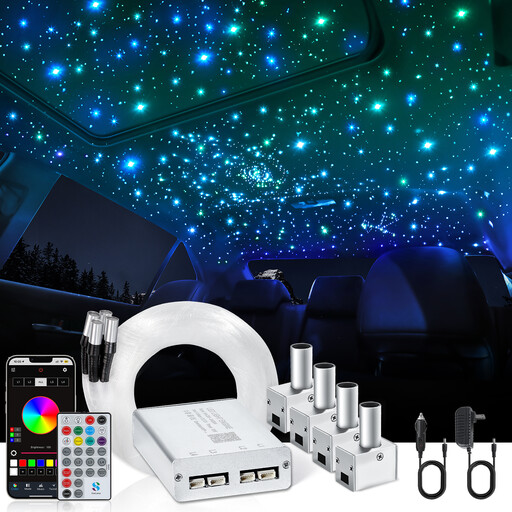
Why This Fits Their Persona: For the car owner aiming for the ultimate "wow" factor. A starlight headliner kit replicates the starry night sky effect found in ultra-high-end luxury vehicles. This is a more involved project, but the result is unparalleled.
This kit avoids the "uneven lighting" pitfall by its very nature. With 1000 individual fibre optic strands, it creates a beautifully distributed and randomised starfield effect, which is far superior to trying to achieve a similar look with LED strips.
The split design with 4 light source ports allows for more fibres and zoned colour control, meaning you can have different sections of your "sky" in different colours. It includes both app and RF remote controls, plus a pure white light mode.
We have compiled a complete, real-time list of products that fully satisfy these strict selection criteria and UK safety regulations.
1. Are aftermarket car interior lights legal in the UK? Yes, as long as they are used correctly. The law states that lights must not distract the driver or other road users. This means any coloured or flashing lights should not be directly in the driver's line of sight or be bright enough to be seen from outside the vehicle in a way that could be confused with emergency service lights. For general use, a static, dimmable ambient light is perfectly acceptable.
2. Will an RGB LED strip for a car drain my battery? Modern LED lighting is extremely energy-efficient. A full car atmosphere light kit typically draws a very small amount of power, far less than your headlights or even your standard interior dome light. When the car is off, the control module enters a low-power standby mode. As long as your car battery is healthy, leaving a kit installed will not cause any noticeable drain.
3. Can I install a car ambient lighting kit myself? For most kits, yes. Products like fibre optic strips and plug-in T10 bulbs are designed for DIY installation. They usually come with a plastic pry tool to help you safely open gaps in your car's trim. You simply tuck the strip in, hide the wires and plug the controller into a 12V socket or USB port. More complex installations, like a starlight headliner kit, require removing the headliner and can be more time-consuming, but are still achievable for a confident DIYer. Always test the lights before fully installing them.