
24/7 Customer Support

Free returns

Same-day & Next-day Delivery

Quality Guaranteed

Unlock Your Welcome Offers: FREE Delivery | Up to 80% OFF | Free 30-day JoyPlus trial
Download the APP
A car jack is easy to underestimate. Many buyers focus on the headline lifting capacity, only to discover that the tool does not fit beneath the vehicle, cannot reach the correct jacking point or is awkward to store in a boot.
The most suitable car jack depends on your vehicle, available working space and intended use. A compact emergency tyre change jack is not automatically suitable for servicing a vehicle, while a large garage jack may be impractical to carry in a saloon.
A 3 tonne car jack may appear suitable for almost any vehicle, but capacity is only one part of the decision. The jack must also have an appropriate lifting range, saddle size and base position for the manufacturer-approved jacking points.
Never assume that a larger jack is safer for every vehicle. A heavy trolley jack may not fit beneath a lowered sports car, while a 1 tonne car jack may not be appropriate for a large SUV or campervan.
A hydraulic car jack or scissor car jack is designed to raise a vehicle. It should not be treated as the sole support while working underneath it. Once lifted, use correctly rated jack stands placed at approved support points.
A pair of 6 tonne jack stands can suit larger SUVs, 4x4 vehicles and light trucks, but the vehicle manufacturer’s instructions and the stands’ rated capacity still need to be checked before use.
The minimum height is particularly important for low-clearance vehicles. A jack that starts too high cannot be positioned correctly under a lowered saloon or sports car.
Storage is another practical consideration. A foldable car jack may fit inside a spare-wheel compartment, whereas a floor jack or garage jack generally needs dedicated space in a garage or workshop.
Select a rated capacity that is appropriate for the vehicle and the lifting point. Common options include a 1 tonne car jack, 2 tonne car jack and 3 tonne car jack. The listed capacity should not be treated as permission to lift beyond the vehicle’s requirements or to raise the entire vehicle at once.
For larger vehicles, consider whether a heavy-duty floor jack and separate support stands are more suitable than a compact roadside jack.
Compare the jack’s minimum height with the clearance beneath your vehicle. A low-profile car jack is more suitable for vehicles with limited ground clearance, while a taller floor jack may provide more useful reach for SUVs and 4x4s.
The maximum height also matters. If the jack cannot raise the vehicle sufficiently to remove a wheel or access the intended work area, its capacity will not compensate for the short reach.
Look for a stable base, suitable saddle and a construction material that matches your use. Forged alloy steel can help keep a scissor jack compact, while welded steel and cast components are more common in heavy-duty workshop equipment.
A trolley jack with front and swivel castors is easier to position on a firm, level garage floor. However, wheels do not make an unsuitable surface safe. Avoid soft ground, loose gravel and slopes, and follow the vehicle manufacturer’s jacking instructions.
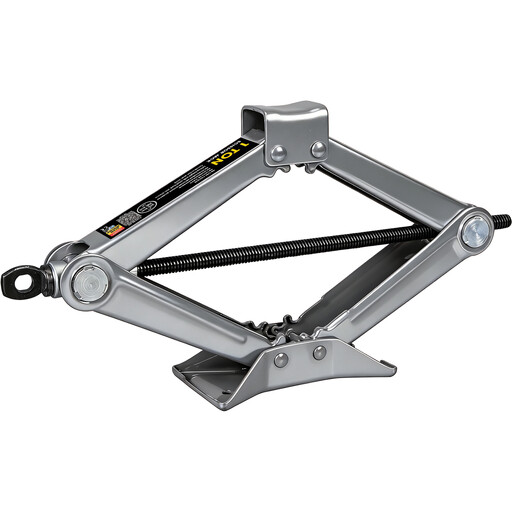
Why This Fits Their Persona: A practical option for drivers who want an emergency tyre change jack that can remain in the boot of a saloon, city SUV or low-clearance car.
Its stated 88mm starting height addresses the clearance problem, while the foldable design helps avoid buying a jack that is too bulky for everyday vehicle storage.
88–380mm lifting range, 1 tonne rated capacity, widened non-slip base and compact 88mm folded height.
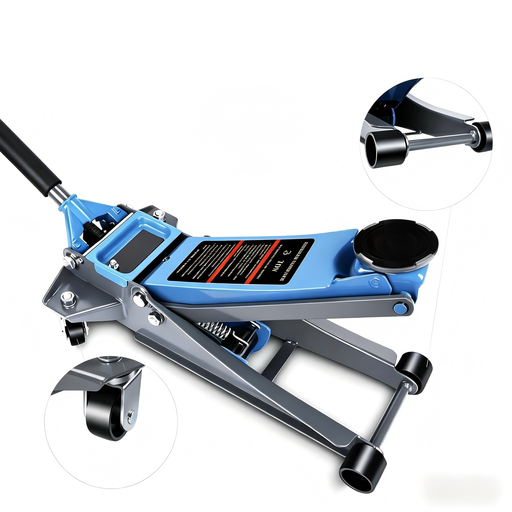
Why This Fits Their Persona: Suitable for home mechanics and garage users who want a mobile hydraulic floor jack for regular work on cars, SUVs and some light trucks.
The 73mm minimum height helps with lower vehicles, while the stated load-limiting protection and replaceable rubber saddle address common concerns about positioning and overloading.
3 tonne capacity, 73–500mm lifting range, dual-piston pump and four-wheel manoeuvrability.
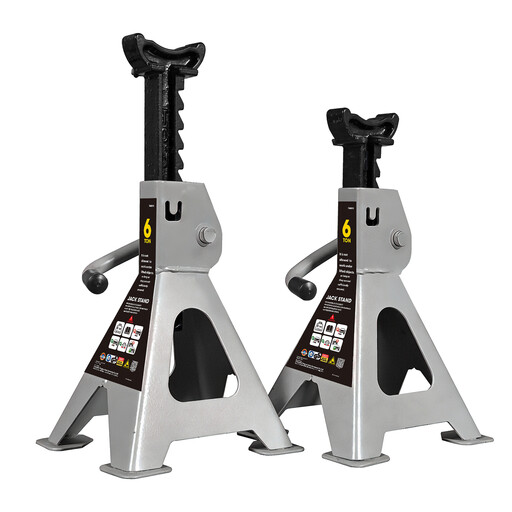
Why This Fits Their Persona: Intended for workshop users, owners of large SUVs and 4x4 vehicles, and those needing raised support after lifting with a suitable car jack.
These stands are designed specifically for supporting rather than lifting, helping avoid the dangerous mistake of relying on a hydraulic jack alone. The listing states EN 1494 certification.
6 tonne rated capacity, 388–580mm adjustable height, welded steel structure and rubber saddles.
We have compiled a complete, real-time list of products that fully satisfy these strict selection criteria and UK safety regulations.
For a brief wheel change, follow the vehicle and jack instructions carefully, but do not work beneath a vehicle supported only by a car jack. Use suitably rated jack stands for inspections, repairs and any task requiring access underneath.
Lifespan depends on load, frequency of use, storage and maintenance. Inspect for bent parts, damaged welds, hydraulic leaks, unstable wheels, worn saddles and a release mechanism that does not operate smoothly. Remove damaged equipment from service rather than relying on its original capacity label.
Usually, a trolley jack is more appropriate for a garage or workshop because of its size and weight. For roadside emergencies, a foldable scissor car jack is generally easier to carry. Always check its capacity and height range against the vehicle before travelling.