
24/7 Customer Support

Free returns

Same-day & Next-day Delivery

Quality Guaranteed

Unlock Your Welcome Offers: FREE Delivery | Up to 80% OFF | Free 30-day JoyPlus trial
Download the APP
Buying one of the many car jacks available online can seem straightforward until you discover that lifting height, vehicle clearance and load capacity vary considerably. A jack suitable for a small hatchback may be unsuitable for an SUV, while a compact roadside model may not provide the range or stability needed for workshop maintenance.
This guide explains the specifications that matter, highlights common buying traps and matches four products to different UK driving and garage-use profiles.
A listing may show “2 ton”, “3 ton” or “6 ton”, but this is the jack’s rated lifting capacity, not an instruction to lift any vehicle weighing up to that figure without checking the manual. You also need to consider the vehicle’s kerb weight, the section being lifted and the manufacturer’s recommended jacking points.
Never rely on a car jack alone while working underneath a vehicle. Use appropriately rated axle stands on firm, level ground.
A jack with a high minimum height may not fit beneath a lowered car, sports model or vehicle with a flat tyre. This is where a low-profile car jack or scissor jack can be useful. Conversely, a model that fits under a small car may not extend high enough to lift an SUV or light commercial vehicle safely.
Always measure the clearance from the ground to the approved jacking point before buying.
A portable car jack is convenient for emergency tyre changes, but compact designs usually require more manual effort and may offer less lifting range. A trolley jack or floor jack is easier to manoeuvre around a garage, although its wheels and longer handle require more storage space.
Marketing terms such as “fast lift” should be assessed alongside the actual pump design, saddle size, wheel arrangement and height range.
Match the jack’s rated capacity to your vehicle and intended use:
For workplace users, lifting equipment should be selected, inspected and maintained in line with relevant UK duties, including the Provision and Use of Work Equipment Regulations (PUWER). Check whether additional requirements apply to your working environment.
The lifting range includes the minimum and maximum saddle height. For example, a jack listed at 73–500mm has substantially more height adjustment than a model designed only for emergency wheel changes.
Check both measurements against:
A wide, non-slip saddle can help maintain contact with a suitable jacking point, while a broad base may improve stability on firm ground. Trolley and floor jacks with front castors and swivel wheels are easier to position in a garage.
Avoid using any jack on soft ground, gravel, slopes or unstable paving. If a roadside repair is unavoidable, move away from live traffic where possible, switch on hazard lights and follow the vehicle manufacturer’s emergency guidance.
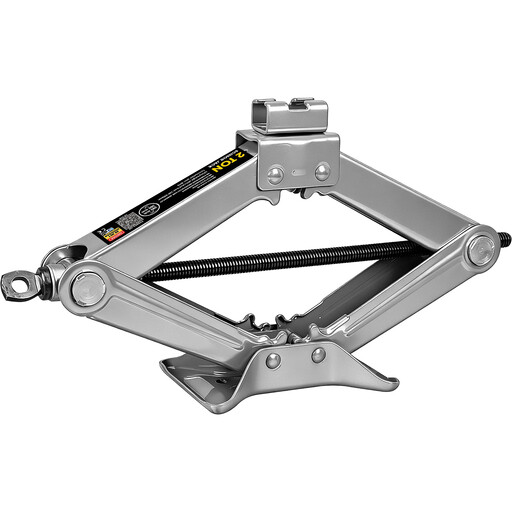
Why This Fits Their Persona: A practical option for drivers who mainly need a jack for tyre changes and emergency use, with compact storage for a boot or spare-wheel compartment.
Its 120–395mm lifting range is stated clearly, helping buyers compare low-clearance fit and usable height rather than capacity alone.
2-ton rated capacity, foldable design, widened non-slip base and a 120mm collapsed height.
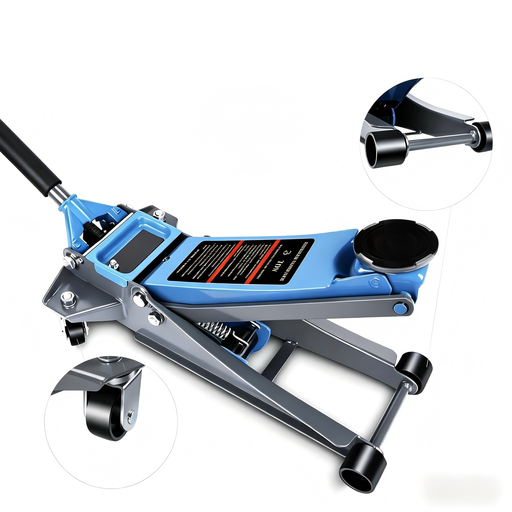
Why This Fits Their Persona: Suitable for home garages where smooth positioning, a broad lifting range and repeated use are more important than boot storage.
The 73–500mm range addresses both low-clearance access and higher lifting needs, while the load-limiting protection counters capacity-related misuse.
3-ton capacity, dual-piston pump, removable rubber saddle and four-wheel manoeuvrability.
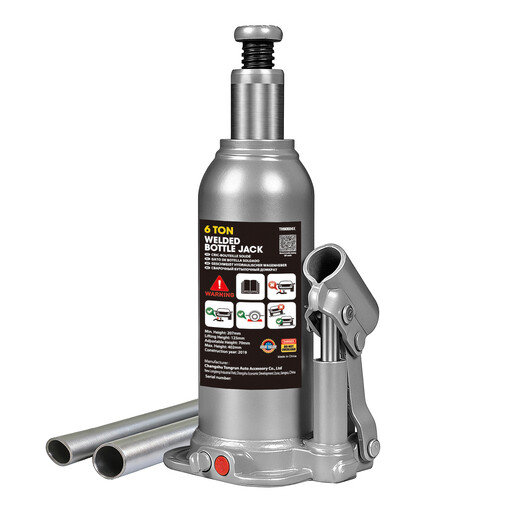
Why This Fits Their Persona: Designed around heavier lifting requirements, making it relevant for SUV, pick-up truck and light-truck owners who have a suitable firm working surface.
Its stated 207–402mm range and 6,000kg rating give heavier-vehicle buyers specific figures to compare before purchase.
Forged steel base, chrome-plated piston rod, adjustable safety overflow valve and screw height adjustment.
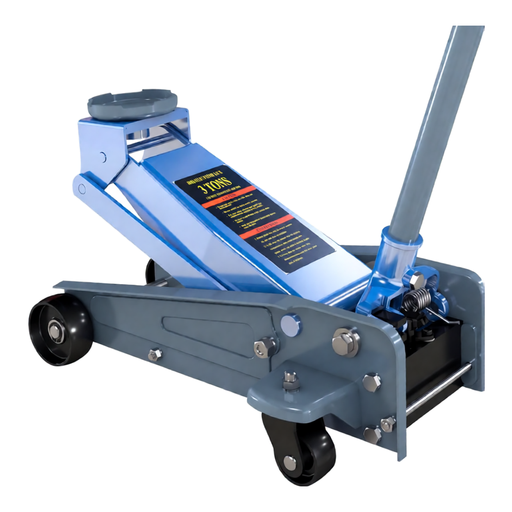
Why This Fits Their Persona: A garage-friendly hydraulic floor jack for users who need a 13.5–46cm range and wheeled movement for routine repairs or wheel changes.
The listing provides saddle dimensions, capacity and lifting range, reducing the risk of choosing a trolley jack based only on promotional wording.
Carbon steel construction, two steel castors, two 360-degree swivel castors and a 46cm maximum lift height.
Before using a hydraulic car jack, inspect the frame, wheels, saddle, handle and hydraulic system. Follow the supplied instructions for checking oil and purging air where required. Close the release valve before lifting, pump smoothly and lower the vehicle in a controlled manner.
Use wheel chocks on wheels remaining on the ground. Place the saddle directly beneath the vehicle manufacturer’s approved jacking point, then transfer the load to axle stands before carrying out repairs. Keep hands and feet clear during lifting and lowering, and do not exceed the stated capacity.
Store the jack in a dry location and avoid modifying safety valves or using makeshift extensions. Hydraulic jacks can lose performance through leaks, contamination or worn seals, so remove any suspect equipment from service until it has been checked.
We have compiled a complete, real-time list of products that fully satisfy these strict selection criteria and UK safety regulations.
Yes, provided its minimum height fits beneath the approved jacking point and its capacity is suitable for the vehicle. Use it on a firm, level surface and support the vehicle with axle stands before working underneath it.
There is no fixed lifespan. Service life depends on frequency of use, storage, hydraulic seal condition, load levels and maintenance. Check regularly for oil leaks, bent components, damaged wheels or uncontrolled lowering.
A bottle jack may offer a higher rated capacity and vertical lifting position for suitable SUVs, while a scissor jack is often easier to store. Compare the SUV’s jacking-point height, kerb weight, required lift and the manufacturer’s instructions before choosing.