
24/7 Customer Support

Free returns

Same-day & Next-day Delivery

Quality Guaranteed

Unlock Your Welcome Offers: FREE Delivery | Up to 80% OFF | Free 30-day JoyPlus trial
Download the APP
Choosing car jacks and jack stands involves more than checking the largest number on the box. A jack may lift a vehicle successfully yet still be unsuitable because it cannot reach the correct lifting point, will not fit beneath the chassis or offers insufficient height for the planned work.
For UK drivers, home mechanics and workshop users, the right combination depends on vehicle weight, ground conditions, lifting height, storage space and whether the equipment is for emergency use or extended repairs.
A 6-tonne car jack is not automatically suitable for every vehicle. Capacity must be greater than the load being lifted, but the jack must also fit the vehicle’s lifting points and provide a practical height range.
Remember that a vehicle’s total kerb weight is distributed across four wheels. Even so, never exceed the equipment’s rated capacity and allow a sensible margin for uneven weight distribution and tools or loads inside the vehicle.
A jack might advertise a generous maximum lift while having a starting height that is too high for a lowered car. Conversely, an ultra-low scissor car jack may fit under a sports car but not provide enough height for certain suspension or chassis work.
Check both measurements:
A hydraulic bottle jack, scissor car jack, floor jack or trolley jack is designed to lift, not necessarily to support a vehicle for prolonged work. Once lifted, use correctly rated car jack stands on suitable manufacturer-approved support points.
Never place any part of your body beneath a vehicle supported only by a jack. Work on firm, level ground, engage the handbrake, select park or first gear and use wheel chocks where appropriate.
Match the jack to the vehicle and intended task. A 1-tonne scissor jack may suit some emergency tyre changes, but it is not a universal solution for large SUVs or vans. A 2-tonne scissor jack offers a higher rated capacity for many saloons and city SUVs, while a 3-tonne floor jack is more suitable for regular garage work involving family cars, SUVs and some light commercial vehicles.
For an SUV and pick-up truck jack, check:
A heavy-duty car jack should not be selected solely because it appears stronger. Its footprint, weight and height range also affect day-to-day usability.
Low-clearance vehicles need a genuine low-profile car jack or an ultra-low scissor design. The 1-tonne scissor model listed below starts at 88mm, while the 2-tonne version starts at 120mm. These figures can make a practical difference for lowered saloons and sports cars.
For taller vehicles, a hydraulic bottle jack can provide useful vertical lifting in a compact footprint. The TCE 6-tonne model has a stated lifting range of 207–402mm, which is aimed at SUVs, pick-up trucks and light trucks.
Look for a broad, non-slip base, a suitable saddle and a construction material intended for the expected workload. Forged or welded steel structures are commonly used in vehicle lifting tools, but design details still matter.
For jack stands, review:
The TCE 6-tonne stands below are listed with EN 1494 certification, welded steel construction, cast iron ratchet posts and rubber saddles. Always follow the supplied instructions and confirm that the stated capacity matches your working arrangement.
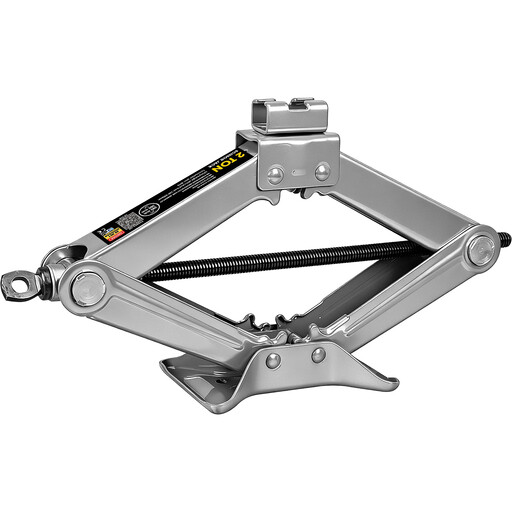
Why This Fits Their Persona: A practical emergency tyre change jack for UK drivers who want compact storage in a boot or spare-wheel compartment.
Its stated 120–395mm range makes both clearance and working height clear, rather than presenting capacity alone.
2,000kg rated capacity, foldable design, widened non-slip base and forged alloy steel structure.
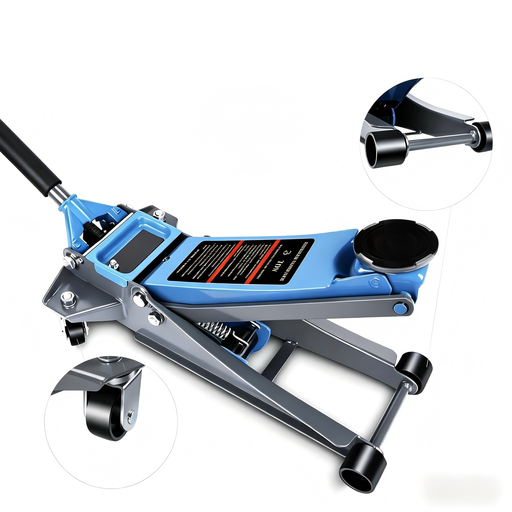
Why This Fits Their Persona: Suits home garages and enthusiasts who value easier positioning and faster repeated lifting over boot portability.
It specifies a 73–500mm lifting range, so buyers can assess low clearance and available working height before purchase.
3-tonne capacity, dual-piston pump, four-wheel movement and a removable 360-degree saddle.
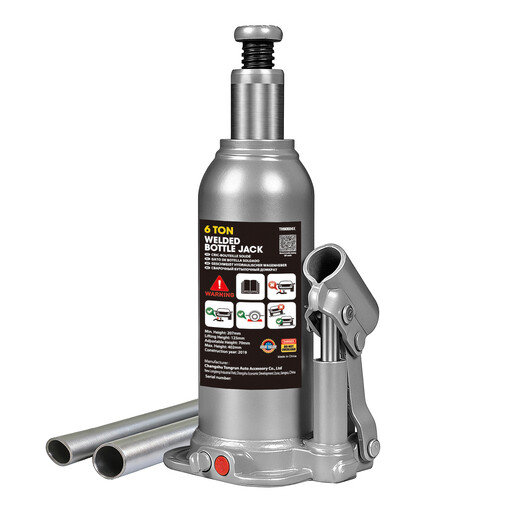
Why This Fits Their Persona: Designed for owners of SUVs, pick-up trucks and light trucks who need a compact vertical lifting tool for suitable hard-standing surfaces.
The 207–402mm range, adjustable screw and stated 6,000kg rating provide more useful detail than a capacity label alone.
Forged steel base, chrome-plated piston rod, safety overflow valve and non-slip heat-treated saddle.
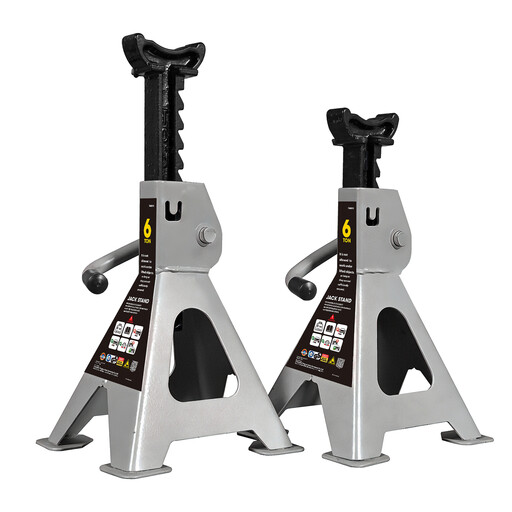
Why This Fits Their Persona: A support option for frequent servicing of large SUVs, 4x4 vehicles, light trucks and campervans where adjustable height is important.
These are support stands rather than lifting-only equipment, with an adjustable 388–580mm height range and stated certification information.
Welded steel structure, cast iron ratchet posts, rubber saddles and a stated 6-tonne capacity per pair.
A scissor car jack is compact and suitable for occasional roadside or home tyre changes. Its manual screw mechanism does not require hydraulic fluid, but lifting is slower and the base must remain stable.
A hydraulic bottle jack uses a vertical piston and handle pumping action. It can offer a higher capacity in a relatively small body, making it useful for taller vehicles. However, its vertical design needs a suitable flat surface and approved lifting point.
A floor jack, also called a trolley jack, rolls beneath the vehicle and is generally easier to position in a garage. Its larger footprint and wheels make it less convenient to carry in a car, but the design is practical for repeated maintenance.
For low-clearance vehicles, compare the minimum height first. For large vehicles, compare capacity, maximum height and base stability. In all cases, pair the lifting equipment with correctly rated, adjustable jack stands when the vehicle must remain raised.
Only use them on firm, level ground capable of supporting the equipment and vehicle. Tarmac can soften in warm conditions, while gravel, grass and sloped surfaces can reduce stability. Use the vehicle manufacturer’s lifting points and follow the jack and stand instructions.
Service life depends on load, storage, surface conditions and maintenance. Keep hydraulic equipment clean and dry, avoid exceeding its rating, inspect for oil leaks or damaged components and lower it fully before storage. Do not use equipment showing structural damage or unreliable lowering.
For a brief emergency tyre change, follow the vehicle manufacturer’s instructions and use the supplied emergency equipment correctly. For inspections, chassis work or servicing, use suitable jack stands after lifting. A jack should not be treated as the sole support while working beneath a vehicle.