
24/7 Customer Support

Free returns

Same-day & Next-day Delivery

Quality Guaranteed

Unlock Your Welcome Offers: FREE Delivery | Up to 80% OFF | Free 30-day JoyPlus trial
Download the APP
There are few things more frustrating for a UK driver than the sound of a clicking ignition or the sight of a sagging tyre, especially on a cold, dark morning. A multi-functional car jump starter with an air compressor seems like the perfect all-in-one solution. However, the market is flooded with devices that promise the world but fail when you need them most. Many car owners end up with a glorified power bank that can't start their engine or a "compressor" that gives up after half a tyre.
As the Joybuy Product Recommendation Officer, my role is to help you see past the marketing jargon. Before you invest in this crucial piece of your emergency car kit, let's look at the common pitfalls that lead to buyer's remorse and how to choose a device that genuinely delivers on its promises.
Many devices look impressive online, but their real-world performance often falls short. Here are the three most common issues we see:
To ensure you get a reliable tool, focus on these non-negotiable specifications. Understanding them is the key to finding a dependable battery booster pack with compressor.
The single most important factor is whether the device can start your specific vehicle. Don't just look at the peak amp number; check the manufacturer's recommended engine size compatibility.
A good car tyre inflator should be both powerful and intelligent.
The internal battery is the heart of the unit. Its capacity and charging capabilities determine its usefulness as a portable car battery charger.
emergency car kit.We've matched some standout options from our catalogue to different UK driver profiles, helping you find a tool that fits your specific needs.
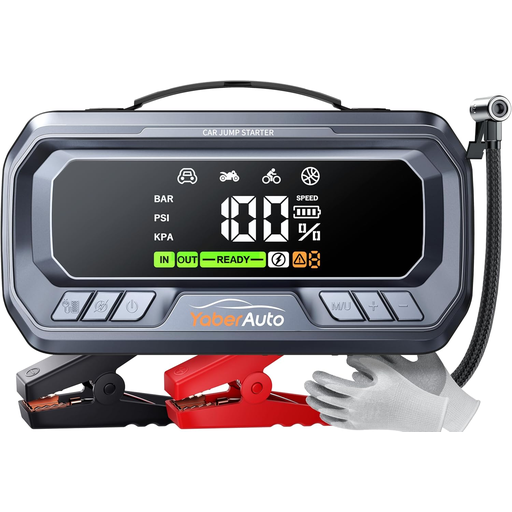
Why This Fits Their Persona: This is for the driver of an SUV, van or large-capacity diesel vehicle who needs uncompromising power. The high peak current provides peace of mind for starting big engines, while the fast PD charging is perfect for professionals and tech users who rely on their laptops and devices on the road.
Its 6500A peak current is genuinely rated for diesel engines up to 8.0L. The 160 PSI compressor is robust and the 65W bidirectional PD charging directly counters the slow-charging pitfall.
Features a unique DC continuous output mode to power dashcams or car fridges when parked. The large 3.3" LCD screen makes operation clear and simple.
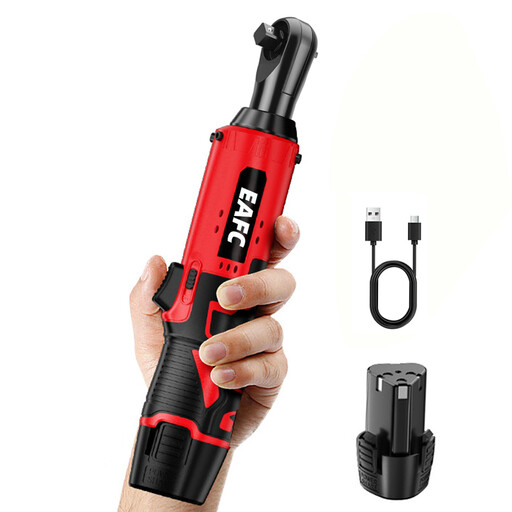
Why This Fits Their Persona: For the driver who sees a jump starter as just one part of a complete roadside toolkit. This electric ratchet is ideal for tackling minor mechanical jobs, from tightening battery terminals to working on components in the engine bay, without the hassle of manual tools.
Avoids the trap of being unprepared for mechanical faults. While a jump starter handles power issues, this tool handles the physical nuts and bolts, preventing a small issue from becoming a breakdown.
Its ultra-slim 3cm head is designed to access tight spaces where conventional wrenches can't fit. The variable speed trigger gives you precise control for delicate tasks.

Why This Fits Their Persona: For the driver who prioritises safety and evidence. This compact camera can be used as a high-resolution dashcam, providing a clear record of journeys and incidents. It's a valuable addition to an emergency kit for insurance purposes and peace of mind.
It avoids the trap of having no visual evidence after an accident. Unlike low-quality dashcams, its 4K resolution and 6-axis stabilisation ensure footage is clear and usable, even in bumpy conditions.
Features dedicated "car mode" and "loop recording" functions. The dual touchscreens make it easy to set up and review footage on the spot.
We have compiled a complete, real-time list of products that fully satisfy these strict selection criteria and UK safety regulations.
A quality lithium-ion jump starter should last between 3 to 5 years. Its lifespan depends on the frequency of use, how it's stored and the quality of the internal battery cells. To maximise its life, avoid leaving it in extreme temperatures for prolonged periods and aim to recharge it every 3-4 months to keep the battery healthy.
Yes, most models are designed to operate and be stored within a wide temperature range, typically from -20°C to 60°C. They are built to withstand being left in a car. However, be aware that extreme cold can temporarily reduce the battery's output. If you live in an area with persistent freezing temperatures, it's a good habit to bring the unit inside to charge fully before a long journey.
A comprehensive emergency kit goes beyond the engine. It's wise to also check the small battery in your car key fob. Being unable to unlock your car is just as inconvenient as a dead engine battery. Many key fobs use small 3V lithium coin batteries, such as the common CR2016 or CR2032 types. Keeping a spare in your glove box is a simple, low-cost way to ensure you're never locked out.