
24/7 Customer Support

Free returns

Same-day & Next-day Delivery

Quality Guaranteed

Unlock Your Welcome Offers: FREE Delivery | Up to 80% OFF | Free 30-day JoyPlus trial
Download the APP
A flat battery or a soft tyre can turn a routine drive into a roadside headache. Waiting for assistance isn't just inconvenient; it can be costly and time-consuming, especially on a cold, wet British night. A multi-functional car jump starter with air compressor seems like the perfect all-in-one solution for your emergency car kit uk. Yet, the market is flooded with devices making bold claims, and choosing the wrong one means you're left with a glorified paperweight when you need it most.
As a Joybuy Product Recommendation Officer, my role is to help you see past the marketing clutter. Many drivers invest in these gadgets only to be let down by common, but avoidable, design flaws. Before you buy, be aware of these three pitfalls:
To ensure you get a reliable tool, focus on these core parameters instead of just the headline figures. This will help you choose a portable battery booster that performs as promised.
The most critical job of a jump starter is to deliver enough current to crank your engine. Instead of focusing only on the advertised peak amps, you need to match the device to your vehicle's engine.
jump starter for a diesel engine requires significantly more power than one for a similarly sized petrol engine, especially in cold weather. As a general rule for a 12v jump starter:
heavy duty jump starter pack with 3000A or more to ensure reliable starting.A functional car tyre inflator is about more than just making noise. Two specifications determine its usefulness:
The device's internal battery and extra functions separate a good tool from a great one.
power bank for car and a bright, multi-mode LED light (with steady, strobe and SOS modes) for nighttime emergencies.Based on these practical criteria, we've identified several models that offer a reliable balance of power, functionality and design for different UK drivers.
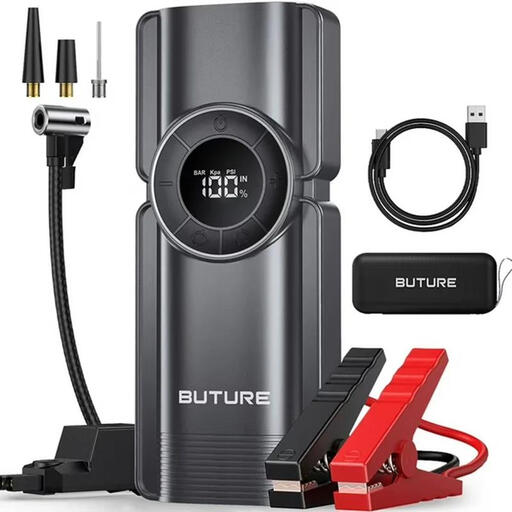
Why This Fits Their Persona: An ideal all-rounder for the majority of UK passenger cars, SUVs and MPVs. It provides ample power for family vehicles and peace of mind for school runs, commutes and holiday trips, without paying for excessive power you don't need.
Its 3500A peak power is backed by a clear rating for up to 8.0L diesel engines, avoiding the "peak amps illusion." The 150 PSI smart compressor with auto-shutoff prevents it from being a useless, inaccurate inflator.
A balanced combination of starting power and smart inflation features. Comes in a tidy storage case, making it easy to keep in the boot.
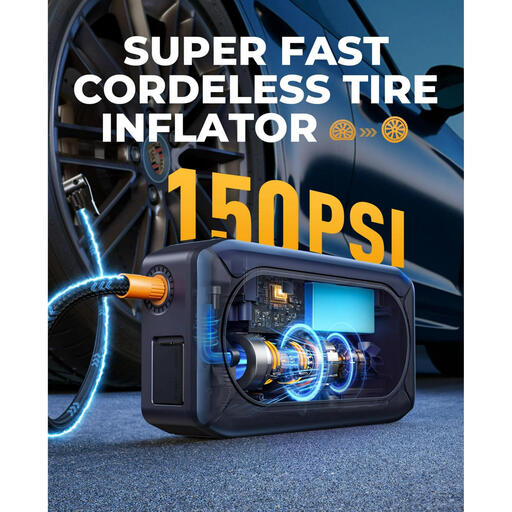
Why This Fits Their Persona: Designed for owners of large 4x4s, work vans or high-displacement diesel SUVs. This user needs absolute confidence that their booster can handle a demanding engine, even on the coldest mornings.
The 4500A rating is suitable for up to 8.0L diesel engines, providing the necessary power. It also features specific cooling technology, directly addressing the overheating issue that plagues lesser compressors during use.
Higher starting power for demanding engines and an all-weather operational range (-20°C to 60°C) provide extra reliability for UK conditions.
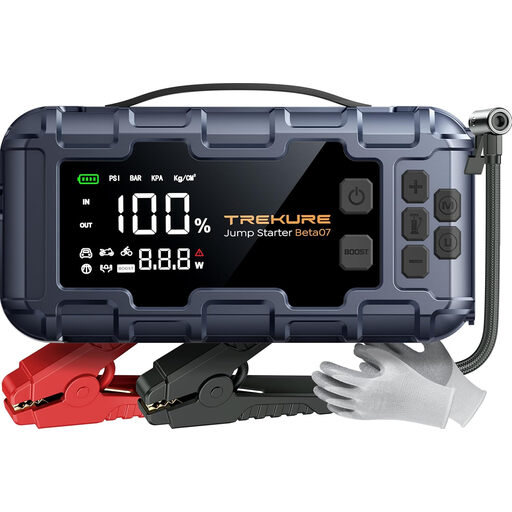
Why This Fits Their Persona: For the user who wants maximum capability. This could be a motorhome owner, a tradesperson with a large commercial van or an adventurer who needs a powerful, fast-charging hub for all their gear on long trips.
This 6000a jump starter tackles the "slow to recharge" pitfall with 45W PD fast charging. Its huge 12L engine rating provides a clear, no-nonsense measure of its heavy-duty power, far beyond the ambiguous peak amp figure.
Top-tier starting power for very large engines and rapid PD charging for both the unit and other devices. The 160 PSI compressor offers superior inflation performance.
We have compiled a complete, real-time list of products that fully satisfy these strict selection criteria and UK safety regulations.
This depends on the model and the quality of its internal lithium battery. A well-made unit should retain a usable charge for 3 to 6 months. However, for peace of mind, it is good practice to check the battery level every 2-3 months and top it up if necessary, particularly before a long journey or during the winter months. Storing the device indoors rather than in the car during periods of extreme cold or heat can also help preserve long-term battery health.
Yes, most modern lithium-ion jump starters are designed to work even when a car battery is completely flat (showing very low or zero voltage). Many models include a "boost" or "force start" button for this exact scenario. This function often bypasses the initial voltage detection safety check, so it is crucial to ensure the clamps are connected to the correct positive and negative terminals before activating it. Always refer to the manufacturer's instructions for the correct procedure.
A 3500A portable battery booster is generally sufficient for starting most diesel engines up to around 8.0L. However, other factors can influence performance. The age of your vehicle's battery, its overall condition and the ambient temperature all play a role. Diesel engines require significantly more cranking power in cold UK winters. If you own a large commercial van with an engine over 3.0L or live in a colder part of the country, choosing a model with 4000A or more provides a greater margin of safety and reliability.