
24/7 全天候客户支持

免费退货

当日/次日达

品质保障

开启新人专享福利: 全场免邮 | 低至 2 折 | 免费试用 30 天 JoyPlus 会员
下载 Joybuy
That dreaded silence when you turn the key is a moment every driver fears. A flat battery can disrupt your entire day, leaving you stranded and waiting for roadside assistance or a friendly neighbour with a set of traditional jump leads. Fortunately, a modern car jump starter offers a self-sufficient and reliable solution. These compact devices can get your vehicle running again in minutes, without needing another car.
A portable car starter pack is more than just an emergency tool; many now function as a jump starter power bank for your devices or include a built-in torch. But with so many options, how do you choose the right one? This guide is designed to help you understand the key features and find a model that suits your vehicle and your needs.
Before looking at specific models, it helps to understand what makes a good jump pack. Keep these points in mind to make an informed choice.
The most critical specification is the peak amperage (A). This number indicates the maximum power the unit can deliver to start your engine. A small hatchback with a petrol car engine will require significantly less power than a large SUV with a diesel engine.
Always check the manufacturer's recommended engine compatibility (e.g., "up to 7.0L petrol / 5.5L diesel").
Most modern units are lithium jump starters, known for being lightweight and holding a charge well. The battery capacity, measured in milliamp-hours (mAh), determines how many jump starts you can perform on a single charge and how effectively it works as a power bank for your phone or tablet.
Many models are part of a complete emergency car kit, offering features like:
A quality 12V battery booster should come with smart clamps that offer protection against common mistakes. Look for features like reverse polarity protection (prevents damage if you connect the clamps to the wrong terminals), short-circuit protection and over-temperature protection. These systems use lights and audible alerts to ensure you are using the device safely.
Here are some noteworthy options that cater to a range of different vehicles and user needs.
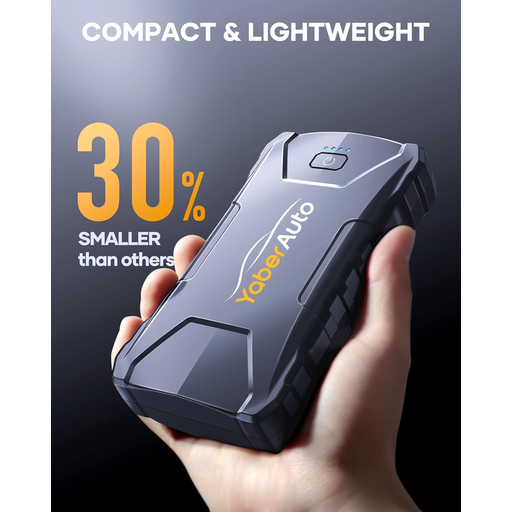
Why It Stands Out: The YaberAuto YA80 is a compact and highly portable unit that packs a surprising amount of power for its size. It’s an ideal all-rounder for the average UK driver, easily fitting into a glove box or backpack.
Pros:
Who is it for? Daily commuters and families with standard petrol or mid-sized diesel cars who value a compact, easy-to-store emergency tool.
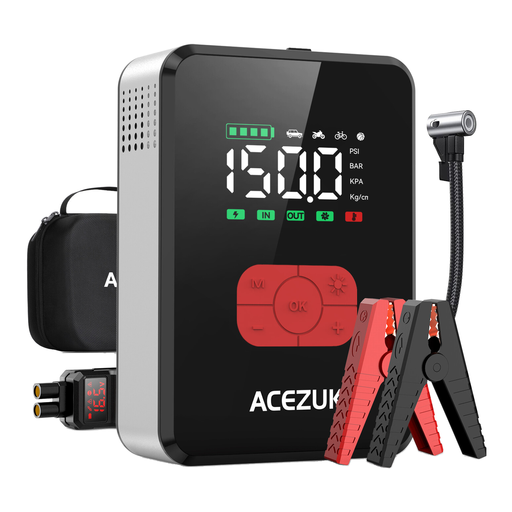
Why It Stands Out: This is a true multi-functional device. The ACEZUK M06 combines a very high peak current with a built-in 150 PSI air compressor, making it a comprehensive solution for roadside emergencies.
Pros:
Who is it for? Owners of large SUVs, vans or diesel vehicles, as well as anyone wanting the convenience of an all-in-one jump starter and tyre inflator.
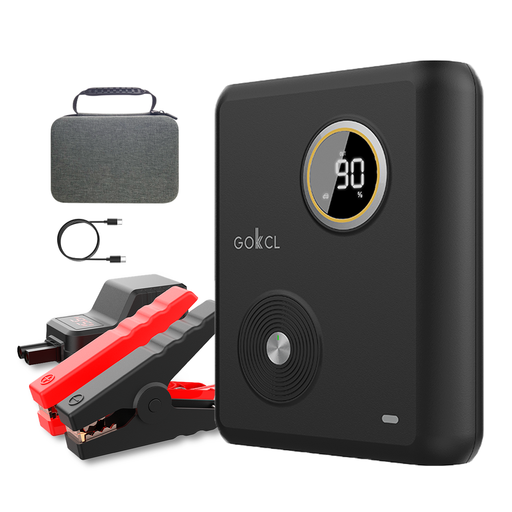
Why It Stands Out: The GOKKCL GK03 moves away from traditional lithium batteries, using sodium-ion technology instead. This offers notable advantages in longevity, safety and performance in extreme temperatures.
Pros:
Who is it for? Users who live in areas with extreme weather, or those who want a low-maintenance "set and forget" jump starter that will be ready when needed, even after long periods of storage.
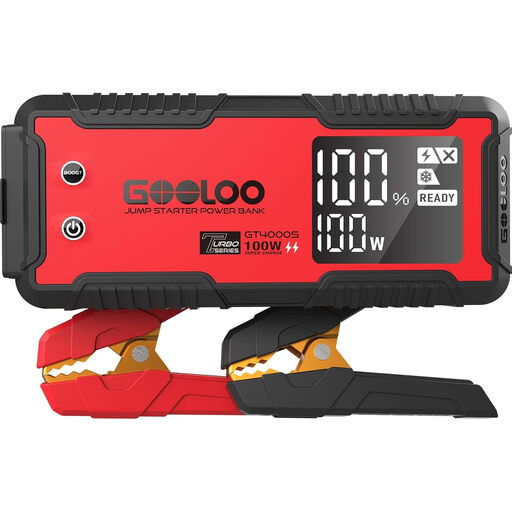
Why It Stands Out: The GOOLOO GT4000S is built for power and speed. Its high peak current makes it suitable for large engines, and its 100W two-way fast-charging capability means both the unit itself and your devices can be powered up in very little time.
Pros:
Who is it for? Owners of heavy-duty vehicles like trucks, RVs and boats, or anyone who prioritises rapid charging and maximum power in their emergency equipment.
The models highlighted here represent a strong cross-section of what is available, but the right choice always depends on your specific vehicle and needs. If you're looking for different features or power levels, you can explore a wider selection of the best jump starter battery pack on our main category page.
This depends entirely on your engine size and type. For most small-to-medium petrol cars in the UK, a unit with 600A-1500A peak current is sufficient. For larger petrol SUVs and most diesel cars, aim for 1500A-2500A. For large diesel trucks or vans, a heavy-duty model with 3000A or more is recommended. Always check the manufacturer's specifications against your vehicle's engine.
Yes, most modern jump starters are designed to work on batteries with very low or no charge. Some advanced models even feature a manual override or "boost" button specifically for starting a vehicle with a zero-volt battery, bypassing the automated safety checks for a forced start. Always follow the manufacturer's instructions carefully when using this feature.
For most lithium jump starter models, it is good practice to check and top up the charge every 2 to 3 months to ensure the battery remains healthy and ready for an emergency. Some newer technologies, like the sodium-ion battery in the GOKKCL model, have a much lower self-discharge rate and may only need checking once a year. Refer to your product's user manual for specific maintenance advice.