
24/7 全天候客户支持

免费退货

当日/次日达

品质保障

开启新人专享福利: 全场免邮 | 低至 2 折 | 免费试用 30 天 JoyPlus 会员
下载 Joybuy
That dreaded silence when you turn the key is a moment every driver fears. A flat battery can happen at the most inconvenient times, leaving you stranded and waiting for roadside assistance. A modern car jump starter is a compact, powerful solution that puts control back in your hands, getting you back on the road in minutes.
But with so many options available, how do you choose the right one for your vehicle? This guide is designed to help you understand the key features to look for in a portable jump starter. We will walk you through what matters most and share our top recommendations to give you peace of mind on every journey.
Selecting the right jump starter pack doesn't have to be complicated. Focus on these key areas to find a reliable device that matches your vehicle's needs.
The most critical specification is the peak amperage (A). This number indicates the maximum current the jump starter can deliver to your battery. As a general rule:
All the consumer-grade devices you'll find are 12v jump starter models, suitable for standard cars, motorcycles and light trucks.
A modern lithium jump starter is far safer than traditional booster cables. Look for units with a comprehensive set of safety protections. Essential features include spark-proof technology, reverse polarity protection (which prevents damage if you connect the clamps incorrectly), over-current, overload and short-circuit protection. These systems make the process virtually foolproof, even for those with no mechanical experience.
Many jump starters are multi-functional devices. The most common extra is a built-in jump starter power bank, allowing you to charge your phone, tablet or laptop via USB ports. Other useful features include a powerful LED torch with different modes (like flashlight, strobe and SOS) and even 12V/15V DC outputs to power accessories like tyre inflators or portable coolers.
Here are a few standout options that offer a great combination of power, safety and functionality for UK drivers.
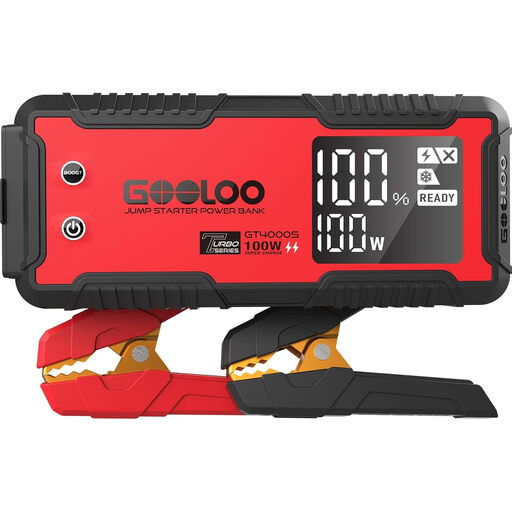
Why It Stands Out: The GT4000S is a powerhouse designed for demanding situations. Its standout feature is the 100W two-way fast charging, which, according to GOOLOO, can fully recharge the unit in just 1.2 hours. Its massive 4000A peak current provides confidence for starting large engines.
Pros:
Who is it for?: Drivers of large diesel trucks, RVs, commercial vans or anyone who values top-tier power and exceptionally fast recharging speeds.
View the GOOLOO GT4000S on Joybuy
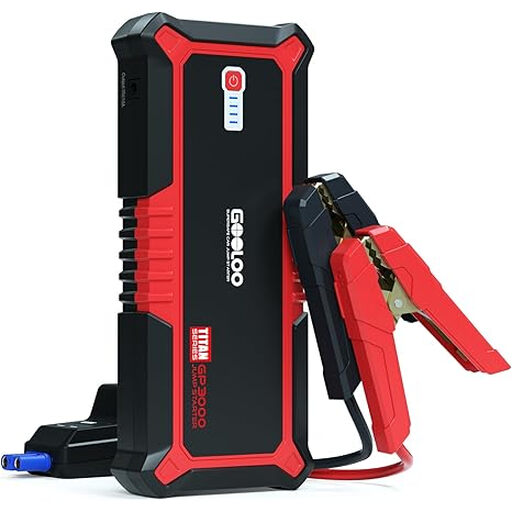
Why It Stands Out: The GP3000 offers a fantastic balance of power and portability. With 3000A peak current, it has more than enough muscle for the vast majority of vehicles on UK roads, including larger SUVs and vans, without the higher price tag of a 4000A model.
Pros:
Who is it for?: The everyday driver who wants a powerful, reliable and versatile emergency car starter that can handle everything from family cars to light commercial vehicles.
View the GOOLOO GP3000 on Joybuy
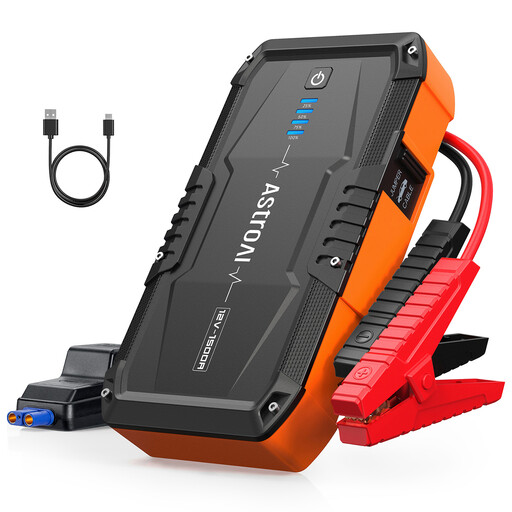
Why It Stands Out: The AstroAI S8 is a compact and highly practical choice for drivers of smaller vehicles. It packs 1500A of peak current into a lightweight and easy-to-store package, making it an excellent glovebox companion for daily commutes.
Pros:
Who is it for?: Commuters and owners of standard petrol or smaller diesel cars who need a dependable, no-fuss jump starter for emergencies with a small footprint.
An emergency car starter is an essential tool for reactive situations, but proactive maintenance is the key to vehicle longevity. While you're ensuring your car is prepared for a flat battery, it's also a good time to think about what keeps it running smoothly day-to-day. For those with diesel vehicles, using the correct engine oil is fundamental to performance and engine health.
If you're looking to keep your engine in top condition, explore our curated selection of high-quality Diesel Engine Oil.
1. Can a car jump starter damage my car? Modern portable jump starters are designed with multiple safety features, such as reverse polarity and short-circuit protection. As long as you follow the manufacturer's instructions, the risk of damaging your vehicle's electronics is extremely low. These devices are significantly safer than traditional jumper cables.
2. How many amps do I need to jump-start my car? This depends on your engine. A small petrol car might only need 400-600A, but a larger V8 or a diesel engine will require much more. A jump starter with 1500A-2000A is a safe bet for most petrol cars and SUVs. For diesel engines, especially those over 3.0L, it is advisable to choose a unit with 2500A or more.
3. How long does a portable jump starter hold its charge? Most lithium jump starters have a very low self-discharge rate and can hold their charge for 12 to 18 months. However, manufacturers typically recommend checking the charge level and topping it up every 3 to 6 months to ensure it's always ready for an emergency.