
24/7 Customer Support

Free returns

Same-day & Next-day Delivery

Quality Guaranteed

Unlock Your Welcome Offers: FREE Delivery | Up to 80% OFF | Free 30-day JoyPlus trial
Download the APP
There are few things more frustrating than turning the key in your ignition and hearing nothing but a disheartening click. A flat battery can happen to anyone, at any time, often on a cold, wet morning or when you are already running late. For years, the only solution was a cumbersome set of jump leads and the hope of finding a willing passer-by.
Today, a modern car jump starter offers a far more convenient and self-reliant solution. These compact, powerful devices can get your vehicle running again in minutes, without needing another car. However, the market is filled with options, making it difficult to know which one is right for you.
This guide is designed to help you understand the key features to look for in a portable car battery charger and to highlight a few standout models that cater to different driver needs across the UK.
Before diving into specific products, let's cover a few essential points to consider during your search. Focusing on these will help you find a reliable emergency car starter that will not let you down.
The most critical specification is the power output, measured in Amps (A). You will typically see two figures: starting current and peak current. The peak current is the maximum power the unit can discharge in a short burst to crank a stubborn engine.
Beyond starting your car, many of these devices serve a dual purpose. The battery capacity, measured in milliamp-hours (mAh), determines how many jump starts you can perform on a single charge or how long it can function as a jump starter power bank.
Look for models with USB ports to charge your phone, tablet or other gadgets. Some even come with integrated LED torches with SOS modes or built-in air compressors to inflate a low tyre, making them true multi-purpose emergency tools.
A quality jump starter should come with a suite of built-in safety protections. Features like reverse-polarity protection (prevents damage if you connect the clamps incorrectly), short-circuit protection and over-charge protection are essential. These safeguards protect both you and your vehicle's sensitive electronics from accidental damage.
Here are our recommendations for car jump starters that offer a great combination of performance, features and reliability for UK drivers.
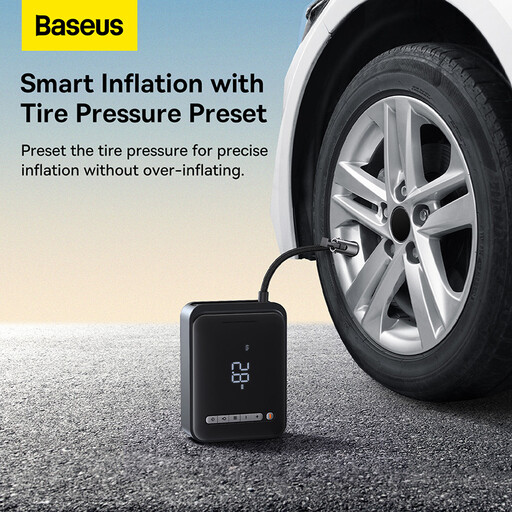
Why It Stands Out: This device from Baseus is the definition of a practical, multi-functional tool. It combines a capable jump starter with a digital air compressor, tackling two of the most common roadside problems in one compact unit.
Pros:
Who is it for?: The everyday commuter or family car owner who values convenience and wants a single, easy-to-store device to handle both a flat battery and a soft tyre.
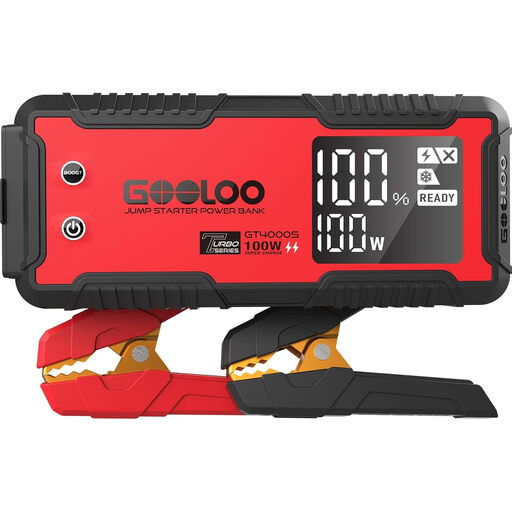
Why It Stands Out: For those who need serious power, the GOOLOO GT4000S delivers. With a massive 4000A peak current and incredibly fast recharging capabilities, it is built for demanding situations and large vehicles. According to the brand, its 100W two-way fast charging can fully replenish the unit in just over an hour.
Pros:
Who is it for?: Owners of large SUVs, vans, motorhomes or commercial vehicles. It is also an excellent choice for anyone who wants the peace of mind that comes with having a high-power, quick-charging unit on hand.
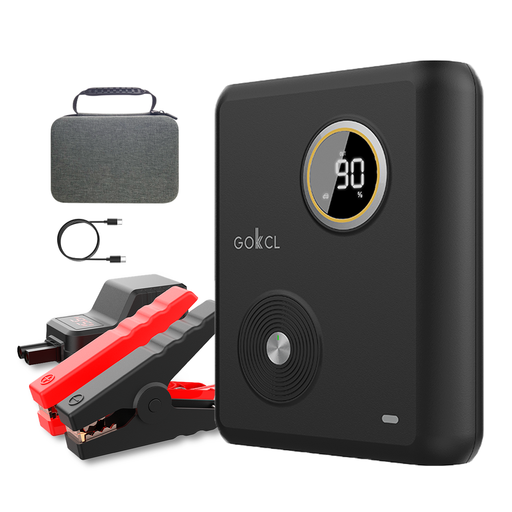
Why It Stands Out: This model moves away from traditional lithium batteries, using advanced sodium-ion technology instead. This brings significant advantages in terms of safety, longevity and reliability, especially for a device stored in a car that experiences wide temperature swings.
Pros:
Who is it for?: The driver who wants a low-maintenance, "set-and-forget" jump starter. Its resilience to temperature and long standby time make it ideal for anyone who wants a device they can trust to be ready after months or even years in the boot.
These three recommendations cover a range of needs, from everyday convenience to heavy-duty power and long-term reliability. However, if you have different requirements or would like to compare more models, you can explore our full collection of car jump starters to find the perfect match for your vehicle and budget.
As a general guideline, a unit with 400-1000 peak amps is adequate for most small-to-medium petrol cars. For larger V8 engines, vans and diesel cars, it is advisable to choose a model with 1500 peak amps or more. If in doubt, a more powerful unit provides a greater margin of safety.
Reputable, modern jump starters are equipped with multiple safety features to prevent damage. Protections against reverse polarity, short circuits and over-current are designed to safeguard your vehicle's battery and complex electronic systems. Always ensure you follow the manufacturer's instructions for safe operation.
This depends on the battery technology and the specific model. Many lithium-ion jump starters may require a top-up charge every 3 to 6 months to ensure they are ready when needed. Some newer models using technologies like sodium-ion have a much lower self-discharge rate and can hold a usable charge for years. It is always good practice to check the charge level before a long trip.