
24/7 Customer Support

Free returns

Same-day & Next-day Delivery

Quality Guaranteed

Unlock Your Welcome Offers: FREE Delivery | Up to 80% OFF | Free 30-day JoyPlus trial
Download the APP
That dreaded silence when you turn the key is a moment every driver fears. A flat battery can disrupt your day, whether you are on the morning commute, heading out for a family trip or in a remote car park late at night. While breakdown services are an option, they often involve long waits and recurring costs. A modern car jump starter offers a practical, self-sufficient solution, getting you back on the road in minutes.
As the Joybuy Product Recommendation Officer, my role is to help you navigate the options. This guide cuts through the technical jargon to highlight key features and provide clear, practical advice, helping you find a reliable device for your vehicle and needs. We will explore what to look for in a portable car battery charger and present some of our top recommendations for 2026.
Selecting the right jump starter can feel overwhelming with all the different specifications. Here are a few key points to consider to ensure you get a device that is right for your vehicle.
The most critical specification is the peak amperage (A). This number indicates the maximum power the jump starter can deliver to turn over your engine. A small hatchback with a petrol engine requires significantly less power than a large SUV with a diesel engine.
Always check the manufacturer's specifications for engine size compatibility (e.g., "up to 9.0-litre petrol / 8.0-litre diesel").
Modern jump starters are often more than just a car battery booster pack. Many come with additional features that can be incredibly useful in an emergency.
Consider which of these features are essential for your peace of mind versus those that might add unnecessary bulk or cost.
A good 12v jump starter should be safe and straightforward to use, even for someone with no mechanical experience. Look for models with built-in safety protections. Key features include:
A clear display screen showing the remaining charge and operational status is also a significant advantage.
Based on features, power and user-centric design, here are some standout options to consider for your car's emergency kit.
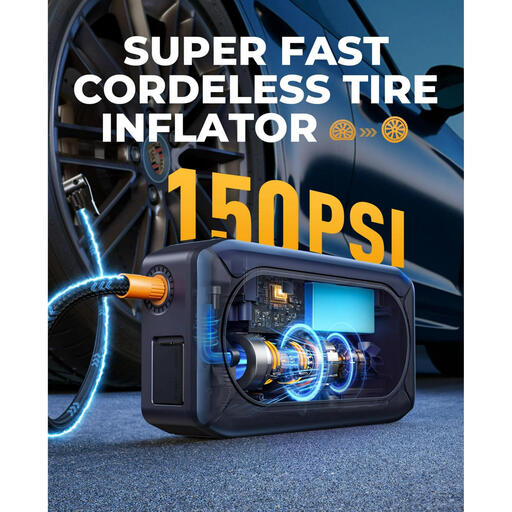
Why It Stands Out: The BUTURE BC02 is a comprehensive 5-in-1 emergency tool. Its combination of a powerful 4500A peak current and a built-in 150PSI digital air compressor makes it a versatile solution for a wide range of roadside problems. The clear LCD screen provides all the necessary information at a glance, from battery level to real-time tyre pressure.
Pros:
Who is it for? Drivers of larger vehicles, vans or SUVs, and anyone who values the convenience of an all-in-one emergency device that handles both flat batteries and flat tyres.
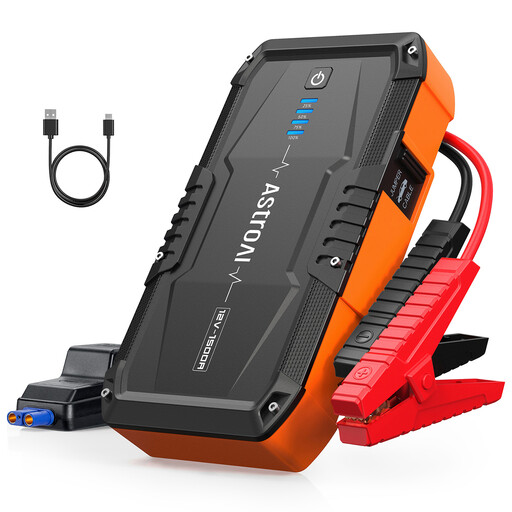
Why It Stands Out: The AstroAI S8 focuses on delivering reliable jump-starting power in a compact and lightweight package. Its standout feature is the "BOOST" mode, specifically designed to revive fully drained batteries that other starters might struggle with. Weighing under a pound, it is easy to store in a glove box or travel bag.
Pros:
Who is it for? Commuters and owners of small to mid-sized cars who prioritise portability and want a straightforward, effective jump starter without the bulk of extra features.
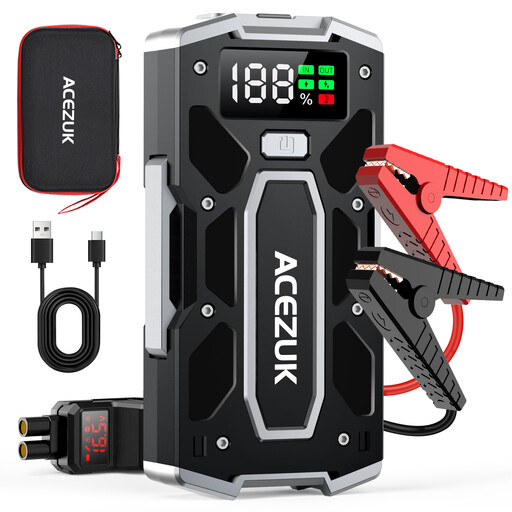
Why It Stands Out: For those who need maximum power, the ACEZUK M02 delivers an impressive 8000A peak current. This heavy duty jump starter is engineered to handle high-displacement engines, including large trucks and boats, with ease. The large LCD screen clearly displays battery status and alerts, while its rugged construction is built to last.
Pros:
Who is it for? Owners of large trucks, vans, boats or high-performance cars. It is also a great choice for anyone who wants the assurance of having one of the most powerful portable units available.
A jump starter is a cornerstone of roadside preparedness, but it is not the only tool you might need. A reliable light source is equally important for any after-dark emergency, from changing a tyre to inspecting the engine bay.
If you are looking to build a complete emergency kit, consider exploring a dedicated flashlight with battery. Many modern options offer powerful beams, long battery life and durable construction, making them a perfect companion to your new jump starter.
1. Can a car jump starter damage my vehicle's electronics? Modern jump starters are designed with multiple safety features to prevent this. Protections like reverse polarity, over-voltage and short-circuit prevention are standard in quality units. These systems ensure that power is delivered safely, protecting your car's sensitive ECU and other electronics, provided you follow the manufacturer's instructions.
2. How often should I charge my portable car battery charger? It is good practice to recharge your jump starter every 3 to 6 months, even if you have not used it. Lithium batteries will slowly lose charge over time, and keeping the unit topped up ensures it has enough power when you need it most. Many models have indicator lights that make it easy to check the battery level at a glance.
3. What is the difference between peak amps and starting amps? Peak Amps (A) is the maximum burst of energy the jump starter can output for a very short period. This initial jolt is what's needed to get a stubborn engine turning. Starting Amps (or Cranking Amps) refers to the power it can sustain for a few seconds while the engine cranks. While peak amps is the most commonly advertised figure, both are important indicators of a unit's power. For most consumer purposes, a higher peak amp rating generally correlates with more starting power.