
24/7 Customer Support

Free returns

Same-day & Next-day Delivery

Quality Guaranteed

Unlock Your Welcome Offers: FREE Delivery | Up to 80% OFF | Free 30-day JoyPlus trial
Download the APP
A flat battery is a frustrating and common problem for UK drivers, whether you're facing a frosty morning commute or returning to your car after a long holiday. In the past, the only solution was a set of cumbersome jump leads and the hope of finding a willing helper. Today, a modern car jump starter offers a compact, powerful and self-sufficient alternative, getting you back on the road in minutes.
These portable devices are more than just a one-trick pony. Many now function as a complete emergency power pack, capable of inflating tyres, charging your phone and providing a powerful torch. But with so many options available, how do you choose the right one for your vehicle? This guide will walk you through the key features to consider and present some of our top recommendations to help you find a reliable companion for your car, van or motorcycle.
Before diving into specific models, understanding a few key specifications will help you make an informed decision.
The most critical factor is the jump starter's peak current, measured in Amps (A). This determines its ability to turn over an engine. A small petrol hatchback requires significantly less power than a large diesel van.
Always check the manufacturer's recommended engine size compatibility (e.g., "up to 8.0L Diesel").
Many modern jump starters are multi-functional tools. Consider which extra features would be most useful for you.
The internal battery determines how long the jump starter holds its charge when not in use. Most use lithium-ion batteries, which are lightweight and powerful. It's good practice to check and recharge them every 3-6 months. Some newer models use sodium-ion technology, which offers a much longer standby time and wider operating temperature range, making them a 'fit and forget' option for your boot.
Here are a few standout options that cater to different needs and vehicle types.
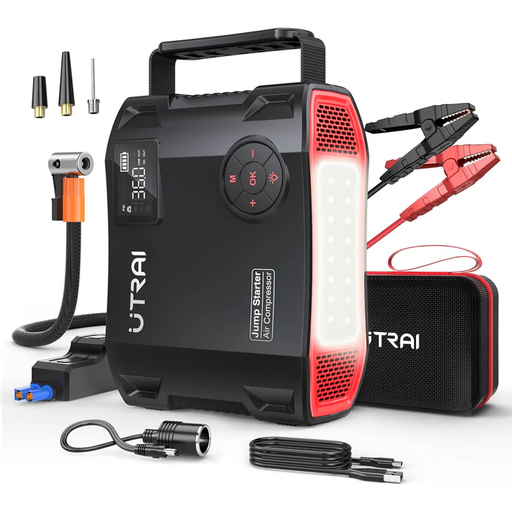
Why It Stands Out: This is a high-power, all-in-one unit designed for those who want maximum capability. With a massive 6000A peak current and a fast-inflating air compressor, it's equipped to handle almost any roadside situation.
Pros:
Who is it for? Owners of large vehicles like vans, motorhomes or trucks, as well as families who want a single, powerful device for all their emergency and outdoor power needs.
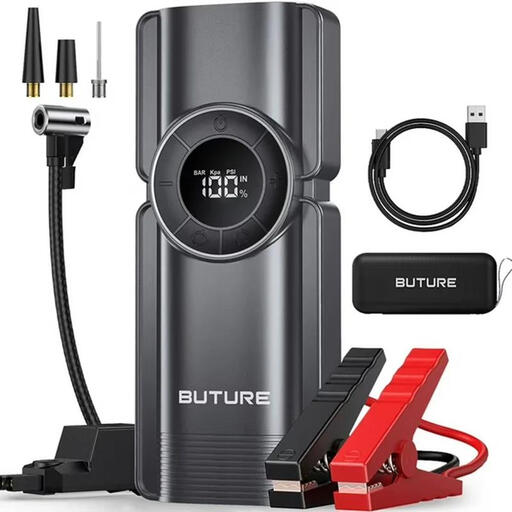
Why It Stands Out: The BUTURE beta01 offers a great balance of power and practicality for the average UK driver. It provides ample starting power for most cars and SUVs, combined with the convenience of a built-in smart air compressor.
Pros:
Who is it for? Daily commuters and family car owners who need a reliable 12v jump pack that also covers tyre inflation without being overly specified for very large engines.
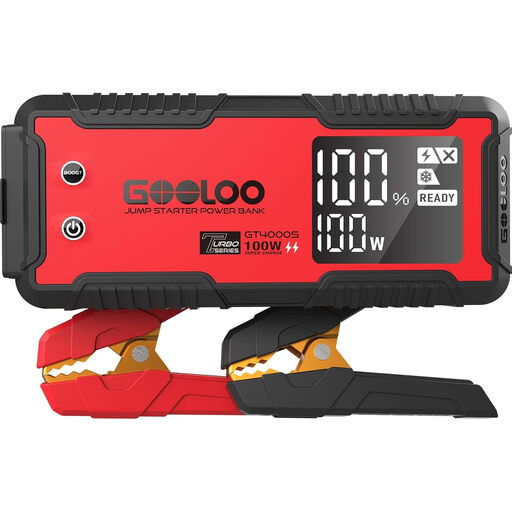
Why It Stands Out: The GOOLOO GT4000S focuses on raw starting power and rapid charging. Its standout feature is the 100W two-way fast-charging, which allows the unit itself to be recharged in just over an hour.
Pros:
Who is it for? Users who prioritise starting power for large engines and exceptionally fast recharging over an integrated air compressor. It's a great choice for professionals and those who value speed and efficiency.
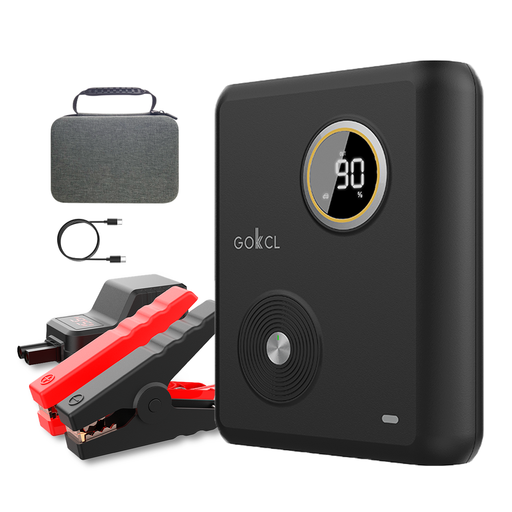
Why It Stands Out: This model uses innovative sodium-ion battery technology, which addresses the main drawbacks of traditional lithium units. It boasts an extremely long standby time and a very wide operating temperature range, making it exceptionally low-maintenance.
Pros:
Who is it for? The 'peace of mind' user who wants a portable car battery booster they can store in their car for years without worrying about frequent recharging. Ideal for classic car owners or those with second vehicles that are not driven daily.
If these recommendations don't quite fit your needs, or if you're looking for a more basic power bank or a different combination of features, you can explore our full range of emergency charging pack solutions to find the perfect match for your vehicle and lifestyle.
Yes, most are designed to be stored in a vehicle. However, extreme temperatures can affect battery life and performance. Models with a wide operating temperature range, like the sodium-ion GOKKCL GK03, are particularly well-suited for being left in a car year-round in the UK's variable climate. Always check the manufacturer's recommended storage temperature.
This depends on your engine type and size. A typical 1.6L petrol car might only need 400-600A to start, while a 3.0L diesel van could require 2500A or more, especially in cold weather. It's always better to choose a jump starter with a higher peak amp rating than you think you'll need to ensure it works when you need it most.
No, they serve different purposes. A car jump starter provides a large, immediate burst of power to start a vehicle with a flat battery. A car battery charger is a maintenance device that slowly recharges a battery over several hours and helps maintain its long-term health. While some jump starters can act as a power bank, they are not designed to fully recharge a flat car battery.