
24/7 Customer Support

Free returns

Same-day & Next-day Delivery

Quality Guaranteed

Unlock Your Welcome Offers: FREE Delivery | Up to 80% OFF | Free 30-day JoyPlus trial
Download the APP
A flat battery is one of the most common and frustrating reasons for a vehicle breakdown in the UK. Whether you're facing a frosty morning commute or are stranded in a remote car park after a long day out, being unable to start your car is a situation every driver dreads. While traditional jump leads are an option, they rely on the kindness of a stranger and another vehicle. A modern car jump starter offers a self-sufficient solution, getting you back on the road in minutes.
However, the market is flooded with options, and it's easy to make a poor choice. Many drivers are caught out by misleading specifications and features that fail when they're needed most. Before you buy, it's crucial to understand the common pitfalls.
To avoid these issues, focus on the specifications that truly matter. Analysing these core parameters will help you select a reliable and effective tool for your needs.
Instead of focusing solely on the advertised peak amps, consider your vehicle's engine size and type.
The battery is the heart of the lithium jump pack. Its capacity, measured in milliampere-hours (mAh), determines how many jump starts it can perform on a single charge and how well it functions as a jump starter power bank for your devices.
A reliable 12V car starter must have built-in safety protections. Look for units that explicitly mention features like:
The clamps themselves should be robust, with strong springs for a secure connection and fully insulated grips.
We've filtered through the options to match different UK drivers with a suitable portable jump starter.
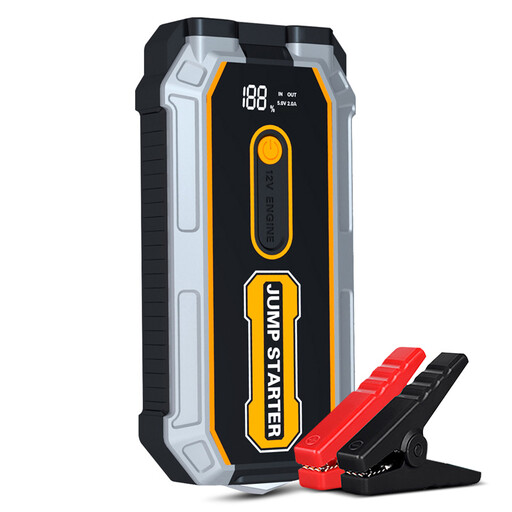
Why This Fits Their Persona: Ideal for drivers of typical family hatchbacks or saloons in the UK. Its ultra-compact size means it can be stored in a glovebox or door pocket, ensuring it's always on hand without taking up boot space. It also serves as a handy power bank for charging a phone on the go.
Its 1200A peak current is appropriately matched for most petrol cars, avoiding the trap of overpaying for unnecessary power. The smart LCD display allows you to easily monitor its charge, preventing the "dead when you need it" scenario.
Ultra-compact and lightweight design (approx. 330g) makes it exceptionally portable. Includes a multi-mode LED light for emergencies.
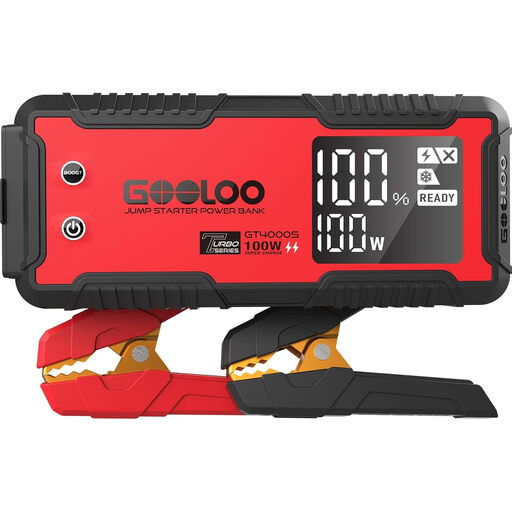
Why This Fits Their Persona: This is for the owner of a large SUV, van, pickup or boat. Its high 4000A jump starter rating provides the necessary power for large-displacement diesel and petrol engines, making it a reliable tool for both personal and light commercial use.
This unit backs up its high peak amp rating with the ability to start engines up to 10.0L diesel. The 100W two-way fast charging directly addresses the "dead when needed" flaw, as it can be fully recharged in just over an hour.
Powerful enough for large engines (up to 10.0L diesel) and features 100W two-way fast charging, which can also power laptops and other large devices.
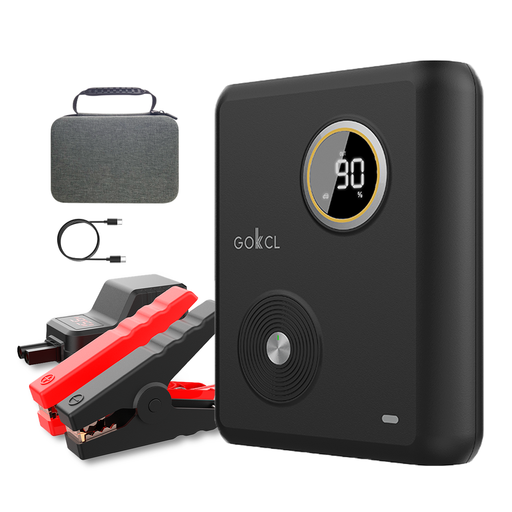
Why This Fits Their Persona: This is for the driver who values a "set it and forget it" approach to emergency preparedness. The sodium-ion battery technology means it can be left in a car for years without needing a top-up, making it the ultimate low-maintenance, high-reliability choice.
It completely solves the "dead when you need it" problem with a claimed standby time of up to 5 years. Its sodium-ion chemistry is also inherently more stable and safer across the wide temperature swings experienced inside a car in the UK.
Extremely long standby time and a wide operating temperature range (-40°C to 80°C) provide exceptional reliability. It can also be recharged from 0V, unlike some lithium batteries that fail if fully discharged.
We have compiled a complete, real-time list of products that fully satisfy these strict selection criteria and UK safety regulations.
For most common lithium-ion models, it is wise to check the charge level and top it up every 3 to 6 months to ensure it's ready for an emergency. However, some newer models, particularly those using sodium-ion battery technology, have a much lower self-discharge rate and can hold their charge for a year or longer. Always refer to the manufacturer's specific recommendations.
Yes, these devices are designed to be stored in a vehicle. However, extreme cold can impact the performance of standard lithium batteries. If you live in an area with harsh winters, look for a model with a specified low operating temperature (e.g., -20°C or below). Models with sodium-ion batteries typically offer a superior operating range in both cold and hot conditions.
Not always. The most important factor is matching the jump starter's power to your vehicle's engine. A 1200A unit is perfectly adequate for most standard petrol cars, and buying a much larger 4000A jump starter would be unnecessary. Conversely, trying to start a large diesel van with an underpowered unit will likely fail. Choose the right tool for the job rather than just chasing the highest number on the box.