
24/7 Customer Support

Free returns

Same-day & Next-day Delivery

Quality Guaranteed

Unlock Your Welcome Offers: FREE Delivery | Up to 80% OFF | Free 30-day JoyPlus trial
Download the APP
That dreaded clicking sound from the ignition on a cold, dark morning is a moment every UK driver fears. A flat battery can ruin your day, causing missed appointments and a long wait for roadside assistance. A portable car jump starter seems like the perfect solution, offering independence and peace of mind. However, the market is flooded with devices, and many fail to deliver when you need them most.
As the Joybuy Product Recommendation Officer, my role is to help you navigate the marketing jargon. Before you buy, be aware of these common pitfalls that lead to wasted money and a false sense of security.
To ensure you get a reliable emergency car starter, focus on the specifications that truly matter. Here’s what to look for.
The power you need depends entirely on your vehicle. A small petrol engine requires far less power to start than a large diesel engine.
The type of battery inside the jump starter power pack determines its safety, lifespan and how long it holds a charge.
Never connect a power pack directly to your battery with simple, "dumb" cables. Modern smart jumper cables are a non-negotiable safety feature. These intelligent clamps contain a control box with circuitry that protects against common and dangerous user errors. Look for a unit that explicitly lists:
Based on these critical criteria, we've matched several products to different UK driver profiles.
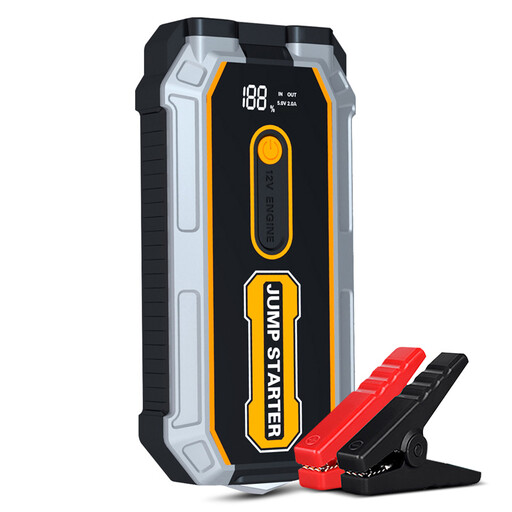
Why This Fits Their Persona: Ideal for drivers of standard petrol or smaller diesel cars who need a straightforward, compact and affordable solution. At just 330g, it fits easily in a glove box and provides enough power for common vehicles without the cost of oversized, professional-grade units.
Its 1200A peak current is a realistic rating for its intended use on smaller engines, avoiding the "Peak Amp Illusion." The clear LCD display also shows the remaining power, helping you avoid the "Self-Discharge Trap" by reminding you when to recharge.
Extremely compact and lightweight design. Also functions as a USB power bank for charging a phone in an emergency.
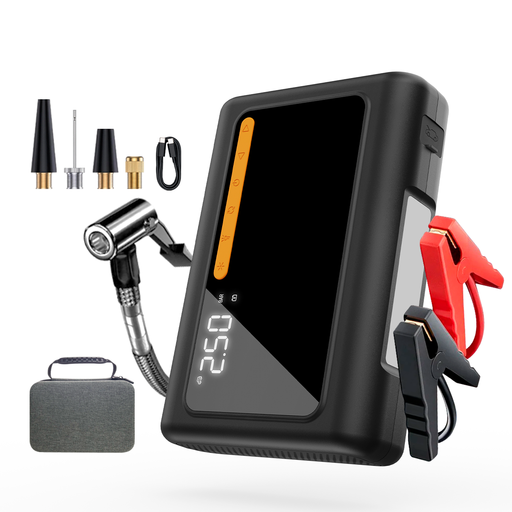
Why This Fits Their Persona: For the driver who values ultimate reliability and preparedness. This user wants a device they can trust to work after long periods of storage and in the harshest UK weather. The added tyre inflator provides a complete roadside emergency solution.
It directly counters the "Self-Discharge Trap" and "All-Weather Myth." According to the manufacturer, its sodium-ion battery has an ultra-low self-discharge rate for long-term standby and operates effectively in extreme cold (-40°C), where lithium models struggle.
Features a 4-in-1 design including a jump starter, 150 PSI tyre inflator, fast-charging power bank and LED light. The sodium-ion battery technology is its standout feature for long-term reliability.
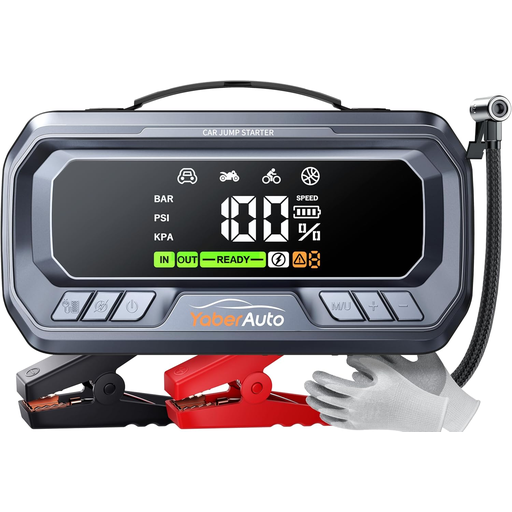
Why This Fits Their Persona: This user owns a large SUV or van, travels frequently, and wants a powerful, multi-functional gadget that does it all. The high peak current, fast device charging and advanced digital interface appeal to their need for performance and technology.
While it has a high peak amp rating, it's backed by compatibility with large 8.0L diesel engines, giving substance to the number. The large 3.3" LCD screen provides clear, real-time data on battery status and tyre pressure, removing guesswork.
Features a powerful 160 PSI air compressor and supports 65W PD fast charging, allowing it to charge laptops and other high-power devices quickly. The DC output can also power 12V accessories like a car fridge.
We have compiled a complete, real-time list of products that fully satisfy these strict selection criteria and UK safety regulations.
This varies significantly by battery type and quality. Standard lithium-ion models should be checked and recharged every 2 to 3 months to ensure they are ready for an emergency. Models with newer battery technology, such as sodium-ion, claim much lower self-discharge rates, potentially holding a useful charge for a year or more. Always check the manufacturer's recommendation.
Yes, but it's important to be aware of temperature extremes. Most quality jump starters are designed to be stored in a vehicle and have an operating temperature range of roughly -20°C to 60°C. However, leaving any battery-powered device in direct, intense sunlight inside a car on a hot summer day can shorten its lifespan and, in rare cases, pose a safety risk. It's best to store it in the boot or glove compartment, out of direct sun.
Absolutely. Most jump starters are shipped with only a partial charge for safety reasons. It is critical to fully charge the device according to the manufacturer's instructions before you rely on it. This not only ensures it will work when needed but also helps to condition the battery for a longer service life.