
24/7 Customer Support

Free returns

Same-day & Next-day Delivery

Quality Guaranteed

Unlock Your Welcome Offers: FREE Delivery | Up to 80% OFF | Free 30-day JoyPlus trial
Download the APP
That sinking feeling when you turn the key and hear nothing but a faint click is a familiar frustration for many UK drivers, especially on a frosty morning. A portable car jump starter seems like the perfect solution, promising self-reliance and a quick fix. However, the market is flooded with options, and it's easy to buy a device that fails when you need it most.
As a Joybuy Product Recommendation Officer, my role is to help you see past the marketing clutter. Many drivers find their new gadget is useless after a few months or, worse, can't even start their car once. This is often due to a few common purchasing pitfalls.
To ensure you get a reliable tool, focus on the specifications that matter for real-world use, not just the numbers on the packaging.
The power you need depends entirely on your vehicle. A 12V jump starter is standard for almost all cars, vans and motorcycles in the UK.
Modern devices almost exclusively use lithium jump starter technology, making them much smaller and lighter than old lead-acid packs. Beyond starting your car, many double as a jump starter power bank with USB ports to charge your phone or tablet, which is incredibly useful in an emergency. Some larger models even include a built-in jump starter with air compressor, offering a complete roadside emergency solution.
Never compromise on safety. Look for a car battery starter that comes with smart jumper cables. These have built-in protection against common mistakes, such as:
The clamps themselves should feel robust, with strong springs and solid, all-metal construction where they contact the battery.
Instead of a generic list, we've matched a few reliable options to the types of drivers who would benefit from them most.
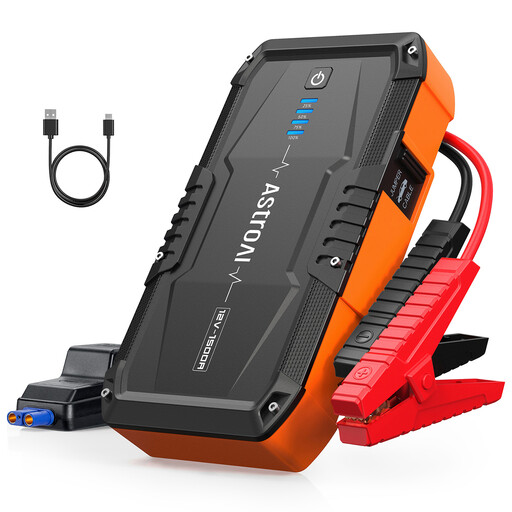
Why This Fits Their Persona: Ideal for drivers of standard UK hatchbacks and saloons (e.g., Ford Focus, VW Golf, Vauxhall Corsa) with smaller petrol or diesel engines. It's compact enough to live in the glovebox and provides peace of mind for daily commutes without unnecessary bulk or features.
It avoids the engine size trap with realistic claims (up to 6.0L petrol/3.0L diesel), providing ample power for its target vehicles without over-promising.
Features a "BOOST" mode for fully drained batteries and includes 8 safety protections. Its compact, lightweight design makes it highly portable.
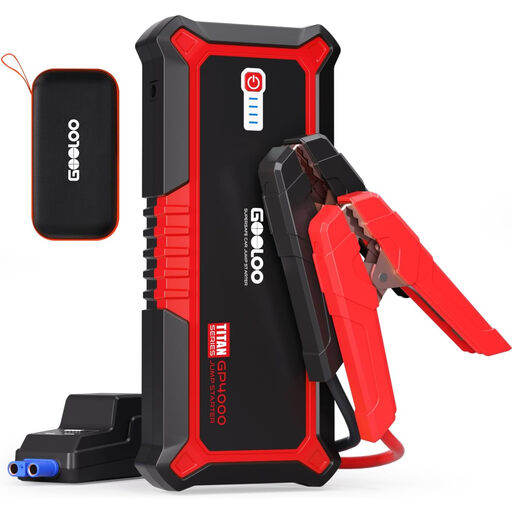
Why This Fits Their Persona: Perfect for owners of larger family vehicles, SUVs and vans (e.g., Nissan Qashqai, Land Rover Discovery, Ford Transit). The high power output handles larger diesel engines with ease, and the power bank function is essential for keeping devices charged on long road trips.
This unit directly counters the flimsy build quality trap. It features heavy-duty, all-metal clamps and a rugged, drop-resistant casing designed for long-term use.
Its 4000A peak current can start all petrol and up to 10.0L diesel engines. It also includes fast-charging USB ports and a "BOOST" function for completely dead batteries.
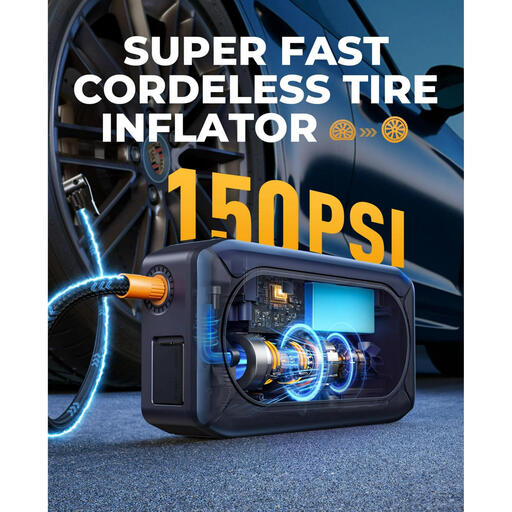
Why This Fits Their Persona: For the driver who wants a single, powerful tool for multiple roadside emergencies. It's perfect for large vehicle owners, campers and anyone who values the convenience of an all-in-one solution for both flat batteries and flat tyres.
Unlike some multi-tools where extra features are gimmicks, this unit combines two genuinely useful, high-performance functions without compromising on the core jump-starting power.
The integrated 150 PSI digital air compressor with auto-shutoff is a major benefit. Its massive 4500A peak current provides confidence for starting very large engines (up to 9.0L petrol/8.0L diesel).
We have compiled a complete, real-time list of products that fully satisfy these strict selection criteria and UK safety regulations.
Most modern lithium jump starters can hold a significant portion of their charge for 6 to 18 months. However, battery performance degrades over time and in cold weather. It is good practice to check the charge level and top it up every 3-4 months and always before a long journey or the start of winter.
Yes, most are designed to be stored in a vehicle and have an operating temperature range that can handle a UK winter (typically down to -20°C). However, be aware that extreme cold can temporarily reduce the battery's output. For optimal performance, if the unit has been in a freezing car overnight, it can help to warm it slightly (e.g., in your pocket or inside the car with the heating on for a few minutes) before use.
This depends on your needs and priorities. An integrated unit is incredibly convenient, saving you from buying and storing two separate devices. It's ideal for those who value an all-in-one emergency kit. The trade-off is that these models are typically larger, heavier and more expensive than a standard jump starter pack. If you already own a good tyre inflator or value a more compact jump starter, a standalone model may be a better choice.