
24/7 Customer Support

Free returns

Same-day & Next-day Delivery

Quality Guaranteed

Unlock Your Welcome Offers: FREE Delivery | Up to 80% OFF | Free 30-day JoyPlus trial
Download the APP
A flat battery rarely happens at a convenient time. It may leave you outside work, on a dark rural lane or preparing for a long family journey. A car jump starter can provide useful backup, but choosing one purely by its largest amp figure can lead to disappointment.
Common purchasing traps include:
The right choice should match your vehicle, driving habits and the emergency functions you are likely to use.
Check the manufacturer’s stated compatibility with petrol and diesel engines before buying. Diesel engines generally require more starting power than petrol engines of a similar size. A product rated for up to 6.0L petrol and 3.0L diesel engines may suit many family cars, while larger SUVs, vans or specialist vehicles need a higher stated rating.
Peak current is useful for comparing products, but it is not a guarantee that every vehicle will start. Battery condition, temperature, cable connection and engine design also matter. For a typical UK car, a 12V battery jump starter with clear petrol and diesel capacity ratings is more useful than an unexplained amp figure.
Never use a 12V jump box for cars on a 24V system. Check the vehicle handbook if you are uncertain.
A suitable car battery booster pack should include practical safeguards such as:
These features help reduce operating errors, but they do not replace careful connection. Turn off the vehicle’s lights, radio and heating before starting. Connect the red clamp to the positive terminal and the black clamp to the negative terminal or an appropriate unpainted vehicle ground, following the product manual.
After the engine starts, remove the clamps promptly. Do not allow the red and black clamps to touch.
A jump starter with air compressor can be particularly useful for commuters and long-distance drivers. Look for preset pressure settings, an automatic shut-off function and a readable display. A portable tyre inflator is intended to correct low pressure or provide temporary assistance; it is not a substitute for inspecting a damaged tyre or visiting a qualified tyre professional.
A built-in USB power bank can charge a phone during a roadside delay. Check the output ratings if you regularly carry several devices. An LED emergency light with steady, strobe or SOS modes can improve visibility when checking a vehicle at night, although you should also follow UK roadside safety guidance and move away from live traffic wherever possible.
The following recommendations are selected by practical use case rather than by a single headline specification. Product ratings and functions are based on the supplied manufacturer information, so check the listing and vehicle handbook before purchase.
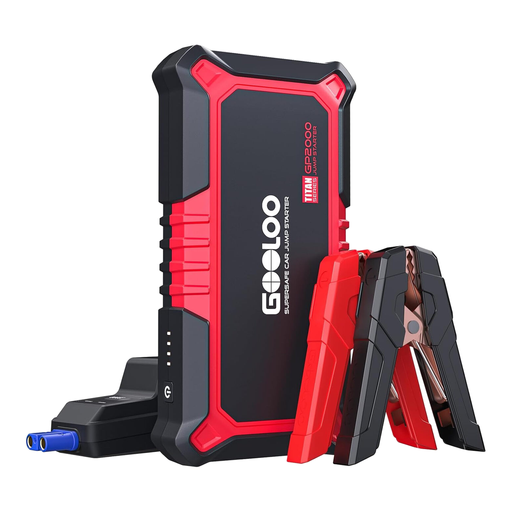
Why This Fits Their Persona: A compact option for everyday drivers who want an emergency car starter without carrying a large unit. It is rated for up to 8.0L petrol and 6.0L diesel engines.
Its stated 12V compatibility, smart jumper lead and ten listed protection functions provide more useful information than a peak-current figure alone.
2,000A peak current, dual USB outputs, three-mode LED torch and a stated weight of about 1.2 lb.
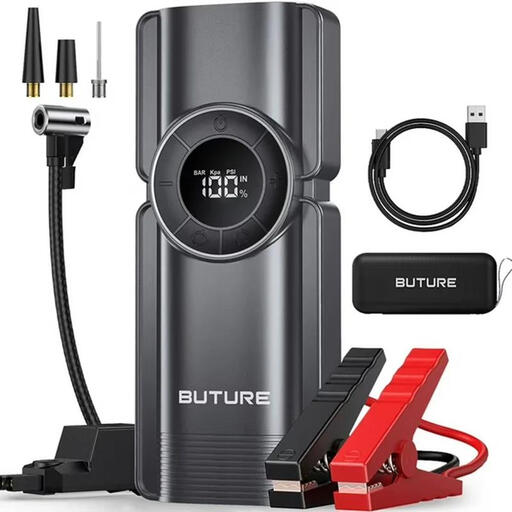
Why This Fits Their Persona: Suitable for drivers wanting one portable unit for battery assistance, tyre inflation, device charging and roadside lighting.
The digital display, preset inflation and automatic shut-off make the compressor specification more practical than maximum PSI alone.
3,500A peak current, 150 PSI compressor, dual 5V/2.1A USB outputs and constant, strobe and SOS lighting.
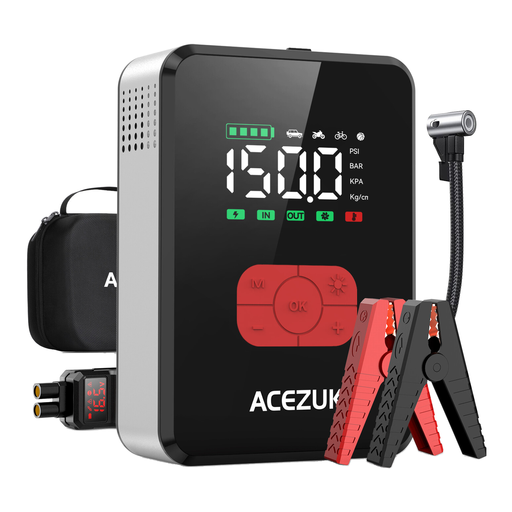
Why This Fits Their Persona: A practical match for larger petrol vehicles, diesel vehicles, vans and drivers who also need regular emergency inflation support.
It combines engine ratings with a displayed pressure reading, preset modes and automatic shut-off, helping buyers assess the whole tool rather than one number.
7,000A peak current, 150 PSI air compressor, 26,800mAh stated capacity and smart clamp alerts.
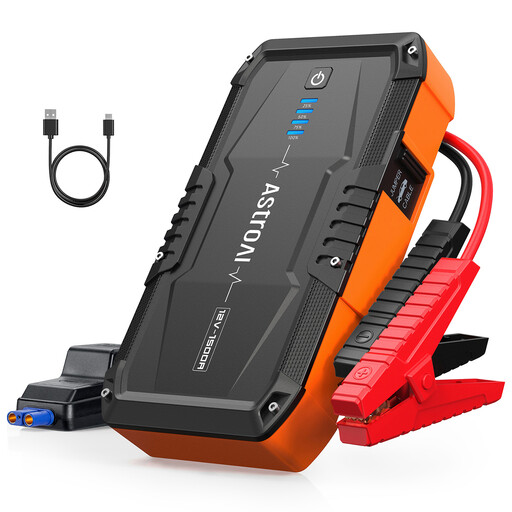
Why This Fits Their Persona: Its compact format suits small-car owners, commuters and motorists who want a straightforward jump starter power pack.
The stated 12V rating and separate petrol and diesel limits make vehicle matching clearer. It is not intended for 24V equipment.
1,500A peak current, eight listed protection functions, dual USB-A outputs and three LED modes.
Before an emergency, fully charge the unit and read its instructions. Keep the clamps, cable and connectors in the supplied case. Many manufacturers recommend checking the charge every few months; follow the specific schedule for your model.
For a jump start:
Do not use damaged cables, expose the unit to water or leave it in excessive heat. If the battery repeatedly goes flat, arrange a battery and charging-system check rather than relying on the booster indefinitely.
Some models include a boost or force-start mode for very low voltage batteries, but this varies by product. Check the manual, ensure the unit has sufficient charge and use the correct connection procedure. A failed start may indicate a damaged battery or another vehicle fault.
Lifespan depends on battery chemistry, storage temperature, usage and charging habits. Recharge it at the interval specified by the manufacturer, store it away from moisture and heat, and inspect the cables before use. A jump starter should be treated as emergency equipment, not left unmaintained in the boot.
A model with a built-in compressor can usually top up tyres when its pressure range and operating instructions are suitable. Compare preset modes, automatic shut-off, airflow and recommended rest periods. For persistent pressure loss or visible damage, seek professional tyre assistance rather than continuing to inflate the tyre.