
24/7 Customer Support

Free returns

Same-day & Next-day Delivery

Quality Guaranteed

Unlock Your Welcome Offers: FREE Delivery | Up to 80% OFF | Free 30-day JoyPlus trial
Download the APP
A car jump starter can be useful when a vehicle will not start in a supermarket car park, outside your home or on a remote country road. Unlike traditional jump leads, a portable car battery booster does not require another vehicle, making it practical for commuters, families, tradespeople and long-distance drivers.
However, choosing one is not simply a case of selecting the highest amp figure. Marketing descriptions can make similar products appear interchangeable, while important details such as engine compatibility, charging requirements and compressor duty cycles are easy to overlook.
A large peak-current number may attract attention, but it does not by itself confirm that a jump starter suits your vehicle. Check the manufacturer’s stated compatibility for petrol and diesel engine size, as well as the required 12V system.
A booster designed for a 4.0L petrol engine may not be suitable for a larger diesel van. Conversely, a very high-current model may add cost and weight without providing a practical benefit for a small hatchback.
A jump starter with air compressor may display a maximum pressure of 150 PSI, but maximum pressure is not the same as inflation speed. Look for useful details such as airflow rate, preset pressure modes, automatic shut-off and recommended rest periods.
For everyday UK driving, the correct tyre pressure is normally far below 150 PSI. Always follow the pressure specified in your vehicle handbook or on the vehicle’s tyre information label rather than relying on the headline maximum.
Lithium battery packs gradually lose charge while stored. A car battery jumper pack that is left in a boot for months may not be ready during an emergency. Many products recommend recharging every few months, while some specify a longer interval.
Before buying, check whether the unit has a visible battery display, USB-C charging, a storage case and clear instructions. Avoid leaving it permanently in extreme heat, such as on a dashboard in direct summer sunlight.
Most portable car jump starters in this category are made for 12V vehicles, including cars, SUVs, motorcycles, lawnmowers and some boats. They should not be used with 24V heavy-duty vehicles unless the manufacturer specifically states otherwise.
Compare the stated engine limits carefully:
Peak current is a useful comparison point, but it should be considered alongside battery capacity, rated energy and the manufacturer’s vehicle guidance. A 12V jump starter with a larger capacity may offer more starting attempts between charges, although it can also be heavier.
For occasional roadside use, a compact 1,000A–2,000A unit may suit smaller vehicles. Larger SUVs, vans and diesel engines may call for a higher-rated car battery booster pack. Do not use an amp rating alone to justify compatibility.
Look for smart safety clamps with features such as reverse-polarity alerts, short-circuit protection, over-current protection and over-temperature protection. These features are intended to help reduce connection errors, but they do not replace careful operation.
A typical procedure is:
Never allow the red and black clamps to touch. Inspect cables and clamps before use, and stop if they are damaged.
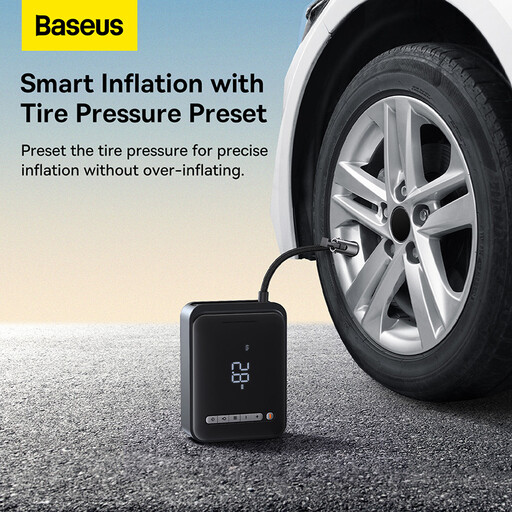
Why This Fits Their Persona: Its compact format suits drivers who want a straightforward emergency car starter for smaller 12V vehicles, with added tyre inflation capability.
The specifications state a 1,000A peak current and identify supported inflation pressure rather than relying only on a broad marketing description.
54W inflation pump, USB outputs, approximately three-hour charging time and a stated 5–150 PSI gauge range.
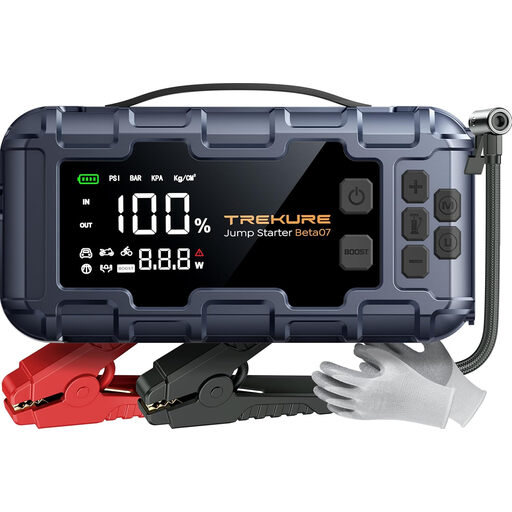
Why This Fits Their Persona: A suitable option for drivers who value a larger display, fast charging and multiple roadside functions in one case.
It lists both compressor airflow and a recommended duty approach, helping buyers look beyond the 160 PSI headline figure.
6,000A peak current, 45W USB-C PD, dual USB-A outputs, 3.3-inch display and a 600-lumen LED emergency light.
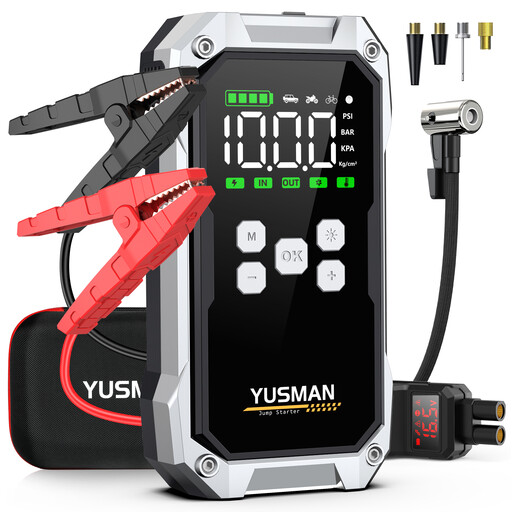
Why This Fits Their Persona: Its stated support for petrol engines up to 10.0L and diesel engines up to 10.0L makes it relevant to larger vehicles and varied outdoor equipment.
The product information clearly identifies 12V use, charge-level guidance and a recommended recharge interval for storage.
5,000A peak current, 21,800mAh capacity, 150 PSI compressor, LCD pressure display, USB ports and four LED modes.
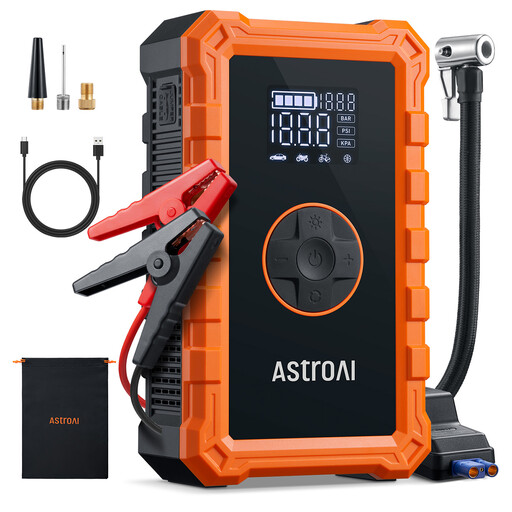
Why This Fits Their Persona: Drivers covering motorways, rural routes or leisure trips may appreciate the integrated booster, portable tyre inflator, torch and power bank.
The manual specifies a ten-minute inflation limit followed by a rest period, helping prevent misuse of the compressor.
1,500A peak current, 150 PSI inflator, preset pressure modes, automatic shut-off, digital screen and USB charging.
No. Confirm that the product is intended for your vehicle’s 12V system, then compare its petrol or diesel engine limit with your vehicle. A 24V lorry or other heavy-duty system requires equipment specifically designed for that voltage.
Follow the product manual. Several models recommend charging every three to six months, while others specify a longer interval. Store the unit in a cool, dry place and check its display before a long journey.
It can be stored in a vehicle if the manufacturer permits it, but avoid prolonged exposure to very high or low temperatures. Keep the unit dry, prevent the clamps from touching and store accessories in their case. A quick inspection before use helps identify damaged cables or a low charge level.