
24/7 Customer Support

Free returns

Same-day & Next-day Delivery

Quality Guaranteed

Unlock Your Welcome Offers: FREE Delivery | Up to 80% OFF | Free 30-day JoyPlus trial
Download the APP
There are few things more frustrating than the dead click of a car that will not start. A flat battery can happen to anyone, whether it is due to leaving the lights on, a cold snap or an ageing battery. While roadside assistance is an option, waiting for help can be time-consuming and costly. A modern car jump starter offers a fast, self-service solution, getting you back on the road in minutes.
However, the market is flooded with options, and it is easy to make a poor choice. Many drivers are drawn in by flashy marketing, only to find their new gadget fails them when it matters most. Before you buy, be aware of these common purchasing traps:
To ensure you get a reliable device that works for your specific vehicle, focus on these core parameters.
This is the most critical factor. Look for the manufacturer's specific recommendations for engine size, usually listed in litres (L) for both petrol and diesel. As a rule of thumb, a jump starter for diesel engines needs a higher starting current. Do not just rely on the peak amp figure; check the specifications for the maximum recommended engine displacement (e.g., "Suitable for up to 7.0L Petrol / 5.5L Diesel"). This ensures the 12V jump box has enough power for your vehicle.
Modern lithium-ion units are more than just starters; they are also a jump starter power bank. The battery capacity, measured in milliampere-hours (mAh), determines how many times you can start a car on a single charge and how much power is available for your other devices. A higher mAh rating is useful for charging phones, tablets or other USB-powered gadgets. Most units also include a built-in LED torch with different modes (steady, strobe and SOS), which is invaluable for emergencies at night.
A reliable car battery booster pack is a safe one. Look for models that explicitly list their safety features. Smart jumper clamps are a key feature; they typically have indicator lights (e.g., a green light for a correct connection, a red light and alarm for an error) that prevent you from making a dangerous mistake. A robust, well-built casing that can withstand being stored in a car boot or glove box is also a sign of a quality product.
We have filtered the options to match different UK driver profiles, focusing on products that offer clear specifications and reliable features.
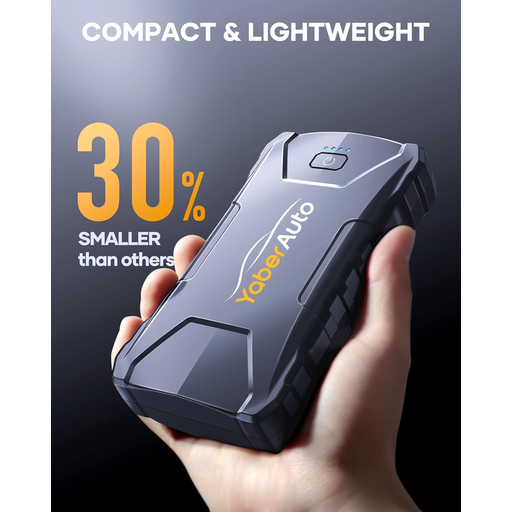
Why This Fits Their Persona: Ideal for drivers of standard family cars, hatchbacks and SUVs. It is compact enough to live in the glove box and provides ample power for most common vehicles on UK roads, offering peace of mind without unnecessary bulk.
It clearly states its compatibility (up to 7.0L petrol/5.5L diesel), preventing the mistake of buying an underpowered unit. It also features 10 built-in safety protections, addressing the risk of using a basic, unprotected device.
A great balance of power and portability. The 13800mAh capacity doubles as a useful power bank for charging devices and the smart jumper clamp provides clear visual and audible alerts for safe operation.
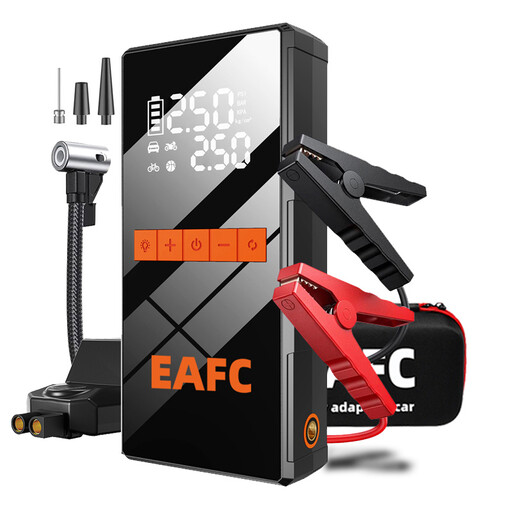
Why This Fits Their Persona: For the driver who wants a complete roadside emergency tool. This 4-in-1 device combines a jump starter with a tyre inflator, power bank and torch, making it perfect for family road trips, camping or simply being prepared for multiple scenarios.
While its jump-starting power is suited for smaller engines (up to 4.0L petrol/2.0L diesel), its primary value is its multi-functionality. It avoids the trap of being a one-trick pony by adding the practical utility of a 150 PSI air compressor.
The integrated air compressor with auto shut-off is a standout feature, allowing you to inflate tyres anywhere. It consolidates two essential car accessories into one compact unit.
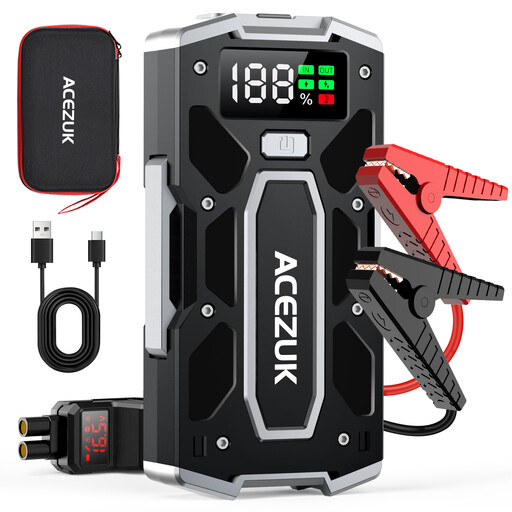
Why This Fits Their Persona: This is for owners of large-displacement vehicles, such as big diesel trucks, vans or boats. Its high power output is designed to handle the demands of engines that smaller boosters cannot, making it a suitable choice for commercial use or serious enthusiasts.
It directly targets the "one-size-fits-all" myth by providing power for engines up to 10.0L petrol and 8.0L diesel. The large LCD screen also provides clear, real-time status, removing guesswork about remaining power and operational safety.
Its primary advantage is its high power output, capable of starting demanding engines multiple times on one charge. The rugged, rubberised construction and 8-layer safety system provide durability and operational confidence.
Beyond an emergency starter, ensuring your vehicle's visibility is key to roadside safety. Modern automotive lighting can make a significant difference in being seen, especially in poor weather or at night.
We have compiled a complete, real-time list of products that fully satisfy these strict selection criteria and UK safety regulations.
To ensure your lithium jump starter is ready when you need it, it is good practice to recharge it every 2 to 3 months, even if it has not been used. The internal battery will slowly discharge over time. Most importantly, always recharge it fully after each use.
Yes, most modern jump starters are designed for this. Some models include a "boost" or "override" function that can be activated to send power to a battery with very low or zero voltage. This bypasses some of the automated safety checks, so it is crucial to ensure your connections are correct and to follow the manufacturer's instructions carefully when using this feature.
For the average UK driver, a portable car battery booster using lithium-ion technology is generally more practical. They are significantly lighter, more compact and versatile, often functioning as a power bank. Traditional lead-acid jump boxes can sometimes offer more raw cranking power and are very durable, but their size and weight make them less convenient for keeping in a passenger car.