
24/7 Customer Support

Free returns

Same-day & Next-day Delivery

Quality Guaranteed

Unlock Your Welcome Offers: FREE Delivery | Up to 80% OFF | Free 30-day JoyPlus trial
Download the APP
A dead battery or a flat tyre can turn a routine commute or a holiday road trip into a stressful ordeal, especially on a cold, wet British morning. A multi-function car jump starter with air compressor seems like the perfect all-in-one solution to keep in your boot. However, the market is filled with devices that promise the world but fail when you need them most.
As a Joybuy Product Recommendation Officer, my role is to help you see past the marketing jargon. Before you spend your money, let's look at the common pitfalls that lead to buyer's remorse and how to choose a reliable tool that offers genuine peace of mind.
Many products use impressive-sounding numbers to catch your eye, but these can be misleading. Here are three key areas where shoppers often get caught out:
To make a smart purchase, focus on the specifications that directly impact performance and safety. Here are the non-negotiable parameters to check.
The primary job of a portable car jump starter is to deliver enough power to turn over your engine. Look for a device that clearly states the engine sizes it's compatible with (e.g., "up to 9.0L petrol / 6.5L diesel"). This is a more practical measure than peak amps alone. For most UK cars, a unit rated for at least 4.0L petrol engines will suffice, but a higher rating provides a greater safety margin and the versatility to help others with larger vehicles. Ensure the device is specified as a 12V vehicle jump starter, which covers virtually all passenger cars and vans in the UK.
As mentioned, don't be swayed by PSI alone. A good cordless tyre inflator should have a respectable airflow rate—aim for 20 L/Min or higher for practical use on car tyres. A model with an airflow of 35 L/Min, for example, can inflate a typical car tyre from 30 to 36 PSI in about a minute. Also, look for features like an automatic shut-off function, which allows you to set the desired pressure and let the device do the work without risk of over-inflation.
The device is also a jump starter power bank. Its internal battery capacity, measured in milliamp-hours (mAh), determines how many times you can charge your phone or tablet. While not its main purpose, a decent capacity is a useful bonus. Finally, a bright, built-in LED light with an SOS mode is an invaluable feature for any nighttime roadside emergency.
Based on these practical criteria, we've matched a few options to different user needs. Instead of a one-size-fits-all approach, consider which profile best describes you.
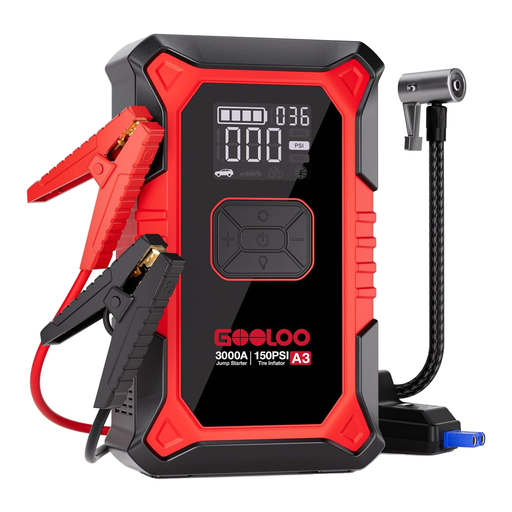
Why This Fits Their Persona: Ideal for the family car or road trip enthusiast who wants a single, robust device to handle a flat battery or tyre. Its power is sufficient for larger SUVs and vans, offering complete peace of mind.
This unit backs its 3000A jump starter rating with clear engine compatibility (9.0L Petrol/6.5L Diesel). Its compressor specifies a 35L/Min airflow, avoiding the "slow inflator" trap. It also lists 10 distinct safety protections.
True multi-functionality with 5 inflation modes and a smart digital screen. The "BOOST" function provides a forceful start for extremely low batteries.
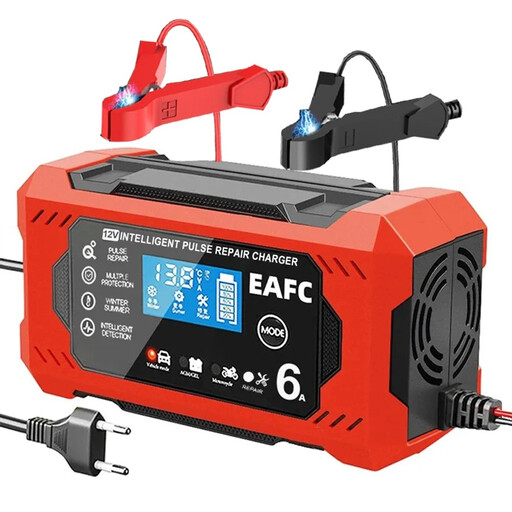
Why This Fits Their Persona: For the driver who prefers prevention over cure. This isn't a jump starter, but a smart charger to keep your battery healthy at home, reducing the chance of it failing in the first place. A great affordable choice for the DIYer.
By focusing on one job—charging—it avoids the compromises of multi-tools. It has clear safety features like polarity and overcharge protection, ensuring safe, long-term battery maintenance in your garage.
Features a pulse repair mode to help recondition and extend the life of older batteries. The clear LCD display shows charging status, voltage and temperature.
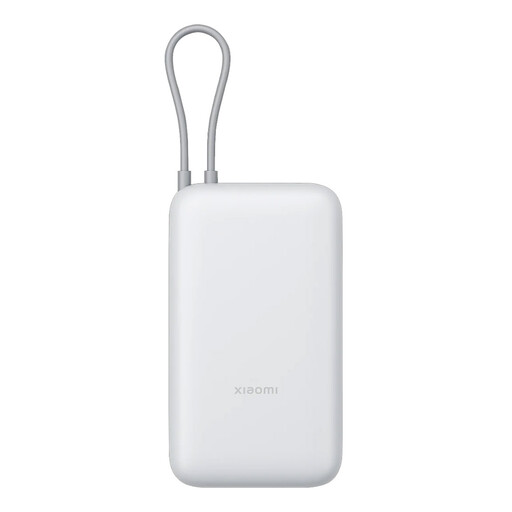
Why This Fits Their Persona: This is for the person whose main emergency is a dead phone, not a dead car. It clarifies the difference between a jump starter and a dedicated high-capacity power bank for charging personal electronics.
It avoids the trap of buying a bulky, over-specified jump starter when all you need is reliable power for your devices. It focuses on doing one thing well: fast, safe charging for phones and tablets.
A large 20,000mAh capacity provides multiple charges. The integrated USB-C cable and two-way fast charging offer superior convenience for daily use and travel.
We have compiled a complete, real-time list of products that fully satisfy these strict selection criteria and UK safety regulations.
1. How long does a portable car jump starter hold its charge? Most modern lithium-ion units can hold a significant portion of their charge for 6 to 12 months. However, for maximum reliability, it is good practice to check the charge level and top it up every 3-4 months, particularly before a long journey or at the start of winter.
2. Can I use a 3000A jump starter on a small car? Yes, it is perfectly safe. A jump starter is designed to deliver only the amount of current that the car's starter motor requests. Using a more powerful unit like a 3000A jump starter on a small car poses no risk and provides the added benefit of being able to assist vehicles with larger engines. The critical factor is to ensure it is a 12V vehicle jump starter, which is the standard for passenger cars.
3. Is a jump starter with a compressor worth the extra cost? For many UK drivers, the convenience is well worth it. It combines two of the most common roadside assistance tools into a single, compact package, saving valuable boot space and often costing less than buying a quality jump starter and a separate cordless tyre inflator. It's useful not just for emergencies but also for routine maintenance, like adjusting tyre pressures as the seasons change.